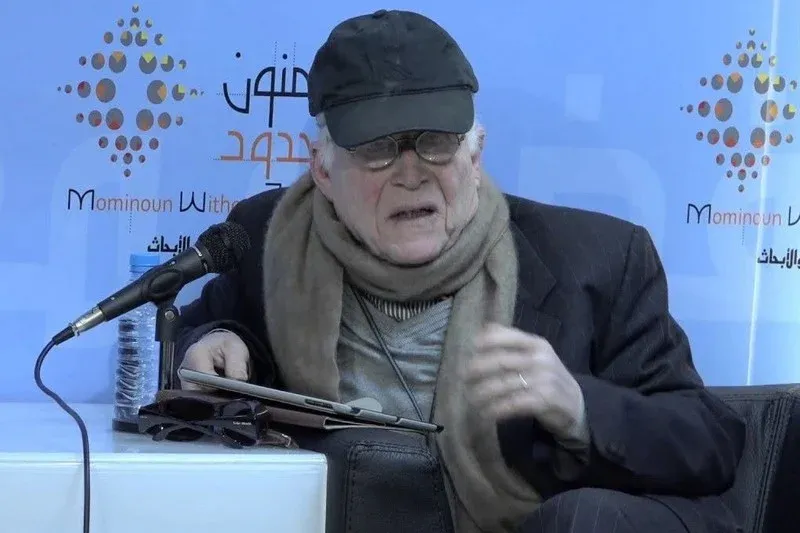

The Passing of Abdelali Elarmani Jamal: A Significant Philosopher in Morocco
Abdelali Elarmani Jamal, a distinguished Moroccan philosopher known for his profound contributions to Latin philosophy and Islamic thought, has passed away at the age of eighty-one. His academic journey was marked by a dedication to exploring the philosophical heritage of both Muslim and Greek traditions, delving into the history of sciences, linguistics, and their intricate relationships with logic. Jamal's scholarly work was characterized by a multilingual approach that enriched his understanding and dissemination of philosophical concepts.
Holding a doctorate in philosophy from the prestigious Sorbonne University in France, Jamal's professional background included significant roles such as a researcher at the National Center for Scientific Research in Paris and the director of scientific research at the French Centre. His influence extended to various universities, including Dar Al-Hekma in Rabat, where he was a visiting professor. In recognition of his exceptional contributions, he was awarded the "High Distinction Medal" from the Epistemological Studies Institute in Brussels, the Higher School of Translation in Tangier, and Abdelmalek Essaadi University in Tetouan during the Spring University of 2019.
The philosopher Mohammed Al-Masbahi expressed his deep sorrow over Jamal's passing, highlighting his active participation in the five 'Symposium Averroicum' gatherings held in cities such as Fez, Cologne, and Harvard, culminating in Marrakesh in 1998, which marked the 800th anniversary of Ibn Rushd's death. Jamal was renowned for his ability to merge philosophy with Sufism, demonstrating a strong inclination towards the mystical dimensions of thought.
Academic Ahmed Al-Farak noted that Jamal was a capable researcher who preferred to work behind the scenes, eschewing the limelight. He was not only knowledgeable about Islamic philosophical heritage but also engaged in deconstructing the mechanisms that shaped the 'logos' within the context of the Arabic linguistic tradition and its intersection with Greek thought. His philosophical inquiries centered around the complex relationship between logic and grammar, illustrating a foundational moment in understanding the limits of linguistic reasoning and its capacity to encompass universal laws of thought.
Professor Mohamed Salah Bouchtala from Marrakech recounted Jamal's profound philosophical journey, emphasizing his belief that knowledge lacking the tranquility of the heart is ultimately incomplete. He reflected on Jamal as a devoted son of Marrakesh, who embodied a rare synthesis of philosophy and spiritual refinement, seamlessly bridging the intellectual worlds of Aristotle, Ibn Rushd, Ibn Arabi, and Sidi Belabbas Al-Sabti, showcasing a harmonious blend of rigorous thought and spiritual depth.
Two months prior to Jamal’s passing, Tayeb Weld Al-Arusi, director of a chair at the Arab World Institute in Paris, wrote in the newspaper “Al-Arab” about Jamal’s extensive intellectual trajectory, describing him as an archetype of the encyclopedic intellectual who transcended narrow specializations. His rigorous academic training, which combined Islamic-Arab cultural heritage with Western philosophical traditions, allowed him to return to original texts in philosophy, history, and religious thought, facilitating a comparative approach to major intellectual issues through historical analysis and philosophical critique.
Al-Arusi also pointed out the fundamental role that Sufism played in Dr. Jamal’s thought, emphasizing that Jamal did not regard Sufism as a mere spiritual experience detached from reason and science. Instead, he saw it as an essential dimension of human experience that complements philosophical inquiry. For him, Sufism represented a quest for balance between intellect and spirit, knowledge and emotional experience, advocating a dialogue between philosophy and spirituality that transcends the artificial dichotomy between reason and faith. His intellectual endeavors were thus an attempt to restore the spiritual dimension within Islamic culture through a rational, methodologically balanced framework.
In conclusion, Al-Arusi lauded Dr. Jamal for his unwavering commitment to justice and truth, underscoring his status as an independent thinker who resisted external pressures or temptations that might have swayed his convictions. He remained a paragon of intellectual commitment to the values of truth, justice, and freedom, fully embracing the belief that the role of thinkers extends beyond the mere production of knowledge to include the advocacy of significant human values.
As reported by hespress.com.