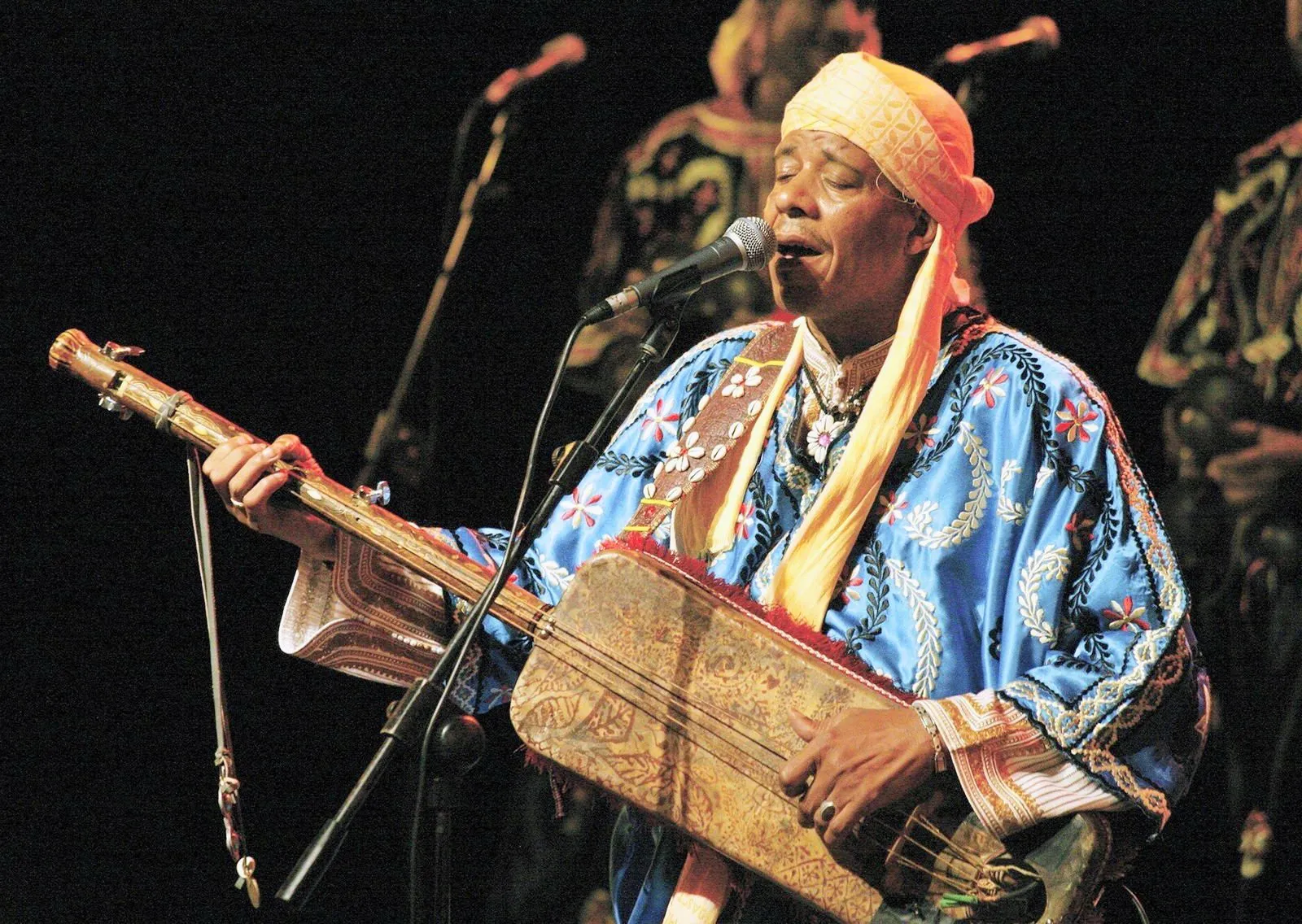

On August 31, 2026, the world of Moroccan music mourned the passing of Aziz Baqbou, a distinguished figure deeply intertwined with the art of Gnawa music. His lengthy artistic journey has left a significant imprint on the national musical and cultural landscape, showcasing the profound impact he had on preserving and promoting this rich heritage both within Morocco and beyond.
As reported by Moroccan media sources, Baqbou succumbed to a prolonged illness, leaving behind a legacy that spans decades. He was a member of a family renowned for their contributions to Gnawa music, being the brother of the late master Ahmed Baqbou, and he collaborated artistically with the late Mustafa Baqbou. This familial tradition has played a crucial role in the preservation and evolution of this musical genre, ensuring its continued relevance in contemporary cultural contexts.
Throughout his active years, Aziz Baqbou participated in numerous artistic events and festivals held in cities such as Marrakech, Essaouira, and Rabat. His involvement in the Gnawa and World Music Festival in Essaouira was particularly noteworthy, as he played a vital role in introducing and popularizing Gnawa music to a broader audience. His performances were not limited to traditional renditions; he also explored innovative collaborations that fused Gnawa with various other musical styles, a trend that has become a hallmark of major Gnawa festivals and contributed significantly to the art form's visibility.
The passing of Aziz Baqbou comes at a time when Gnawa music has attained a prominent status within Morocco's cultural heritage. In 2019, UNESCO recognized its cultural and artistic value by inscribing it on the Representative List of the Intangible Cultural Heritage of Humanity, marking a significant international acknowledgment of its importance.
With the departure of master Aziz Baqbou, Morocco's Gnawa scene loses a pivotal figure who played an essential role in transitioning this art form from traditional performance spaces to national and international festival stages. He leaves behind an artistic and familial legacy linked to the Gnawa school, while other names from his generation and subsequent ones continue to carry the torch of this heritage, ensuring its ongoing presence in the Moroccan cultural sphere.
As reported by marrakechpost.com.