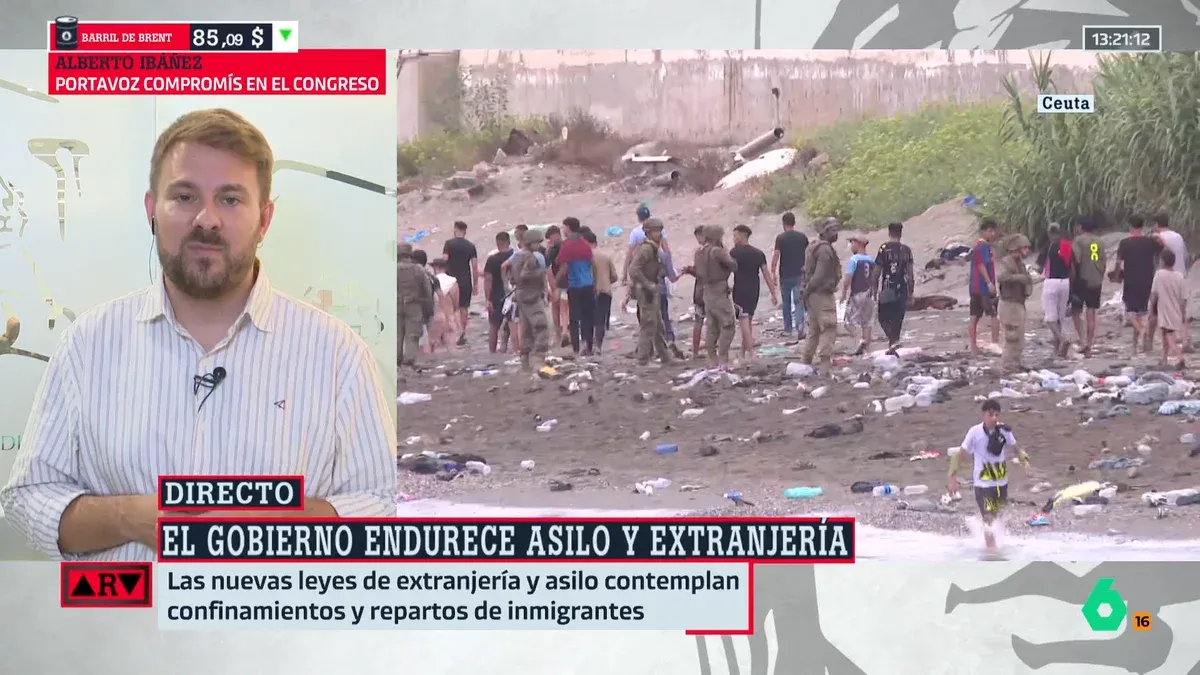

The Ongoing Migration Crisis and Its Political Ramifications
The migration crisis in Ceuta continues to stir significant political tension within the Spanish government. In the face of an unprecedented influx of approximately 80,000 individuals entering irregularly, the socialist faction is advocating for the maintenance of amicable relations with Morocco. Conversely, some coalition partners are urging the Spanish Socialist Workers' Party (PSOE) to openly identify Morocco as the instigator of what they describe as a "hybrid attack." This divergence in approach highlights the complexities and challenges faced by the government in managing both international relations and domestic security.
Alberto Ibáñez's Critique of Government Response
Alberto Ibáñez, the spokesperson for Compromís in the Spanish Congress, voiced his concerns during an appearance on Al Rojo Vivo, emphasizing that, nearly a month after the migration surge, the PSOE has yet to acknowledge the severity of the situation and has refrained from naming the Moroccan king in this context. He characterizes the events in Ceuta as a direct "hybrid attack from Morocco," demanding that the government hold Rabat accountable for the tragic loss of more than 100 lives during this crisis. Ibáñez criticized the government's focus on proposed reforms to immigration laws as a diversion from the core issue at hand, stating, "Shifting attention to this matter is a mistake." Furthermore, he expressed dissatisfaction with the timeline of Prime Minister Pedro Sánchez's upcoming appearance before Congress, which he feels is delayed, suggesting that although moving the date from September 9 to September 3 is an improvement, it still comes too late to address urgent concerns. In his view, prompt and decisive action is necessary to tackle the implications of this migration crisis effectively.
As reported by lasexta.com.