

The Controversial Claims of COPE Regarding Morocco's Existence
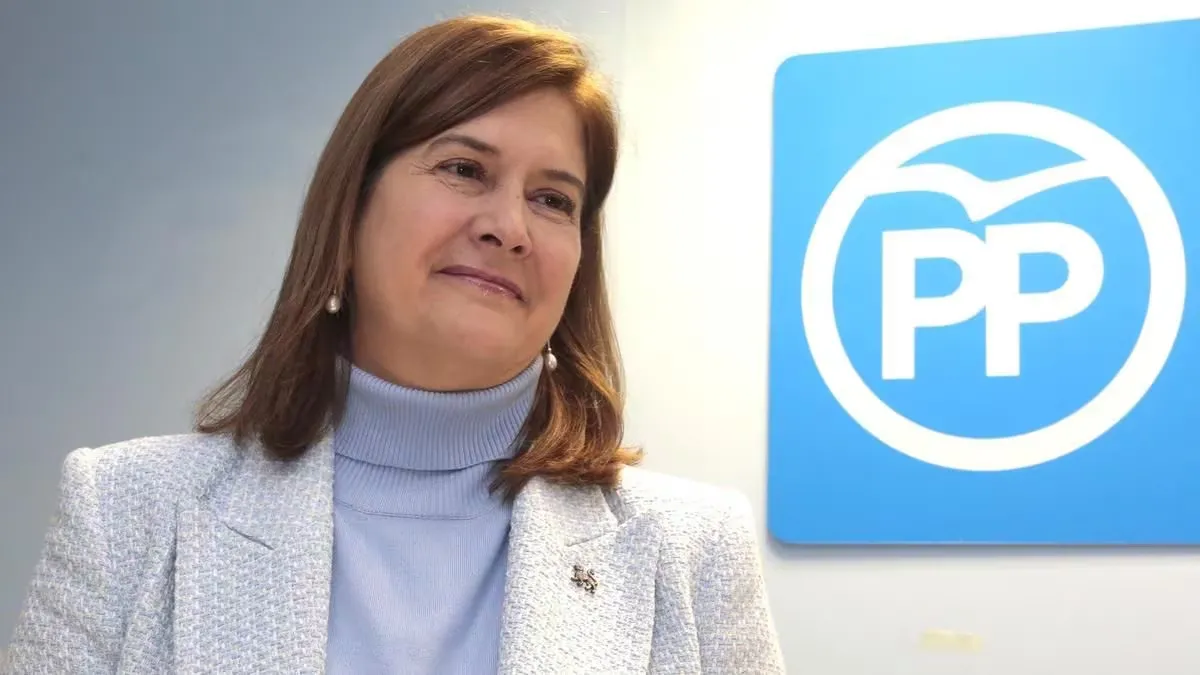
Recently, COPE (Cadena de Ondas Populares Españoles) dedicated over twenty minutes of its program, La Tarde, to the controversial assertion that Morocco essentially emerged from nowhere in 1957. To support such a staggering claim, the network invited Margarita Torres, introduced merely as a "historian," without any opposing voices to challenge her statements or provide necessary context. Torres confidently stated that "until 1957, the Kingdom of Morocco did not exist" and that Ceuta and Melilla "have never been Moroccan." Not only did COPE broadcast her assertions without a shred of verification, but they also featured them prominently, dismissing Moroccan claims as a "pure fantasy" devoid of historical foundation.
The Questionable Authority of Margarita Torres
The first issue at hand is the profile of the expert chosen to impart this peculiar lesson. While Margarita Torres is indeed a historian, her academic specialty does not pertain to Morocco, the Maghreb, or the historical relations between Spain and Morocco. According to her official profile at the University of León, she is a tenured professor of medieval history and completed her doctoral thesis in 1997 on "Noble Lineages in the Kingdom of León, Kinship, Power, and Mentalities from the 9th to the 13th Century." Her primary publications focus on the Kingdom of León, Castilian and Leonese nobility, the Cid, medieval wars, and genealogy.
Moreover, Torres is a member of the municipal council in León representing the Popular Party, as indicated by the official composition of the municipal assembly, and was the party's candidate for mayor in 2023. While this background does not automatically discredit her opinions, it is relevant when she appears on a conservative media outlet to advocate an eminently political thesis regarding Morocco. COPE did not invite a recognized expert on Moroccan state history; instead, they called upon a medievalist whose work is centered on León, associated with the PP, and allowed her to make historically untenable claims for an extended period without posing a single challenging question.
The most glaring contradiction lies at the heart of Torres's own discourse. After asserting that Morocco did not exist prior to 1957, she acknowledges that "Moroccan sultans" signed treaties with Spain in 1767 and 1799. This revelation raises an unavoidable question: if Morocco did not exist, with whom was Spain signing these treaties? The 1767 document explicitly states it is a "Treaty of Peace and Commerce" concluded between Charles III of Spain and Sidi Mohammed ben Abdallah, distinctly titled as the "Emperor of Morocco." The text is available in the historical archives of public international law.
Spain was negotiating, concluding agreements, and thus maintaining diplomatic relations with Morocco nearly two centuries before the date Torres claims for the country’s inception. The United States also established relations with Sultan Mohammed III as early as 1777, later signing the Treaty of Peace and Friendship in 1786, recognized as the oldest bilateral agreement still in effect in American diplomacy, as explained by the U.S. Department of State.
Even the International Court of Justice had previously refuted the thesis propagated by COPE. In a ruling made in 1952, five years before the alleged emergence of the nation, the Court established that Morocco had maintained its status as a state in international law, including under the Protectorate. This ruling concerned rights stemming from treaties previously concluded between Morocco and the United States, and all relevant documents can be accessed on the official site of the International Court of Justice.
What transpired in 1957 was far simpler. Mohammed V, previously Sultan, adopted the title of King. The designation of the head of state changed, but no new country came into existence. Morocco regained its independence in 1956, after over four decades of French and Spanish Protectorates. Regaining independence does not equate to being born; the very principle of a protectorate suggests the prior existence of a political entity under tutelage. In Morocco's case, the Sultan, Makhzen, dahirs, and legal personality of the state were maintained.
Long before the Protectorate, Morocco experienced several centuries of political organization under successive dynasties. By the late 8th century, the Idrisids established the first major Islamic state centered on the territory of present-day Morocco. This was followed by the Almoravids, Almohads, Merinids, Wattassids, and Saadians. The current Alaouite dynasty has ruled Morocco since the 17th century, well before the formation of many contemporary states.
While the Morocco of the 9th century did not possess the exact borders, institutions, or official designation of modern Morocco, the same can be said for medieval Spain, which was not the constitutional state we recognize today. Expecting a country to have institutional and territorial continuity that is not demanded of any other represents a particularly crude manipulation of history.
Even the names of the two cities mobilized by COPE to build its narrative still bear traces of their North African geography and the civilizations that have succeeded one another there. "Ceuta" entered the Spanish language through the Arabic form _Sabta_, derived from the Latin _Septem_. Melilla appears in medieval Arabic sources as _Maliliyya_, while one hypothesis regarding its etymology links it to the Amazigh root _M·L·L_, associated with the color white. While these elements do not definitively settle a contemporary sovereignty issue, they are sufficient to shatter the narrative of cities whose three millennia of history would be exclusively "Hispanic."
COPE could defend the Spanish position on Ceuta and Melilla without erasing Morocco from the map for twelve centuries. They could have invited specialists on the Maghreb, confronted interpretations, and distinguished between history, law, and propaganda. Instead, they chose to lend their microphone to a historian without any verified specialization on Morocco, glossing over her political profile and transforming an easily verifiable falsehood into a supposed masterclass.
Marrakech did not come into existence in 1957; rather, what emerged that year was the title of king adopted by Mohammed V. Everything else is merely a semantic artifice too poor for a historian and too crude for a media outlet to disseminate without any verification.
As reported by fr.le360.ma.

