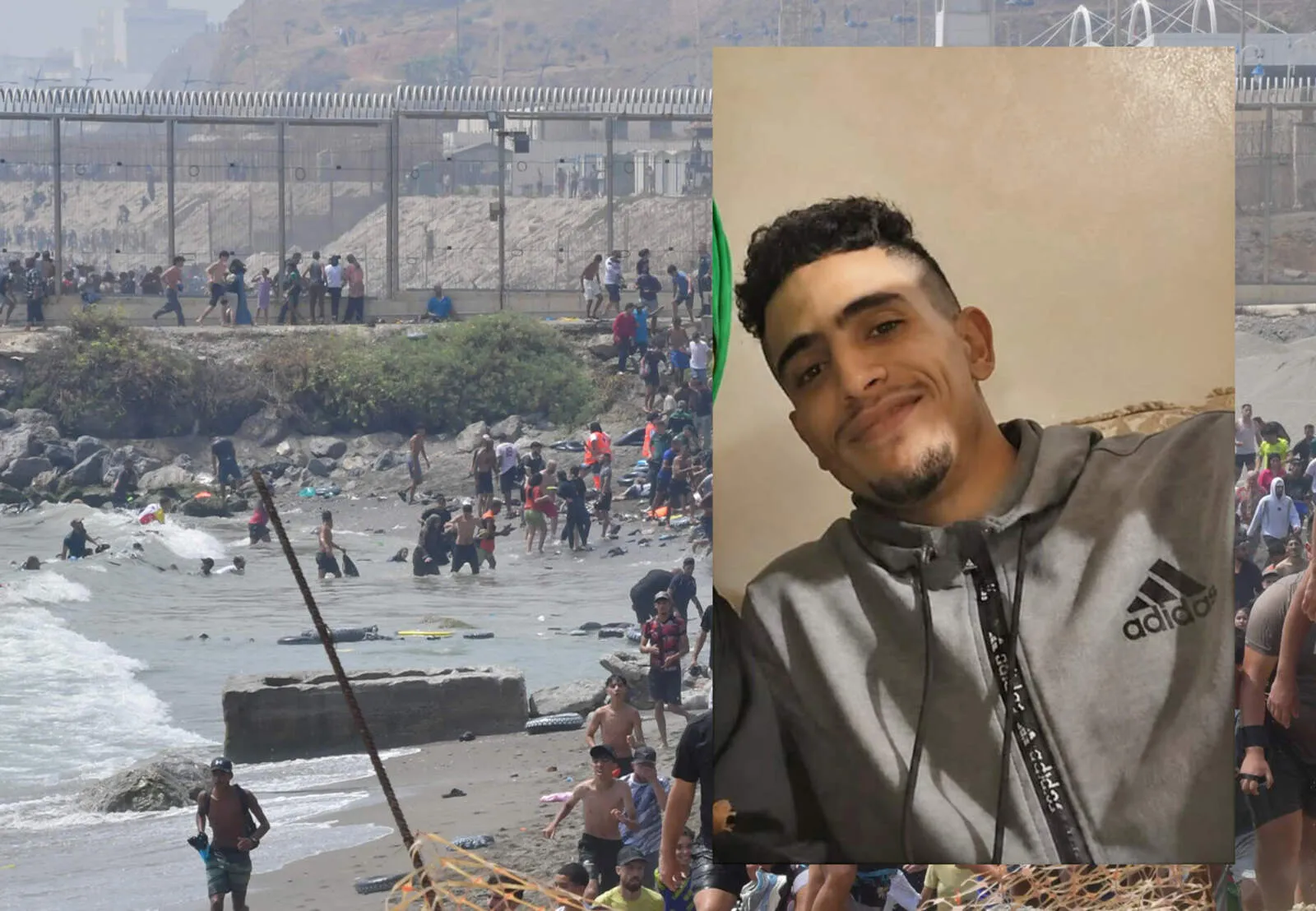
In the wake of an unprecedented mass migration, the Moroccan government, along with the Ministry of Interior and the National Security Delegation, has remained conspicuously silent. This silence is more astonishing than the historical march of migrants themselves. How can a government remain mute in a state of emergency? If they do not wish to explain this situation to us, they should at least elucidate it to the world. Why have we witnessed throngs of desperate individuals or dreamers seeking a better life? What has turned Morocco into a country that repels its own citizens?
This is certainly not a natural scene; the nation is not at war, is not threatened by famine, and does not suffer from civil unrest. In fact, Morocco is one of the few safe countries in a region rife with turmoil. So, why this exodus? After two weeks of desperate migration, the Justice Minister spoke up, accusing Spain of opening its doors and holding it accountable for the return of minors. However, what measures has Morocco taken to control its own borders? What benefit would Spain derive from allowing 70,000 people to cross its borders?
On a diplomatic level, regardless of the extent of their responsibility, Spain has not directly accused Morocco or assigned it any blame. This leads us to ponder: which is more grave, the government's silence or its statements? The reality on the ground remains striking; the neglect that migrants experience is a humanitarian tragedy. Spain has, in a sense, relinquished its responsibility. Perhaps there is a future lesson for dreamers: the other side is not necessarily kinder. Nevertheless, we can only demand accountability from our own officials. Accountability? Well, past experiences have spoiled us, and we believed that a little accountability might be possible.
We are currently living through the most dismal times in contemporary Morocco, following the retreat of the 'democratic process,' the resurgence of an iron-fisted approach, and the resurgence of administrative parties, with every journalist who dares to express an opinion outside the permissible facing imprisonment. We thought we had hit rock bottom, a state which seemed better than what is happening in the region. But that is not the case. This has unfolded as we await elections that will not bring about change, not because change cannot emerge from the ballot box, but because there is no room for change in today’s Morocco.
Moroccans have never reached a level of despair comparable to what they are experiencing now. If people were given the choice to migrate, millions would do so, not solely due to financial constraints and the scarcity of job opportunities, but because of the rampant corruption that has extinguished any hope for a better tomorrow. Yesterday seemed better, and suddenly they find themselves in this dire situation; there are no prospects for change or improvement in their lives, facing the indifference of the government and officials, big and small, towards a populace that is left to perish, burn, or emigrate.
When the youth of 'Generation Z' took to the streets, they expressed their sentiments bluntly: corruption is devouring the country. Their primary slogan was the eradication of corruption, as they perceive it as a massive and overwhelming force crushing the people under its weight. They witness its growth from schools, where certain groups can enroll in elite institutions even without meeting the required grades, extending to master’s programs and doctorates, and positions that, unless reserved for relatives of the powerful, are openly sold.
After the changes that occurred in 2011, the people experienced a healthy atmosphere, marked by a general sense of relief and hope for social justice and a better future. Even those who left the country years ago regretted their hasty departure, missing the chance to be part of a historic change. However, conditions gradually worsened as freedoms contracted across the region, though Morocco remained an island of positivity; the difference in freedom levels compared to its neighbors was significant. Now, it seems that those in the driver’s seat are indifferent to the deteriorating conditions resembling those in neighboring Maghreb countries, where oppression and disdain for the populace prevail.
Can economic development occur in authoritarian states? Occasionally, but these are unique cases, with their pros and cons. Morocco is certainly not China, which, despite lacking political pluralism, operates under an ideology that abhors corruption, combats it reasonably, and thrives on a culture of hard work and merit, providing opportunities for advancement. In contrast, the Moroccan environment encourages undeserved ascension while deepening disparities... A Morocco like this does not wish for its citizens to remain; it has ceased to be a homeland for them and has instead become a sanctuary for the privileged.
As reported by alaraby.co.uk.