
The Unresolved Crisis of Ceuta
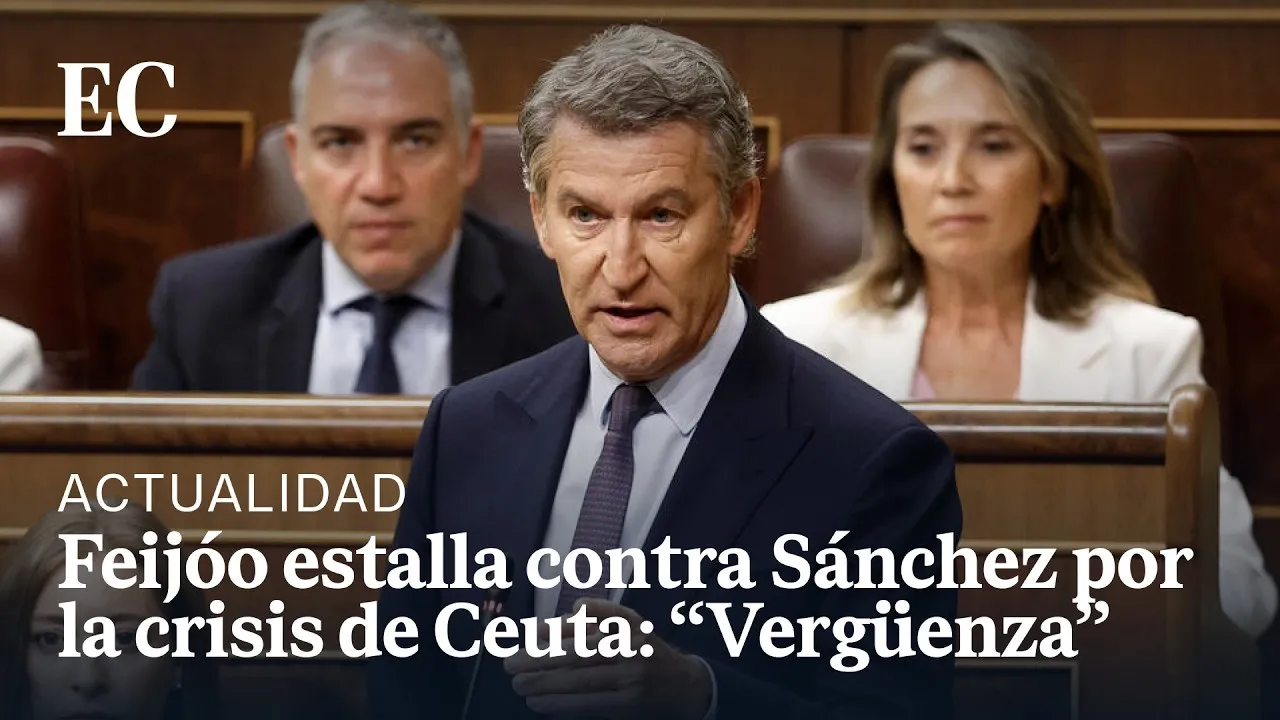
The Ceuta crisis remains a pivotal source of political tension both within the Spanish Parliament and beyond. Alberto Núñez Feijóo, leader of the Popular Party (PP), attended the control session with a clear aim: to extract some clarity from Prime Minister Pedro Sánchez regarding the resolution of a conflict that has only escalated. Feijóo sought to place Sánchez in a compromising position, confronting him with the contradictions that the government has faced since the onset of this crisis. However, his efforts were met with a wall of silence. The Prime Minister provided no details or measures to address the situation, instead attempting to redirect the narrative by blaming the PP for “throwing spanners in the works” of the crisis.
Feijóo posed three critical questions to Sánchez, urging him to clarify when he last communicated with Morocco, how many times he has done so since July 30, and what inquiries he has made regarding the invasion of Spain and the responses received. He pointed out that Morocco reaffirmed to the European Union its willingness to accept all individuals who entered Ceuta illegally, questioning why these repatriations have not commenced. “There are three possibilities: either he doesn’t want to resolve it; or he aims to prolong the issue and is incompetent; or someone is lying here,” Feijóo stated, pressing for answers on why the European law permitting immediate returns has not been enacted by the government.
Despite the barrage of inquiries, Sánchez remained reticent, failing to address any of Feijóo’s questions during either his initial response or the follow-up. Instead, he resorted to a victimhood narrative, trying to deflect responsibility. “Yesterday, a proposal was made in the European Parliament to suspend the association agreement with Morocco. But if that is the country to which the immigrants are being returned, are you trying to prolong the problem or resolve it, Mr. Feijóo?” Sánchez retorted, while boasting about Spain’s position as a top destination for international investment.
Political Fallout and Escalating Tensions
As the session progressed, Sánchez accused the PP of obstructing solutions to the Ceuta issue, asserting that their patriotism was merely superficial. Feijóo countered by accusing the government of attempting to downplay the crisis and shielding those responsible, particularly in reference to Morocco—a sentiment echoed by various PSOE partners in the hemicycle. “Do not ask for more patience, as it has run out,” he concluded emphatically. Sánchez wrapped up his remarks by promising that Ceuta would emerge “strengthened” from the crisis due to “government support” and in spite of opposition, yet he again evaded the crucial details regarding the logistics of returning migrants to Rabat or whether additional unaccompanied minors would be sent to the mainland.
The atmosphere during the control session was charged with tension, as noted by Francina Armengol, who remarked, “I don’t know what you had for breakfast today, but it hasn’t sat well with you.” Neither Junts nor Bildu questioned Sánchez about the migration emergency, yet all PP spokespersons capitalized on the Ceuta matter to criticize various ministers. The PP has prioritized this issue, even sidelining sensitive topics such as corruption and delaying the presentation of their regional candidates. Ester Muñoz, the PP spokesperson in Congress, reiterated the question Sánchez had neglected to answer: “Have you spoken with the King of Morocco?” However, the economy minister also failed to provide clarity. “Ceuta will return to normal, but the question is whether you will assist or continue to hinder progress,” he responded.
Juan Bravo, the PP’s deputy secretary of finance, expressed frustration, stating, “You can manage 23 million tax returns but can’t process 12,000 expulsion files.” He emphasized that Ceuta, Melilla, and Spain as a whole are beyond the government's capability. Only Cayetana Álvarez de Toledo, the PP's deputy spokesperson, deviated from the script, challenging Foreign Minister José Manuel Albares about whether they would indeed veto Ukraine’s entry into the EU to appease Puigdemont, after Albares indicated that the Sánchez government would block any EU expansion unless the inclusion of Catalan, Basque, and Galician as official EU languages was accepted—a major commitment pending with Junts.
As reported by elconfidencial.com.