

Humanitarian Crisis Unfolds in Ceuta
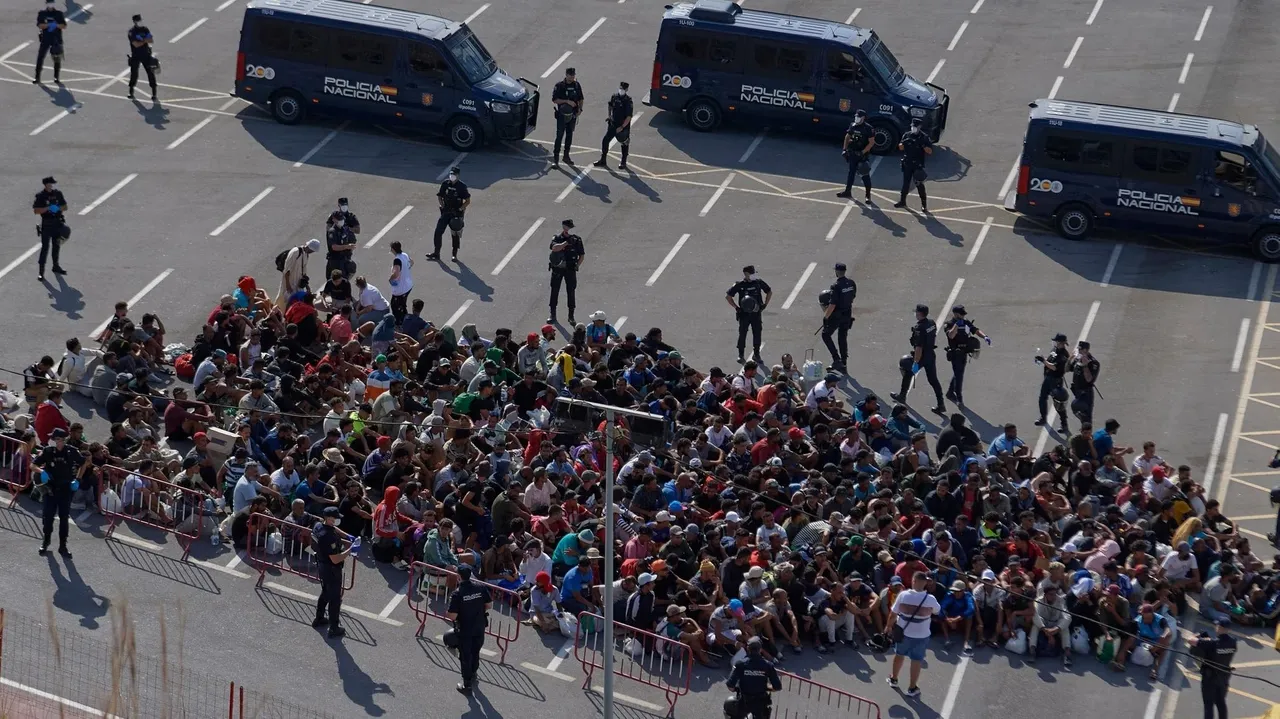
In the Spanish territory of Ceuta, a dire humanitarian crisis has persisted as thousands of migrants sought refuge on the outskirts of the city. For weeks, these individuals congregated on a beach, creating makeshift shelters from cardboard and reeds, while safeguarding their scant belongings in tattered plastic bags. However, on Thursday morning, many of them were escorted by Spanish police to temporary shelters, leaving behind remnants of their stay—abandoned mattresses, plastic chairs, and scraps of tarp. This poignant scene illustrates the complexities and ongoing struggles within Ceuta, where the aftermath of an unprecedented influx of more than 72,000 migrants from Morocco has left the local authorities grappling with the remnants of chaos. Spanish officials are still trying to ascertain the number of migrants remaining in a city of about 84,000, with estimates suggesting that up to 10,000 individuals, including approximately 2,000 minors, might still be present.
In the wake of the initial border surge that tragically resulted in at least 90 fatalities, many migrants chose to return to Morocco, realizing the formidable obstacles they faced in Ceuta and their slim chances of reaching mainland Europe. Nevertheless, thousands have opted to remain hidden in forests, beaches, and near migrant reception centers, contributing to the strain on local resources. The United Nations refugee agency has flagged significant humanitarian challenges in Ceuta, particularly regarding access to basic services, food, and shelter for the migrants. While the majority of recent arrivals hail from Morocco, others have fled war-torn nations such as Sudan, Mali, and Yemen.
Efforts to Address the Crisis Amidst Growing Discontent
The Spanish government has committed to addressing the plight of the remaining migrants in Ceuta. Elma Saiz, Spain’s Minister of Inclusion, Social Security, and Migration, announced that accommodations have been arranged for 1,800 migrants in a parking lot and a military facility. However, as reported by an Associated Press photographer, many migrants continue to roam the streets, while hundreds of women and children are sheltering in makeshift facilities operated by local residents. One migrant, Khadija Rifai, expressed her frustration, noting that while assistance is available for minors, adults like her are left in uncertainty without clear solutions from the authorities. Many migrants, including Rifai, who left Morocco in search of better opportunities, are left pondering their futures and hoping to eventually reach mainland Spain.
Ceuta's Mayor, Juan Jesús Vivas, has voiced his discontent with the national government's response, accusing it of failing to control the situation effectively. In light of the continuing crisis, the Spanish government has allocated emergency funds totaling 6.5 million euros ($7.6 million) to support Ceuta in accommodating the new arrivals. The ministry emphasizes the need for a thorough process to handle each case individually, which involves verifying the nationality and background of the migrants, determining eligibility for asylum, and addressing those who must leave, either voluntarily or forcibly. Amid the uncertainty, many migrants are willing to wait and continue to express their desire for a path forward, as they gather in protest, brandishing signs demanding asylum and expressing their hopes for a better future.
As reported by newsday.com.
