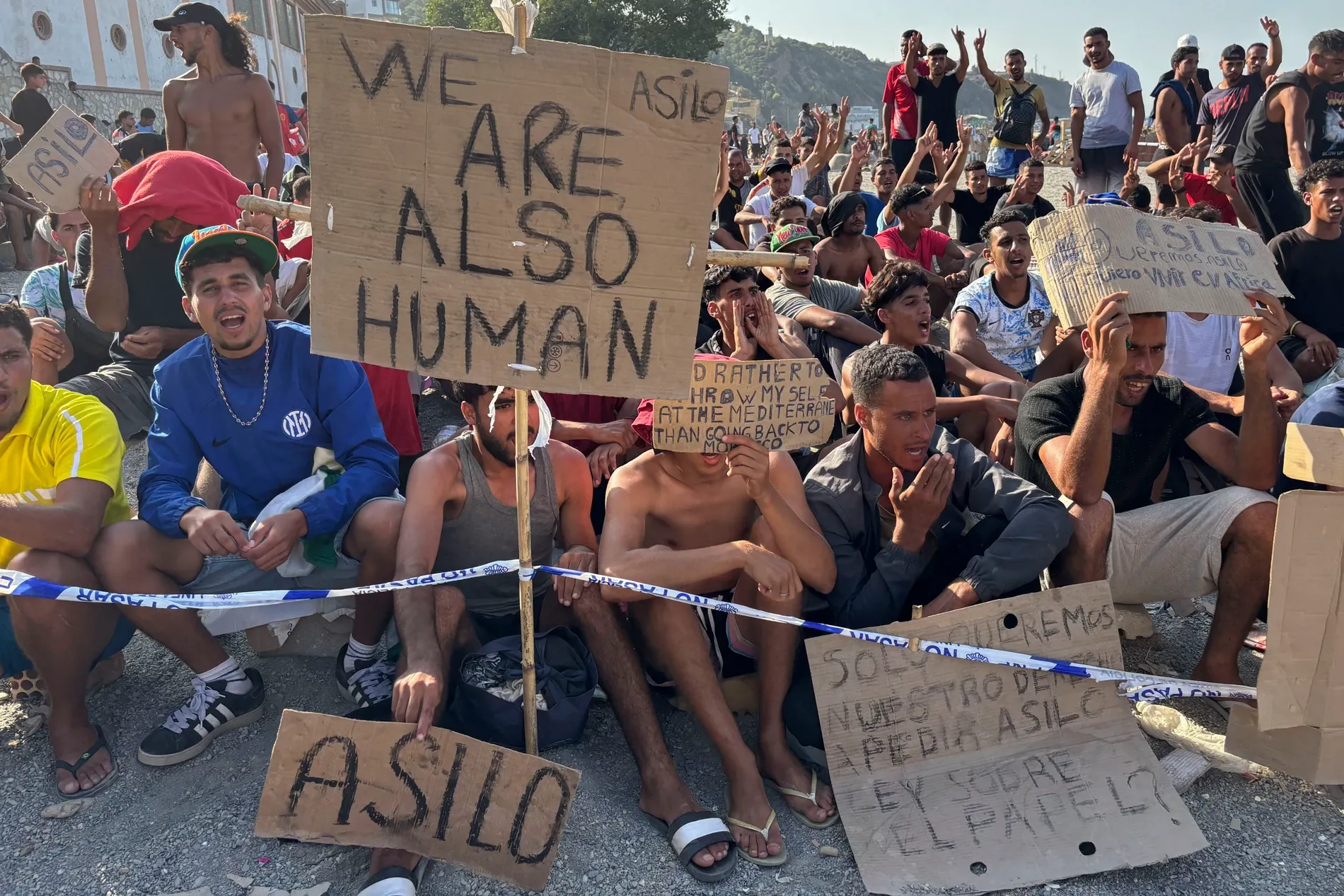

The events in Ceuta are a stark reminder of the persistent migration crisis that continues to unfold across Europe. The recent surge of tens of thousands of migrants is unlikely to be the last, with potential future crises looming in locations such as Melilla, Lampedusa, Lesbos, Crete, or the Canary Islands. When one route closes, migrants instinctively seek alternative pathways to reach Europe. This trend reflects a broader pattern of desperation and resilience among those fleeing dire circumstances.
Among the recent arrivals in Ceuta were not only Moroccan nationals but also exhausted Sudanese migrants who had embarked on a perilous journey across the Mediterranean. Many of these individuals had spent years attempting to escape conflict in Libya and Tunisia, only to find themselves caught in a web of obstacles on their quest for safety. With over four million people displaced by the ongoing civil war in Sudan, their plight is emblematic of a larger humanitarian crisis. In a notable shift, migrants managed to organize themselves swiftly through social media, marking a significant change in how such movements are coordinated.
The sheer volume of individuals attempting to cross into Ceuta overwhelmed both Moroccan and Spanish security forces. However, the subsequent call for a second wave of migration was met with a robust response from governments, which deployed an unprecedented number of security personnel to deter further attempts. This time, no migrants successfully reached the Spanish side, reinforcing Morocco's assertion of its control over its borders, a message directed at both Europeans and its own citizens.
The Challenge of Sustaining Security Measures
Despite the initial influx, most of the 6,000 Moroccan police officers deployed to manage the situation have since withdrawn. Maintaining such a large security presence on a daily basis is simply not feasible. While the security apparatus may ensure temporary stability at the borders, it cannot indefinitely suppress a youthful population yearning for better opportunities. Among the recent arrivals were nearly 2,000 children and adolescents, highlighting the urgency of the situation.
A single online rumor fueled this latest wave of migration: that those who swam to Ceuta could initially remain in Spain. This distorted interpretation of a Spanish court ruling ignited a wave of distrust among the youth, who feel disillusioned about their futures in a homeland that seems to offer little hope.
This sentiment was reflected last fall when Generation Z mobilized online, organizing the largest protests in Morocco since the Arab Spring of 2011. Their rallying cry, "Clinics instead of football stadiums," called for increased funding for healthcare, education, and universities, showcasing a deep-seated frustration with the status quo.
A Complex Landscape of Migration and Development
This discontent is particularly striking given that Morocco is experiencing significant economic growth and modernization. The country is in the process of constructing the largest football stadium in the world in anticipation of the 2030 World Cup. Unlike the refugees from sub-Saharan Africa who also risked their lives at sea, the Moroccan youth are not fleeing extreme poverty or civil war. Moreover, in neighboring Algeria, which is rich in natural gas, approximately 11,000 young people have attempted to cross to the Spanish Balearic Islands in the past year and a half.
Ceuta serves as a poignant reminder of the underlying forces driving migration. Interestingly, the overall number of irregular migrants attempting to reach Europe via sea has decreased, a trend that remains unaffected by Spain's recent legalization of over a million migrants, contrary to some fears. This shift underscores the importance of cooperation with countries like Morocco in managing migration flows. The European Union has effectively outsourced border security to Morocco, which is increasingly asserting its desire to be recognized as more than just a gatekeeper for Europe, highlighting the political and financial implications of this arrangement.
In light of the recent migration crisis, Rabat is seeking to renegotiate its relationship with Europe, aiming for increased financial support and acknowledgment of its positions, particularly regarding the Western Sahara conflict. The EU, particularly under the leadership of figures like Giorgia Meloni, has shown little regard for human rights standards when engaging with North African leaders, including the controversial cooperation with Libyan warlord Khalifa Haftar and the authoritarian Tunisian president Kaïs Saïed, resulting in inhumane treatment of migrants.
At the Muslim cemetery in Ceuta, the growing rows of nameless white concrete graves serve as a stark memorial to the victims of this deadly Mediterranean migration policy, with 76 new graves added recently, a somber indication that this crisis is far from over.
As reported by faz.net.