
The drama surrounding the final of the Africa Cup of Nations (AFCON) 2025 is far from over. The Court of Arbitration for Sport (CAS) is set to hear Senegal's appeal against the decision made by the Confederation of African Football (CAF), which altered the outcome of the final match. Until the hearing takes place, Morocco remains the official champion of the tournament.
Months after the final whistle, the AFCON 2025 finale continues to resonate, with the next chapter unfolding in Lausanne. The CAS has scheduled a hearing for October 8, 2026, to address the appeal filed by the Senegalese Football Federation (FSF) against the CAF and the Royal Moroccan Football Federation (FRMF).
It is important to clarify at the outset that there has been no verdict from the CAS as of now. The upcoming hearing on October 8 will mark another step in the ongoing proceedings rather than the announcement of a decision. The tribunal has noted that the parties did not request expedited procedures and that a ruling will not be delivered on the day of the hearing.
From the Field to the Courtroom
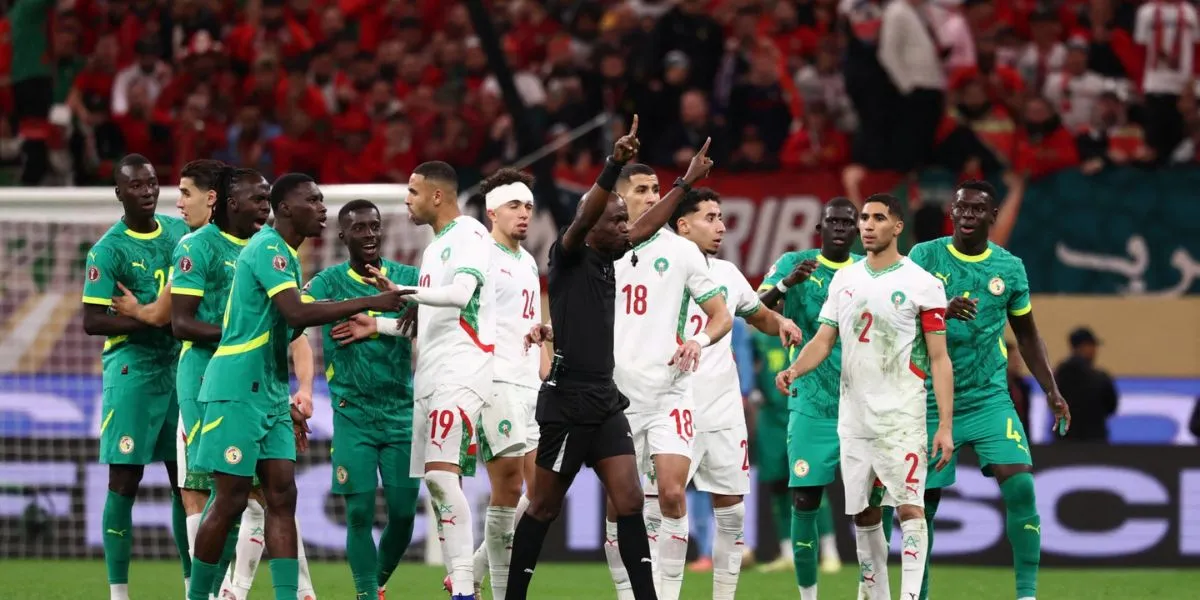
To grasp the significance of the appeal, one must revisit the events that transpired on the night of the final. Senegal claimed victory on the field with a 1-0 score after extra time, amidst tense moments that saw several Senegalese players temporarily leave the pitch before returning to complete the match.
However, the matter did not conclude with the sporting result. Following several appeals and disciplinary actions, the CAF Appeal Jury issued a ruling on March 17, 2026, that radically changed the context. Citing Article 84 of the AFCON regulations, the jury declared Senegal to be forfeit and recognized the match with a score of 3-0 in favor of Morocco. The initial ruling was overturned, and the objection raised by the FRMF was upheld.
This decision is now being contested by Dakar before the CAS.
What Senegal is Seeking
The FSF's appeal was officially registered with the CAS on March 25, 2026. Senegal's request does not merely call for a score revision; the FSF seeks the annulment of the CAF's decision and aims for the CAS to recognize Senegal as the rightful winner of AFCON 2025.
This case extends beyond a mere disciplinary issue; it aims to assess whether the CAF's decision to declare Senegal forfeit and award victory to Morocco can be legally upheld. The complexities arise from the divergent narratives presented by both sides.
From the Senegalese perspective, the focus remains on the outcome achieved on the field, as Senegal resumed play after the interruption and won the final. Conversely, the Moroccan side, represented by the FRMF, has leaned on the disciplinary provisions within the AFCON regulations to challenge Senegal's conduct. The CAF Appeal Jury concluded that Senegal's behavior fell under Articles 82 and 84, leading to their forfeit.
Thus, the CAS must evaluate the arguments from both parties and determine whether the interpretation applied by the CAF can be sustained.
As it stands, Morocco is recognized as the African champion according to the latest ruling in effect, an important detail amidst conflicting reports circulated on social media in recent months. The CAF Appeal Jury's decision from March 17 remains the applicable ruling: Senegal is declared forfeit, and the match is officially recorded as a 3-0 victory for Morocco. The appeal before the CAS does not in itself constitute a new sporting decision.
The CAS now faces the task of deciding whether to uphold or overturn this ruling.
Moreover, the situation has been muddied by various publications prematurely announcing supposed decisions from the CAS. Documents presented as official rulings have circulated on social media, prompting clarifications in the press and from the involved parties. The CAS's official calendar currently dispels some of these rumors: the hearing is set for October 8, 2026, and no judgment has yet been rendered in this matter. The tribunal itself emphasizes that official updates regarding the proceedings should be verified through its channels.
Another noteworthy aspect is that the October 8 hearing will take place behind closed doors at the CAS headquarters in Lausanne. The tribunal has stated that the parties opted not to make the hearing public. The process follows a standard timeline, with no expedited procedures agreed upon by the parties involved. This implies that October 8 may not necessarily culminate in a new media spectacle or an immediate verdict.
After the discussions, the arbitrators will need time to deliberate before reaching a decision. What happens after October 8 is a crucial point for the public. The CAS has not announced a date for its ruling, and its statement from July 24 explicitly mentions that the judgment will not be made on the day of the hearing.
Three potential outcomes can be anticipated: the CAS may affirm the CAF's ruling, annul it, or modify certain elements of the contested decision, depending on the conclusions reached by the arbitration panel. However, the core of the Senegalese request remains: to have the CAF's decision annulled and to be recognized as the AFCON 2025 champion.
Thus, the final word has yet to be spoken. The Morocco-Senegal final has experienced two lives; the first played out on the pitch at the Prince Moulay Abdellah Sports Complex in Rabat, where Senegal emerged victorious after extra time. The second phase shifted to the disciplinary and legal arena, with the CAF's March 17 decision declaring Senegal forfeit and awarding the match to Morocco with a score of 3-0. The third stage will take place in Lausanne, where the CAS will review Senegal's appeal on October 8. Yet, the verdict will not be revealed that day. In the meantime, one status remains clear: Morocco is still officially recognized as the winner of AFCON 2025, while Senegal continues to challenge this decision before the highest sports arbitration body.
As reported by lesiteinfo.com.