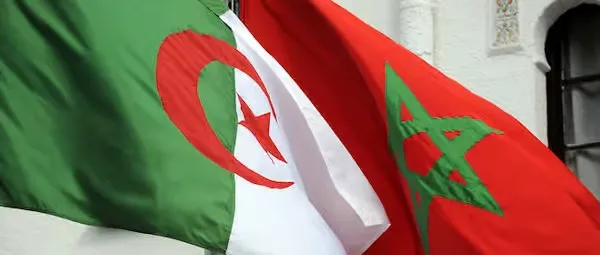

Reconsidering Morocco-Algeria Relations: A Framework for Reconciliation
The enduring rivalry between Morocco and Algeria, which has persisted since the early years of their respective independences, prompts a critical examination of the potential for reconciliation. This topic is central to the study published by the Policy Center for the New South, titled "The Moroccan-Algerian Conflict Under the Lens of the Reconciliation Paradigm," authored by Fadoua Ammari and Rida Lyammouri in July 2026. The authors do not present reconciliation as an immediate solution or an inevitable outcome; rather, they propose an analytical framework designed to consider the conditions necessary for a gradual transformation of a relationship historically characterized by distrust.
At the heart of their argument is the understanding that the Morocco-Algeria relationship cannot be solely defined by the dispute over Western Sahara. While this issue has become the focal point of their rivalry, its roots extend into a deeper historical context. The Sand War of 1963, for example, significantly entrenched antagonistic strategic perceptions between the two nations. Colonial-era border disagreements have left a lasting imprint on their mutual representations, further complicating the dynamics of their relations.
Since the mid-1970s, the Sahara conflict has emerged as the primary axis of confrontation, imparting a new geopolitical and diplomatic dimension to their rivalry. It has intertwined with issues of sovereignty, self-determination, and regional balance. However, the Sahara conflict has not solely generated antagonism; it has reshaped the fault lines of their relationship and broadened its international implications. Recent history also illustrates that there have been periods of rapprochement, notably at the end of the 1980s when diplomatic relations were restored, and the Arab Maghreb Union (UMA) was established in 1989. Unfortunately, this hopeful dynamic quickly dissipated, particularly following the closure of the land border in 1994 and the subsequent severing of diplomatic ties by Algeria in 2021. The study interprets these events as indicators of a conflictuality that has gradually become institutionalized.
As reported by lebrief.ma.
Shifting the Paradigm: Towards a Sustainable Relationship
The historical depth of the Morocco-Algeria relationship leads the authors to advocate for a paradigm shift. Realist approaches can elucidate power dynamics and strategic rivalries, while juridical and diplomatic readings highlight the Sahara's centrality. Economic analyses reveal the costs associated with the fragmentation of the Maghreb. However, the study argues that each of these frameworks leaves a critical question in the shadows: how can the relationship itself be sustainably transformed?
The concept of reconciliation is employed here with precision. It does not imply erasing differences or imposing a shared historical narrative, nor does it suggest that Rabat and Algiers find themselves in a post-war or post-conflict transition. The authors explicitly distance themselves from a mechanical application of transitional justice models, instead viewing reconciliation as a forward-looking framework applicable to a prolonged interstate rivalry.
In this context, reconciliation is defined as a long-term process encompassing trust reconstruction, acknowledgment of political wounds, transformation of perceptions, and a gradual reopening of cooperative spaces. It necessitates a "de-securitization" of the relationship, meaning a gradual transition of certain subjects from a constant threat narrative to one of dialogue, negotiation, or technical cooperation. The study emphasizes the distinction between normalization and reconciliation, where the former may restore diplomatic channels or temporarily reduce tensions, while the latter seeks a deeper transformation of the mechanisms that perpetuate hostility.
The authors argue that reconciliation cannot result from a spectacular summit or a mere political gesture; rather, it should advance through successive sequences. The first level would involve "minimal de-escalation," where the immediate goal is to restore discreet technical channels, limit hostile rhetoric, create incident management mechanisms, and pay special attention to humanitarian and familial situations stemming from the border closure and diplomatic rupture. The aim is not to resolve all disputes immediately but to recreate a minimum of predictability within the relationship.
The second level would focus on "building sectoral trust," beginning with areas where the political cost of cooperation is relatively low, such as health, climate, water, disaster management, and sanitary security. Academic and cultural exchanges could also facilitate the re-establishment of dialogue habits, while certain regional risks might warrant limited coordination when Morocco and Algeria's interests converge. This approach is based on the premise that regular and predictable cooperation can gradually alter perceptions; however, economic integration alone cannot guarantee political trust. Thus, economic rapprochement must be complemented by deeper work on bilateral relations.
In this analysis, the land border emerges as both a political and human issue. Its closure symbolizes the material separation between the two societies. The authors do not envision an immediate and complete reopening but rather advocate for gradual, negotiated, and secure forms of movement, particularly for familial or academic reasons. Such an evolution, they argue, would have implications beyond mere mobility, as it could help reintroduce human relations in a space where separation has become the norm.
The societal dimension is crucial in this framework. Academics, media, associations, economic actors, diasporas, and cultural institutions could serve as intermediaries between the two societies. The aim is not to position civil society as an automatic solution to the conflict but to create multiple bridges so that the relationship is not solely defined by state and security apparatuses. The issue of memory work is another sensitive component; the authors believe that sustainable transformation cannot overlook the wounds and perceptions accumulated over decades. It is not about seeking a shared memory or a unique historical narrative but at least recognizing the existence and legitimacy of the other's perceptions.
The Sahara question, however, does not disappear from the equation. The study acknowledges its centrality in the Morocco-Algeria relationship while inviting a distinction between addressing this dispute and managing the overall bilateral relationship. The aim is to allow both dimensions to evolve in parallel, enabling the ongoing treatment of the Sahara issue in its diplomatic, legal, and humanitarian frameworks while preserving spaces for cooperation on other topics. Differentiating these matters could facilitate cooperation despite fundamental divergences.
Moreover, the authors do not present reconciliation as a unilaterally driven process. They stress the need for minimal reciprocity and gradual, verifiable commitments that, at least initially, are reversible. Morocco's "outstretched hand" policy towards Algeria is viewed as a potential resource for a de-escalation strategy, yet the authors caution that a stated willingness alone does not constitute a reconciliation process. De-securitization is a prerequisite in this regard, involving the development of mutual notification mechanisms, technical contact points, and concerted incident management protocols. The goal is to transition from a relationship characterized by closure and suspicion to one structured by predictability and communication.
In the long term, the authors envision a genuine "relational architecture" that combines memory work, sustainable de-securitization, cautious re-institutionalization of Maghreb cooperation, and differentiated management of the Sahara dossier. However, this architecture cannot be imposed externally. Third parties, including the United Nations or states with channels to both capitals, could facilitate certain exchanges or provide procedural guarantees, but the process must remain politically appropriate for both Rabat and Algiers.
The authors warn against the cumulative effects of the status quo beyond the diplomatic sphere. The issue is not only the risk of an open crisis but also the gradual normalization of the rupture, militarization of mutual perceptions, scarcity of contacts, and weakening of cooperative instincts. This bilateral blockage weighs heavily on the entire Maghreb region, where low regional integration limits both economic cooperation opportunities and the collective ability to respond to transformations affecting the Sahel, the Mediterranean, and the African space. In this context, the "non-Maghreb" is not merely a failed integration project but becomes a lasting strategic cost.
Ultimately, the study proposes a three-phase roadmap: in the short term, prioritize de-escalation and restore technical channels; in the medium term, build sectoral trust through targeted cooperation and human exchanges; and in the long term, establish a more sustainable relational architecture incorporating memory, regional cooperation, and differentiated management of the Sahara issue. The path forward remains inherently uncertain, as the authors acknowledge the limitations of their approach, which range from power dynamics to perception asymmetries, strategic interests, and the autonomy of actors involved in the Sahara dossier. These factors may limit the efficacy of the reconciliation paradigm, which is presented not as a diplomatic recipe but as a framework to identify the conditions for a potential change in trajectory.
Ultimately, Ammari and Lyammouri's proposal seeks to shift the debate. It is no longer solely about managing the Morocco-Algeria question but about determining how to prevent it from becoming a permanent and irreversible structure of Maghreb relations. Reconciliation, in this perspective, does not imply forgetting differences or renouncing principled positions; it signifies a gradual process aimed at reconstructing dialogue channels, reducing mechanisms of distrust, and progressively reintroducing cooperation into a relationship dominated for decades by suspicion.