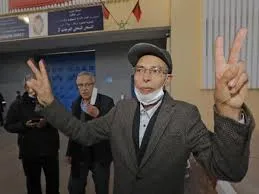

The case of Maâti Monjib, a Franco-Moroccan historian and human rights activist, has become emblematic of the ongoing struggles faced by those who dare to challenge authority in Morocco. Since 2020, Monjib has been subjected to a protracted legal battle with an uncertain outcome, which has severely restricted his ability to leave Morocco. On March 30, 2026, border police at Rabat-Salé Airport barred him from boarding a flight, despite his possession of an official university invitation to deliver a series of lectures at the Panthéon-Sorbonne University in Paris, extended by his French colleague, Pierre Vermeren, an expert on the Moroccan kingdom.
The restrictions imposed on Monjib extend beyond his inability to travel; they permeate various aspects of his professional and personal life. In April 2019, he was suspended from his university position in Rabat, stripped of his salary, and had his bank accounts frozen. A decision was made to confiscate his assets, although this has not yet been executed. Many human rights activists characterize his plight as a form of "social death," as Monjib finds himself increasingly isolated both materially and professionally. He describes his situation as an "open prison," where bureaucratic obstacles multiply and his means of subsistence dwindle.
Historical Context of Repression
Monjib's troubles trace back decades, beginning during the reign of the late King Hassan II, due to his activism within the National Union of Students of Morocco. As a young scholar working on a thesis titled "The Moroccan Monarchy and the Struggle for Power," published by l'Harmattan in 1992, he was first arrested in 1995. His release was facilitated by a swift media and human rights campaign led by organizations such as the Moroccan Association for Human Rights and the Moroccan Organization for Human Rights, alongside significant support from various newspapers, particularly Al-Ittihad Al-Ishtiraki and Al-Alam.
Following this episode, Monjib sought refuge in Senegal, where he taught at Gaston Berger University in Saint-Louis for several years. However, around fifteen years ago, a smear campaign was launched against him during the so-called Arab Spring, accusing him of breach of trust, treason, and sexual assault—charges he vehemently denies and believes were aimed at silencing him and other journalists and intellectuals. Despite being subject to an international arrest warrant, he continued to travel to Morocco without facing immediate repercussions. However, after public protests and statements highlighting the surveillance and defamation he endured, he was eventually arrested upon returning from vacation in August 2015, along with six other activists, on charges of "undermining state security" through purported propaganda.
In 2021, Monjib was sentenced to one year in prison for "undermining state security and fraud" linked to his management of a center for investigative journalism. He was released after three months following a 20-day hunger strike, influenced by pressure from human rights organizations, including Amnesty International. Concurrently, a second investigation into money laundering was initiated, which remains unresolved and is cited by his defense as a reason for the ongoing restrictions, particularly the travel ban.
A Continued Struggle for Rights
Despite receiving a royal pardon from King Mohammed VI in 2024, Monjib's situation remains dire; his civil rights have not been restored, his bank accounts remain frozen, and he has not been allowed to resume his work. Living under such constraints, he states, "I no longer have a life. It has become a burden, especially due to the defamation and surveillance." Human rights organizations assert that his predicament is primarily a result of his activism and critical writings regarding the power structure in Morocco. According to Maryam Jamal Al-Idrissi, a lawyer from the Casablanca Bar, the charges against Monjib are rooted in the discretionary power of the public prosecutor, and despite the legal actions taken, they do not undermine the presumption of innocence—a fundamental principle of fair trial rights.
Intellectuals and human rights activists, including Abdellatif Laâbi and Abdelrahim Afarki, have highlighted the disparity in treatment between Monjib and other cases, such as that of the Algerian writer Boualem Sansal. While the Élysée has vocally supported Sansal during his incarceration, it has remained silent on Monjib’s plight, raising questions about the geopolitical considerations influencing France's diplomatic engagements. The statement from these activists underscores a perceived double standard in France’s response, pointing to the strategic nature of its relations with Morocco compared to Algeria.
In conclusion, Monjib's legal team is preparing to file complaints with the relevant United Nations bodies in Geneva and New York, as they seek to address the numerous violations of his rights and the urgent need for international advocacy in his favor.
As reported by france24.com.