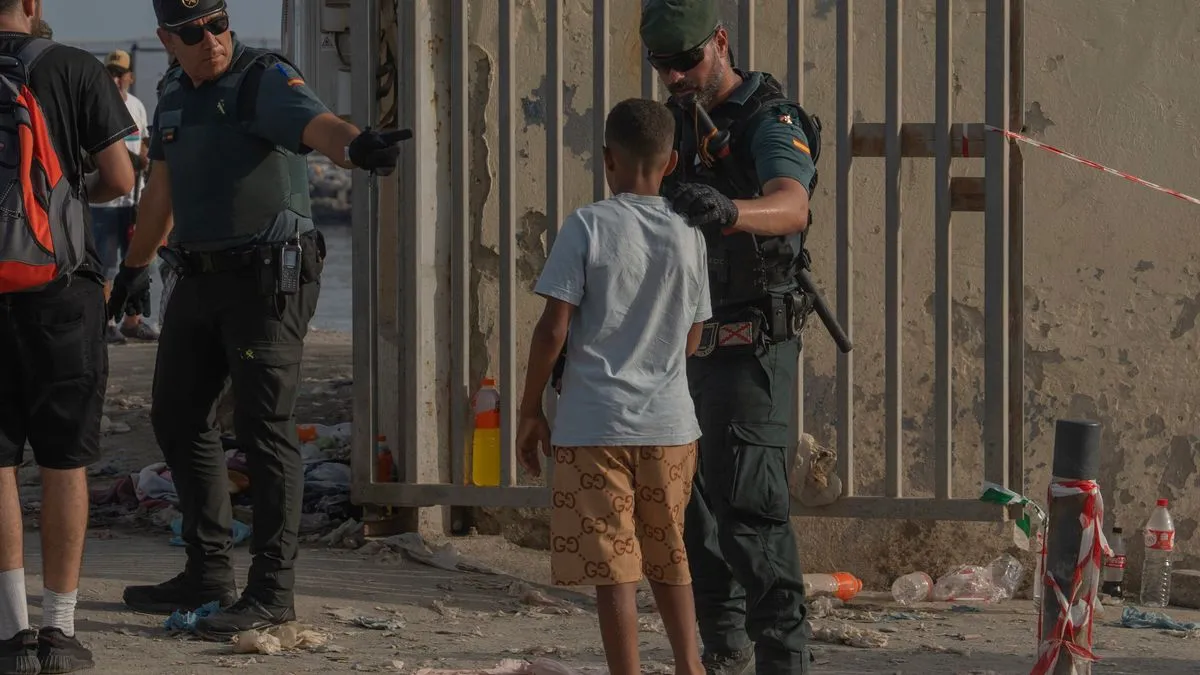

The Ongoing Migration Crisis in Ceuta
In recent times, Ceuta, the Spanish enclave located on the northern coast of Africa, has become a focal point for a growing humanitarian crisis involving thousands of unaccompanied minors. These young individuals, seeking refuge from the harsh realities of their home countries, find themselves stranded in a precarious situation, often without adequate shelter or support. Under Spanish law, these minors are entitled to protective measures, yet many remain on the streets, vulnerable and exposed to the elements. This alarming situation raises significant questions about the responsibility of the Spanish government and the broader European Union in addressing the needs of these children.
Reports indicate that instead of providing the necessary support and protection, authorities are resorting to illegal practices, including forcibly sending these minors back to Morocco. This disregard for their rights not only exacerbates their plight but also reflects a troubling trend in how migration issues are handled in Europe. The complexities of migration policies, combined with political pressures, often leave the most vulnerable—like these children—without the help they desperately need. As they navigate a system that seems to fail them at every turn, the question arises: why does Spain tolerate this precarious situation?
As the situation unfolds, the international community watches closely, urging for a more humane approach to the migration crisis that prioritizes the safety and well-being of minors. The need for immediate action has never been more critical, as these children deserve better than to be treated as mere statistics in a political debate.
As reported by spiegel.de.