
Unaccompanied Girls in Ceuta: Seeking Shelter and Support
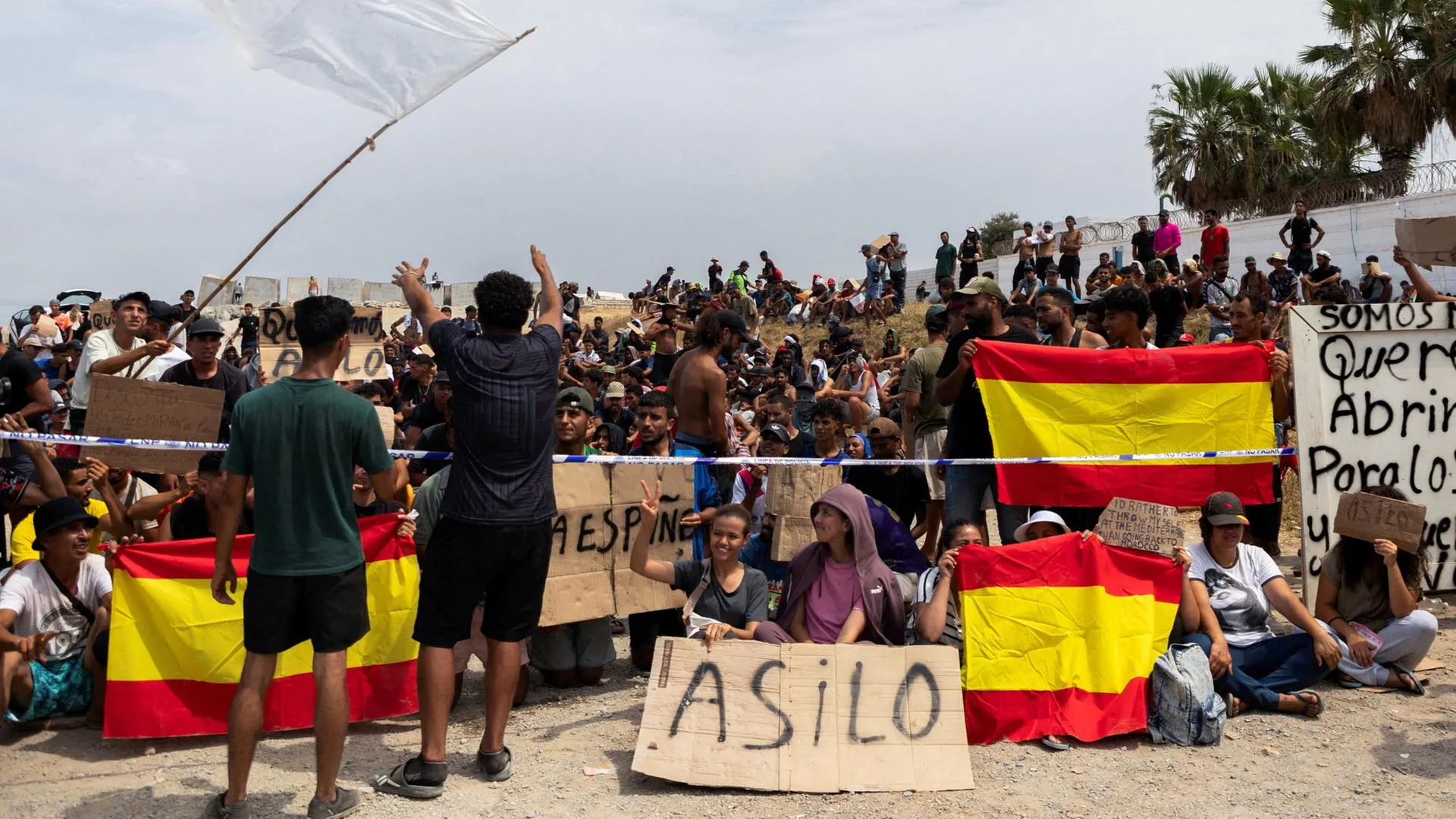
In the Spanish enclave of Ceuta, a significant number of girls seeking asylum have arrived, hoping to support their families back home amidst uncertain futures. Many of these minors are unaccompanied and are currently being sheltered in a local school’s football field, as detailed by community activist Rana from the neighborhood association in Ceuta's Moroccan district of El Principe. She points to the football pitch, where dozens of girls, who have been in this situation for about two weeks, gather. Their laughter and playful screams resonate, a stark contrast to the trauma some have endured. Rana, dressed in a flowing bright garment with faded henna tattoos adorning her hands, reveals the grim reality: some girls have suffered sexual violence and have been brought here for safety, provided with mobile toilets and makeshift sleeping arrangements.
The back area of the pitch is draped with blue tarpaulins, creating a makeshift shelter for these girls, complete with mattress beds and carpets for seating. This setup not only provides them with basic amenities but also offers a semblance of privacy, shielding them from prying eyes. The disappointment among the local population is palpable, particularly regarding the corruption that permeates their home country of Morocco.
Striving for a Better Life
Among these girls is 17-year-old Fatima, who hails from the coastal city of Tangier in northwestern Morocco. Since arriving in Ceuta on July 31, she recounts her initial struggles of finding shelter, stating, "We were homeless and endured a lot until we found this association that took us in and protected us from the young men outside." Fatima shares her aspirations of seeking a better future to support her family, particularly her mother, who toils from dawn until 7 PM, preparing traditional flatbreads. "My mother works so hard that her hands are sore and white; she can hardly move them. We now plead with the Spanish authorities to assist us and not to send us back to Morocco," she expresses with hope.
Ihsane, another 17-year-old, joins the conversation, sharing her arduous journey of over 60 kilometers from Tangier to Tétouan before crossing into Ceuta. "We live in modest conditions with little money. I have learned, worked, and played football in school," she explains. The girls have found some solace in their newfound community, where volunteers have brought food packages, and local association members organize meal distributions. Ahmed Enfedal, the president of the neighborhood association, recently returned from a meeting with city officials, expressing frustration at the lack of meaningful action regarding the situation of these girls. "They talk about security and waste management, but I want them to focus on the girls. That's what matters most to me," he asserts.
Despite the establishment of shelter, Ahmed notes that little has changed in the two weeks since their arrival. Approximately 86 girls have been transferred to a specialized youth facility for girls, yet many others remain unaccounted for. Ahmed's expression darkens when he contemplates the future of these minors. He fears that both the Spanish and Moroccan governments are negotiating bilateral agreements to repatriate these girls back to Morocco. "The International Convention on the Rights of the Child must be adhered to. It's that simple," he insists, highlighting the critical need for protection for unaccompanied minors.
With thousands of migrants—including unaccompanied minors, refugees from war-torn regions, and adults seeking better lives—still in Ceuta, the city, with its population of around 84,000, faces immense challenges. Ahmed emphasizes that Ceuta cannot permanently accommodate all the minors currently residing there, asserting that this is not solely the responsibility of the city. "There's mainland Spain and Europe. If we are indeed part of Europe, then this is a European issue that requires a collective solution," he concludes, underscoring the pressing need for a coordinated response to this humanitarian crisis.
As reported by tagesschau.de.