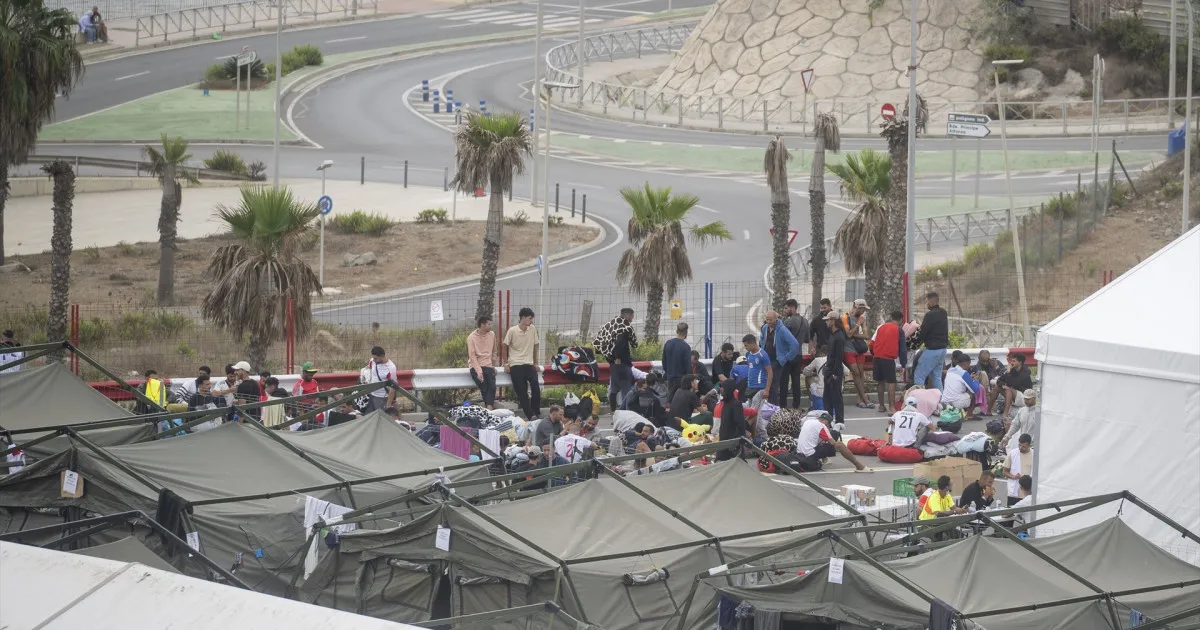

Understanding the Complex Political Landscape in Ceuta
In light of recent events surrounding Ceuta, the necessity for a broader perspective becomes increasingly evident. Citizens may find solace in the philosophy of Pangloss from Voltaire's _Candide_, who advocated for a naive optimism, yet it is crucial to look beyond immediate perceptions. The political machinations at play resemble those of skilled illusionists, employing tactics such as selective attention to obscure harsh realities. Unfortunately, this selective vision perpetuates a narrative where the urgent overshadows the important, leading to a distortion of truth in public discourse. This sentiment echoes the words of famed American baseball player Yogi Berra, who famously noted that "it ain't over till it's over." Thus, it is essential to reassess what seems obvious, as misinterpretations can lead to misguided conclusions, as demonstrated by the recent threats against Ceuta following the events of July 30, when a so-called "blue march" comprised of 72,000 individuals from Morocco, allegedly orchestrated by Moroccan intelligence, invaded the city.
The situation escalated when a substantial police presence was mobilized in response to this attempted incursion, which contradicted statements from both governments. A logical conclusion drawn by observers is that the violation of Spanish territorial integrity could not have occurred without the backing of Moroccan authorities. This recent influx of migrants served as a stark reminder of Morocco's capacity to exert pressure on Spain, reminiscent of the historical 'green march' into Spanish Sahara during the twilight of Franco's regime. Morocco has demonstrated its willingness and ability to deploy mass migrations strategically to assert its interests, effectively signaling to Spain that it has the means to replicate such actions at will.
The Underlying Tensions and Strategic Maneuvering
In the backdrop of this hybrid warfare, the recent escalation appears to be a calculated act of intimidation aimed at the residents of Ceuta. The weekend's events unfolded like a theatrical performance, potentially orchestrated by Spanish Prime Minister Sánchez to create the illusion of diplomatic progress where none exists. This tactic seems to align with Morocco's long-term strategy of advancing its interests incrementally while maintaining a façade of cooperation. Following this apparent truce, Morocco might leverage this situation to negotiate control over maritime territories rich in gas and oil reserves near the Canary Islands, which Spain has restricted from Repsol, a major energy company.
As Sánchez finds himself in a precarious position, many question the official reports indicating that only 148 migrants were apprehended, with a breakdown of 128 sub-Saharan individuals and 20 Moroccans, despite the absence of Spanish media presence in the region. The Moroccan government's propaganda has emphasized King Mohammed VI's direct involvement in curtailing the alleged assault, which they claim spiraled beyond their control. However, the overwhelming display of military assets, including helicopters and drones, serves to reinforce suspicions that these events are a diversion rather than a genuine threat. Ultimately, the security of Ceuta hinges precariously on the whims of the Moroccan sultan, raising concerns about the region's stability and the safety of its residents.
In this environment of uncertainty, it is clear that Morocco's tactics resemble psychological manipulation, akin to the concept of gaslighting, where one party destabilizes another's perceptions of reality. Spain finds itself in a vulnerable position, particularly after the recent covert arrival of Brahim Ghali, the leader of the Polisario Front, who was reportedly in Spain for medical treatment. This incident follows Sánchez's controversial recognition of Moroccan sovereignty over the former Spanish Sahara, a move that came at the expense of Spain's national integrity. The political fallout from these actions has deepened the crisis, as the government seems ill-equipped to manage the influx of migrants, leaving Ceuta at risk of becoming a humanitarian disaster.
Amidst these challenges, the local leadership in Ceuta is scrambling for solutions, echoing past experiences in Poland and Greece regarding asylum seekers. Without immediate and extraordinary measures, Ceuta risks deteriorating into a chaotic environment, burdened by the consequences of hybrid warfare tactics employed by Morocco. Meanwhile, Sánchez appears more preoccupied with maintaining his position amidst internal political strife than addressing the pressing issues facing Ceuta and its residents.
Ultimately, as the drama unfolds, it becomes increasingly apparent that the stakes are high. The situation calls for urgent attention and decisive action from the Spanish government to protect its borders and uphold the integrity of its territories. In a time where political intrigue and international relations are fraught with complexity, the need for clarity and effective governance has never been more critical.
As reported by eldebate.com.