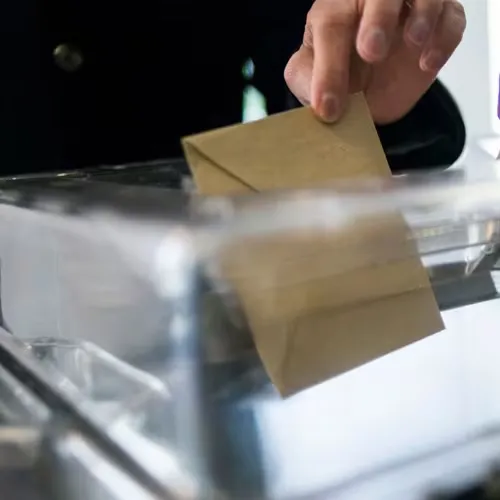

As the legislative elections scheduled for September 23, 2026, draw near, the political atmosphere in Morocco's capital, Rabat, is charged with an unusual intensity. This period of heightened electoral activity has transformed the city's districts into battlegrounds, where internal rivalries and partisan confrontations unfold. One particularly noteworthy area is Rabat-Ocean, often referred to as the 'death district' due to the fierce competition that characterizes it, making it a focal point for strategic political maneuvers. Here, political parties are engaged in meticulous calculations to assemble candidate lists that could potentially alter the balance of power.
As reported by fr.le360.ma.
The urgency of the upcoming elections has intensified the struggle for influence among party leaders in Rabat, where each political entity strives to cement its position in constituencies that have become arenas for settling partisan scores. Rabat-Ocean stands out as a prominent stronghold where the electoral campaign has commenced well ahead of schedule. Political parties are already putting forward influential names, driven by the desire to impact an election whose outcomes remain uncertain, as reported by _Al Akhbar_ on August 13.
Insights from the political headquarters in the capital reveal that the confrontations are no longer restricted to traditional adversaries. Instead, they have shifted internally within the party structures, pitting incumbent elected officials against notable figures seeking re-nomination, as well as national leaders eager to rejuvenate candidate lists and promote new personalities. This delicate balance exposes profound tensions, where personal ambitions clash with collective strategies.
In the local section of the National Rally of Independents (RNI), the atmosphere is fraught with electricity. Disagreements are proliferating over endorsements and candidate selections, especially since recent electoral regulations have led to the withdrawal of several established personalities, including the mayor of Rabat, Fatiha El Moudni. This has intensified the competition, as outgoing officials strive to protect their strongholds while party leadership pushes for renewal by reshaping local power dynamics.
Simultaneously, the search for candidates capable of garnering maximum votes has morphed into a race against time. Political parties are ramping up their efforts, conducting clandestine meetings, and attempting to recruit local influencers, elected officials, and section heads in hopes of forming competitive lists. This phenomenon extends beyond Rabat-Ocean; all constituencies in the capital are experiencing similar initial maneuvers, with negotiations and contacts becoming increasingly frequent as the election date approaches, according to _Al Akhbar_.
However, this political fervor is causing concern among party leaders. Many officials fear that disagreements over nominations could escalate into internal fractures or even defections to other parties. Local electoral history has repeatedly demonstrated that for many elected officials, loyalty to their party is intricately tied to securing the endorsements necessary to pursue a new mandate.