
The Rise of Özgür Özal and the Formation of a New Political Party
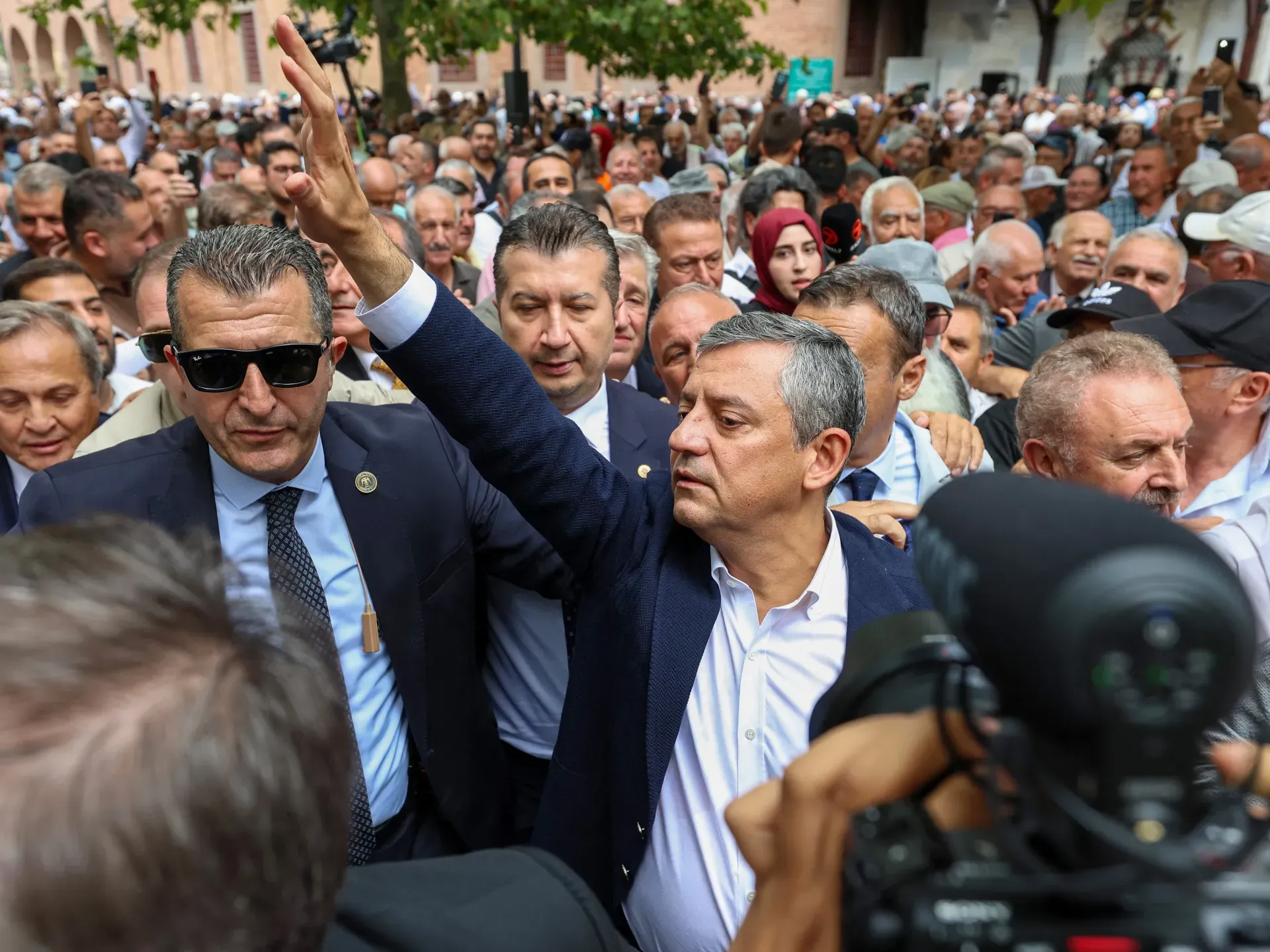
In a captivating narrative that begins with the ballot box and culminates with an axe, Özgür Özal, in his first televised interview as the leader of the "New Party" on July 27, 2026, provided a unique perspective on the current political landscape in Turkey. For over two decades, President Recep Tayyip Erdoğan had consistently triumphed over political rivals, but the dynamics shifted when Özal, succeeding Kemal Kılıçdaroğlu as head of the Republican People's Party (CHP), led the party to victory in the March 2024 municipal elections, marking the first time in over 20 years that they outperformed Erdoğan's Justice and Development Party (AKP). However, this victory was short-lived as the judiciary annulled the party's conference in May 2026 due to alleged irregularities in electing its delegates, reinstating Kılıçdaroğlu and the previous leadership. In a bid to rally support and energize his base, Özal attributed political responsibility for this judicial ruling to Erdoğan, despite lacking concrete evidence to support such claims.
After being ousted, Özal established a new political party, taking 90 members of parliament with him, thereby securing 91 seats and assuming the role of the main opposition party before even participating in elections or expanding its branches across provinces. This unconventional birth of a political party from the upper echelons of parliament stands in stark contrast to the typical grassroots development trajectory that most parties undergo. While other parties often spend years striving for parliamentary representation, Özal found himself starting from a position of relative strength, although he still faced the monumental task of building organizational structures, grassroots support, and a compelling reason for voters to choose his party.
The Internal Struggle Within the CHP and the Emergence of Change
Following Kılıçdaroğlu's defeat in the presidential elections in May 2023, the CHP faced a setback much heavier than just losing a typical electoral contest. Entering the election cycle with the belief that the economic crisis and the public's discontent following the February earthquake provided a favorable opportunity to end Erdoğan's long-standing rule, Kılıçdaroğlu managed to unite six political parties under his candidacy, also gaining support from Kurdish political movements. However, Erdoğan emerged victorious in the runoff election, maintaining the parliamentary majority for his coalition, which led to the fragmentation of the parties that had rallied around Kılıçdaroğlu.
This defeat ignited internal disputes within the CHP, as Kılıçdaroğlu's supporters believed he had expanded the opposition base and positioned it to challenge Erdoğan in a second round. They argued for the continuation of the policy that united conservatives, nationalists, and Kurds around a single candidate. Conversely, critics held Kılıçdaroğlu accountable for his own candidacy and the mismanagement of a campaign that resulted in yet another loss, demanding changes in leadership and candidate selection processes, as well as the relationship between the party center and its branches. This faction, which came to be known as the "Change Stream," initially brought together all those opposed to Kılıçdaroğlu's continued leadership but gradually evolved into a coalition led by Özgür Özal and Ekrem İmamoğlu.
Özal, who had been leading the party's parliamentary group, was well-acquainted with the party's internal dynamics and its delegates. İmamoğlu, the Mayor of Istanbul, possessed an electoral weight unmatched by any other party official, having won two consecutive mayoral elections since 2019. He aimed to change the leadership while retaining his mayoral position and potential presidential candidacy. Özal took charge of the internal competition within the party and assisted İmamoğlu in gathering branch leaders and delegates around him, ultimately presiding over the 38th General Conference in November 2023. This collaboration resulted in a dual leadership structure, with Özal managing the party and İmamoğlu providing popular appeal and a political agenda.
The conference vote revealed the delicate balance of power within the CHP. In the first round, Özal received 682 votes to Kılıçdaroğlu's 664, with neither candidate reaching the required threshold of 684 votes for victory. In the second round, more delegates shifted their support to Özal, allowing him to win with 812 votes against Kılıçdaroğlu's 536, thus ending Kılıçdaroğlu's 13-year leadership. With only five months before the municipal elections, the new leadership reviewed candidate nominations within the party's local networks, employing surveys and consultations with branches, and adopted the slogan "Turkey Alliance" to attract opposition voters without a formal agreement among the parties. The campaign relied heavily on mayors who had won elections during Kılıçdaroğlu's tenure in 2019, notably İmamoğlu in Istanbul and Mansur Yavaş in Ankara. As a result, the 2024 elections bore the imprint of both the new leadership and the legacy of the previous phase.
The results of the March 31 municipal elections provided the Change Stream with the validation it needed to demonstrate the effectiveness of the new leadership. The CHP garnered 37.8% of the votes in the municipal councils, compared to 35.5% for the AKP, winning 14 of the 30 major municipalities, along with 21 municipalities in provincial centers and 314 district municipalities. İmamoğlu retained Istanbul with over 51% of the vote, while Yavaş surpassed 60% in Ankara, and the party expanded its reach to cities like Bursa, Balıkesir, and Manisa, marking a historic moment as the first time in decades that it emerged as the leading party in municipal council voting.
Özal played a pivotal role in this victory as the party's leader, overseeing candidate selections, managing the campaign, and mitigating the impact of the opposition coalition's fragmentation by encouraging cooperation among voters. The outcome was also influenced by factors beyond his control, such as inflation, declining purchasing power, and dissatisfaction among retirees, which affected government candidates. Voter turnout decreased from approximately 85% in 2019 to around 78%. A segment of AKP voters abstained, while others shifted their support to the New Welfare Party, benefiting CHP candidates through strategic Kurdish voting and support from discontented nationalists and conservatives. Moreover, İmamoğlu and Yavaş brought a personal electoral legacy built over five years of effective governance.
However, the victory that conferred electoral legitimacy upon the new leadership did not resolve the internal disputes regarding its legitimacy within the party. Delegates and former members contested the conference that elevated Özal to the presidency, accusing members of the Change Stream of offering money, municipal jobs, nominations, and promotional cards to certain delegates in exchange for their votes, alongside allegations of requesting photographic evidence of ballot papers and circulating rumors of Kılıçdaroğlu's withdrawal prior to the second round. The party responded by asserting that the conference was conducted under the supervision of electoral bodies and that the evidence presented in the case was conflicting, while criminal proceedings related to the allegations continued without definitive rulings.
In October 2025, the Ankara court rejected challenges to annul the conference, only for the appeals court to overturn this decision on May 21, 2026. The court found that the evidence and testimonies revealed a corruption of the delegates' will and violations of mandatory democratic rules within parties, declaring the conference void from its inception. The ruling had ramifications for the conferences and decisions built upon it, leading to Kılıçdaroğlu and the previous party council and disciplinary board returning to their positions, while Özal and the elected bodies during his tenure were sidelined pending the resolution of the appeal before the Supreme Court. This decision transformed the internal conflict into a struggle for two forms of legitimacy, with Özal relying on the mandate from the conference and the municipal victories of 2024, characterizing his ousting as a "judicial coup," while Kılıçdaroğlu framed his return as a mandate to reform the party and protect the will of the delegates. Meanwhile, the government referred the matter back to its origins within the CHP and defended the judiciary's role in monitoring party democracy.
The Özal camp attempted to regain leadership by calling for an extraordinary conference to re-elect him, gathering 833 documented signatures from delegates for this purpose. Kılıçdaroğlu's administration opted to review the signatures and initiate branch conferences before proceeding to a general conference, narrowing the space for compromise between the two factions. As resolving the dispute within the institution proved elusive, Özal and his associates turned towards establishing a new party, effectively redistributing the power that had once been consolidated under a single umbrella. While the name, emblem, headquarters, accounts, and membership records of the CHP remained with the institution led by Kılıçdaroğlu, the provincial branches and district organizations faced a significant restructuring as the political landscape continued to evolve.
As reported by aljazeera.net.