
African Airports Ranking by Seat Capacity: A Dynamic Overview
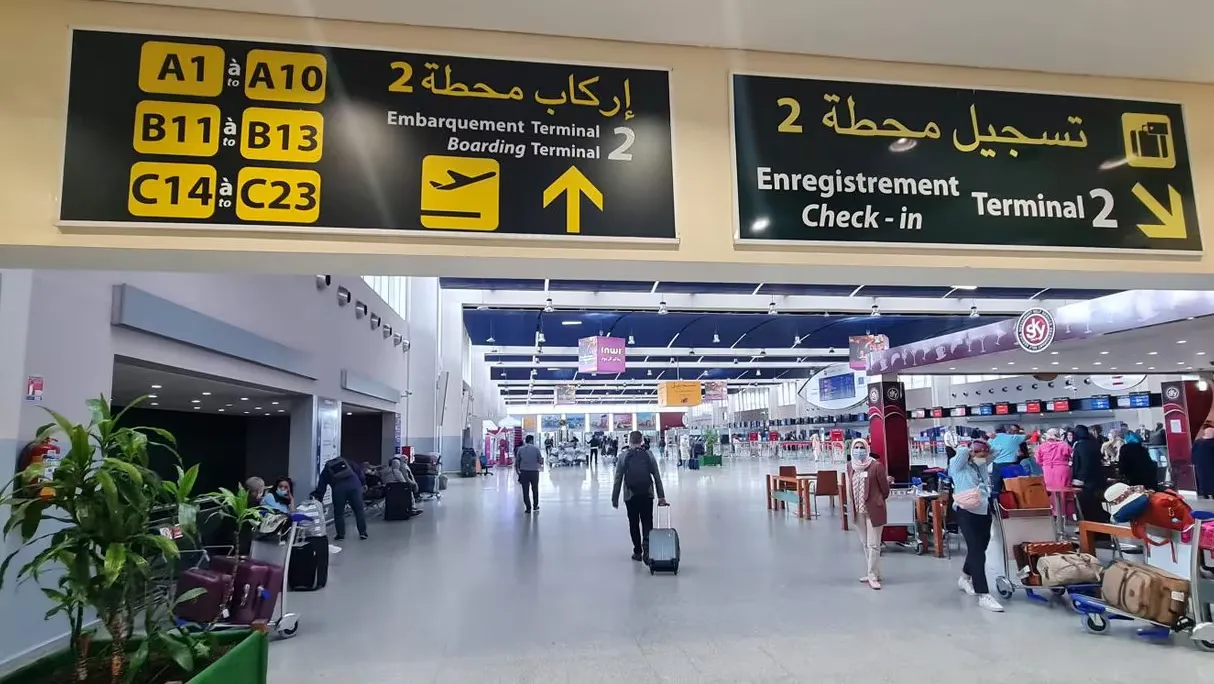
As of August 2026, the rankings of African airports by seat capacity reveal a rapidly evolving landscape within the continent. Leading the charge is Cairo International Airport, boasting an impressive capacity of 1,850,926 seats, far surpassing its competitors. Following closely are Addis Ababa Bole International Airport with 1,251,909 seats and O.R. Tambo International Airport in Johannesburg at 1,148,652 seats, forming a strong podium. The top ten list is rounded out by Mohammed V International Airport in Casablanca (803,579), Houari Boumediene Airport in Algiers (676,242), Jomo Kenyatta International Airport in Nairobi (567,644), Cape Town International Airport (557,503), Tunis-Carthage International Airport (526,444), Murtala Muhammed International Airport in Lagos (483,103), and Marrakesh Menara Airport (480,112). This ranking not only highlights the airports' capacities but also underscores the broader trends in air travel across Africa, where overall seat capacity has surged by 8.8% compared to August 2025, according to the African Airlines Association (AFRAA).
However, this impressive growth in capacity contrasts with profitability, as hubs struggle to convert increased offerings into substantial margins. Notably, intra-African routes have experienced a 10.5% rise in seat availability, driven by network expansions, new route openings, and capacity enhancement initiatives. Such developments signify a strengthening of connectivity within the continent, positioning Africa as a key player in global air travel.
As reported by afrique.le360.ma.
Regional Capacity Distribution and the Challenges Ahead
The top ten airports illustrate significant regional disparities in capacity distribution. North Africa dominates with five airports, including Cairo, Casablanca, Algiers, Tunis, and Marrakesh, which collectively account for 41.9% of the total capacity. Eastern Africa follows with 22.7%, while Southern Africa contributes 18.3%, and Central and Western Africa lags behind with 17.1%. This concentration of capacity in the northern half of the continent emphasizes the need for enhanced infrastructure and policies to support growth in other regions, particularly in Central and Western Africa, where no airports made the top ten list.
The interplay between capacity and traffic further complicates the situation. In August 2026, African airlines captured 47.2% of international capacity, while non-African carriers held 52.8%. Notably, for intercontinental services, African airlines represented 62.4% of capacity, yet they only commanded 37.6% of intercontinental capacity, indicating a strategic challenge in maintaining a competitive position in long-haul markets. Despite generating substantial traffic, the continent struggles to capture a significant share of the value in long-haul travel.
The ongoing imbalance between the growth of capacity and demand is evident, as the Available Seat Kilometers (ASK) metric rose by 9% in July 2026 compared to the previous year, while Revenue Passenger Kilometers (RPK) increased by only 5.8% during the same period. This suggests that the surge in capacity is not being matched by an equivalent rise in passenger demand, leading to pressure on pricing and potentially fragile load factors. The AFRAA has underscored this trend, noting that capacity growth continues to outpace demand, highlighting the need for a conducive fiscal, financial, and infrastructural environment to facilitate sustainable growth in the sector.
In conclusion, the rankings of African airports by seat capacity reveal a continent on the move, with vibrant demand and youthful travelers. However, the necessary infrastructure and policy frameworks are critical to transforming this potential into a robust air transport network that fosters economic development. The future of air travel in Africa relies on viewing aviation not merely as a revenue source but as a vital engine for growth.