
The Political Landscape in Morocco: Fatima Zahra Mansouri vs. Fouzi Lekjaa
In the current political climate of Morocco, a pressing question arises: will King Mohammed VI appoint Fatima Zahra Mansouri directly as the head of the government, or will he lean towards the newcomer Fouzi Lekjaa? This speculation is bolstered by the strategic theory suggesting a political maneuver aimed at establishing a "World Cup Government" under Lekjaa's leadership, especially in light of the need to fortify the country’s infrastructure in preparation for hosting the 2030 World Cup.
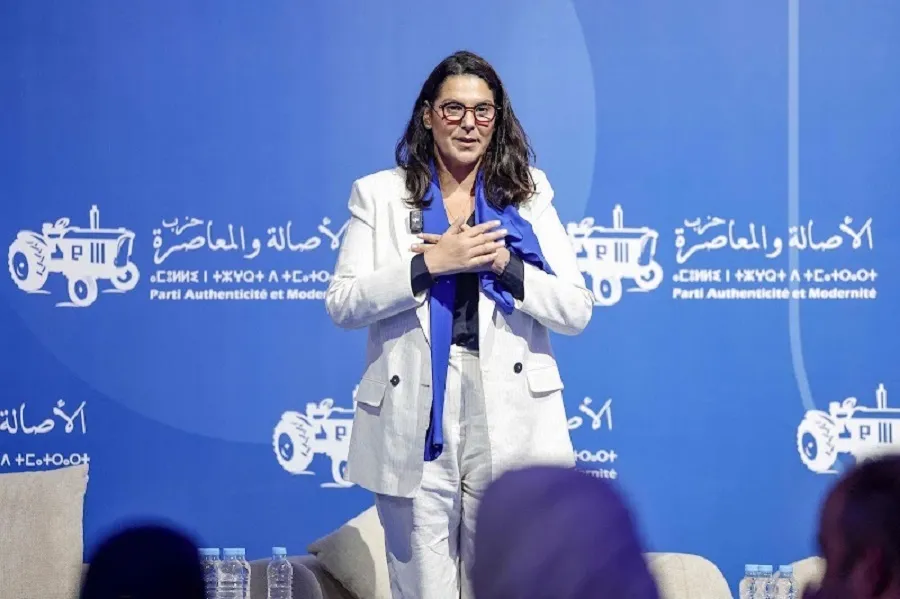
Fatima Zahra Mansouri's ascension to the forefront of Moroccan politics is not a mere byproduct of an electoral moment; rather, it represents a long-standing political journey that began in her hometown of Marrakech. She first ventured into local governance, subsequently transitioning to the parliament and then to government roles. Ultimately, she rose to lead the "Authenticity and Modernity Party" (PAM), commonly known as "the tractor," which secured a significant victory in the legislative elections.
As the PAM has taken center stage in the Moroccan electoral scene, Mansouri's name has transcended the discussions surrounding the party's current dynamics and its positioning within the forthcoming government majority. Instead, it has sparked predictions regarding who might lead the next government, potentially marking Mansouri as the first woman ever to hold the prime ministerial position in the country’s history.
The Path Ahead: Opportunities and Challenges
Initially, Mansouri's road from Marrakech, where she grew up and held various significant positions, to Rabat, particularly to the "Palais du Mechouar," appears to be open. Citizens eagerly anticipate her reception by King Mohammed VI, who is expected to assign her the task of forming the new government. According to Article 47 of the Moroccan Constitution, the King appoints the Prime Minister from the political party that wins the most seats in the House of Representatives based on election results. Given that PAM emerged victorious with 97 seats, it is likely that the appointment will indeed come from this party.
Distinctively, the PAM operates under a collective leadership structure comprising Mansouri, Mohamed Mehdi Bensaid, and Salah Eddine Aouglie, with Mansouri serving as the national coordinator of this collective leadership. By adhering to constitutional conventions, it seems probable that Mansouri will be named the head of the next Moroccan government, thus becoming the first Moroccan woman to achieve this milestone, often referred to as "the daughter of the pasha" due to her father, Abderrahmane Mansouri, having served as the pasha of Marrakech for several years.
However, the constitutional text does not preclude the King from appointing another individual from the leading party in the parliamentary elections, which could place attention on Fouzi Lekjaa, the new budget minister and a recent arrival to the party just before the elections.
Mansouri, born in Marrakech in 1976, has honed her political and managerial skills through her legal background, having studied law at the University of Montpellier in France and practiced as a lawyer. She first gained significant public attention in 2009 when she became the first woman to chair the Marrakech municipal council, later reclaiming the mayoral position following the 2021 elections. Her parliamentary experience extends across three election cycles—2011, 2016, and 2021—culminating in her current role as Minister of National Land Planning, Urbanism, Housing, and City Policy since October 2021.
By 2024, Mansouri has climbed to the upper echelons of the PAM, assuming the role of "Coordinator of the Collective Leadership," effectively acting as the party's Secretary-General. Her prominence has soared, especially following the PAM's recent electoral success, positioning her closer than ever to potentially leading the government in a historic first for the nation.
In analyzing the prospects of the anticipated selection, constitutional law professor Othmane Ziyani from the University of Oujda suggests that the identification of the next Prime Minister will not solely depend on electoral outcomes. Instead, it will also hinge on considerations of competence, the ability to forge a majority, and the nature of the forthcoming phase, which is characterized by significant challenges.
Currently, it remains uncertain who the King will appoint as Prime Minister, as the decision-making process is influenced by factors beyond mere electoral results. Ziyani notes that other considerations come into play, such as competency requirements, the capacity to build a majority, and the challenges ahead.
In this context, Mansouri may appear as a natural political choice, given her leadership role within PAM and the extensive organizational and political experience she has amassed. Her appointment could signify a historical moment, establishing her as the first woman to lead the Moroccan government.
Conversely, Ziyani states that the balance may also tip in favor of Fouzi Lekjaa, highlighting that his late arrival at the party and immediate entry into its political office should not be dismissed as mere electoral recruitment. Lekjaa combines public financial management expertise with a strong presence in the 2030 World Cup preparations, coupled with an image associated with efficacy and results. His recent party affiliation has provided him with the political cover necessary for transitioning from a technocratic role to a potential Prime Minister candidate.
In conclusion, while Mansouri represents a party and symbolic choice, Lekjaa emerges as the more administratively aligned option with the current priorities. However, the possibilities remain open until an official appointment is made, leaving the question of who will ultimately lead Morocco's next government very much alive.
As reported by independentarabia.com.