
Revolutionizing Air Travel in Morocco
In recent years, Morocco has emerged as one of the most vibrant markets in the Mediterranean basin for low-cost airlines. Carriers such as Ryanair, Transavia, easyJet, Volotea, Wizz Air, and Air Arabia Maroc have progressively reshaped the national air transport landscape, establishing themselves as key players in Morocco's tourism strategy. This evolution is a cornerstone of the Morocco tourism roadmap for 2023-2026 and forms a fundamental aspect of the country's aspirations leading up to 2030. Between 2019 and 2025, airline capacity to Morocco has seen a remarkable surge. Despite the disruptions caused by the pandemic, the market not only recovered to pre-crisis levels but has significantly surpassed them. According to data from the Moroccan National Tourism Office (ONMT), by 2025, the airline capacity is projected to increase by 12%, exceeding 12 million scheduled seats.
This growth can be attributed to strengthened partnerships with international airlines, the launch of new routes—including the direct Atlanta-Marrakech service—and the establishment of new air bases within Morocco. This strategic shift has greatly enhanced the accessibility of the destination while promoting market diversification. The majority of the additional capacities deployed to the Kingdom are now driven by low-cost carriers, which have become crucial to Morocco's tourism framework.
Low-Cost Airlines: A Game Changer
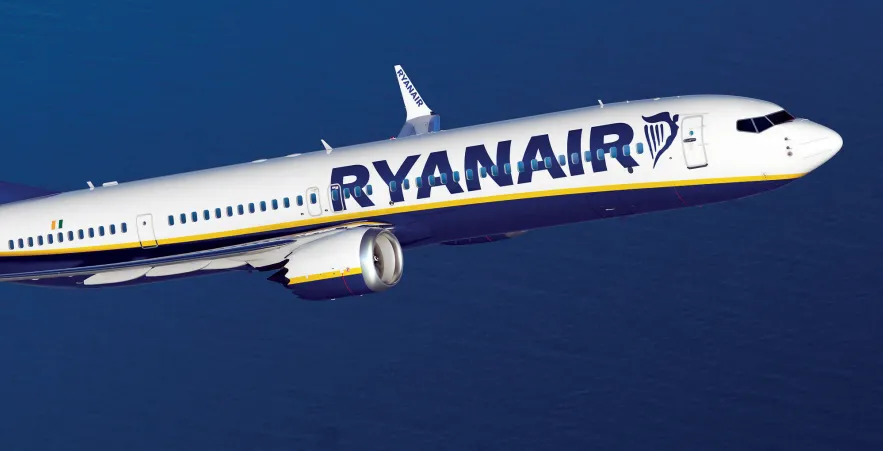
As noted by economist Saïd Tahiri, "open skies are undeniably one of the primary engines of the observed tourist growth in recent years. The development of direct flights and the increasing presence of low-cost airlines have significantly improved Morocco's accessibility and strengthened its competitiveness." This transformation is particularly evident in the British, Spanish, Italian, and German markets, where low-cost airlines now hold a dominant position. Ryanair stands out as a symbol of this transformation, having significantly increased its investments in Morocco following the health crisis. Their partnership with the ONMT, which has been reinforced multiple times since 2022, has led to the opening of dozens of new routes connecting Moroccan cities to numerous European airports. In 2024, Ryanair officially transported 9.1 million passengers in Morocco, and by 2026, they aim to surpass 10.7 million passengers traveling to, from, and within the Kingdom. The most notable innovation remains its entry into the Moroccan domestic market in 2024, as it becomes the first European low-cost airline to operate internal routes in Morocco, creating new competitive dynamics against traditional operators.
Alongside Ryanair, Transavia plays an equally strategic role in the Kingdom's primary source market: France. The low-cost subsidiary of the Air France-KLM group has significantly bolstered its presence in recent years. Agreements with the ONMT have facilitated the opening of routes to main Moroccan destinations. From the winter of 2025-2026, Transavia increased its capacity to Morocco by 30%, opening 14 new routes and adding over 130,000 seats. This growth aims to enhance accessibility to various Moroccan regions, seasonally adjust tourist flows, and diversify source markets. After already boosting its offer by 13% during the summer of 2025, with over 712,000 seats available, Transavia confirms Morocco as its top destination in terms of seat-kilometers offered.
The rise of low-cost airlines has also profoundly altered the structure of source markets. For decades, France was the primary driver of tourist arrivals; however, Morocco is now experiencing growing engagement from new markets. The United Kingdom has emerged as one of the most dynamic markets, alongside Germany, Italy, Ireland, the Netherlands, and several Central European countries, all witnessing sustained growth. This diversification is a crucial factor for the resilience of Morocco's tourism sector, reducing dependency on a limited number of markets and allowing for better absorption of economic fluctuations affecting certain source countries. Another significant consequence of this air revolution pertains to regional development. For a long time, tourist activity was concentrated around a few hubs: Marrakech, Agadir, Casablanca, and Tangier. Today, the opening of new routes is enabling destinations once deemed secondary to gain international visibility. Essaouira now enjoys direct connections with several European cities, while Ouarzazate benefits from the growth of cultural and cinematic tourism. Dakhla is gradually establishing itself as an international destination for water sports and nature tourism. Additionally, cities like Nador, Tétouan, and Oujda are enjoying a much denser air network than just a few years ago. Thus, the growth of low-cost airlines serves as a tool for regional integration and a lever for tourism development.
The increase in tourist arrivals vividly illustrates this dynamic. In 2019, Morocco welcomed approximately 13 million tourists. Following the collapse due to the pandemic, the recovery was swift. The Kingdom surpassed 14.5 million visitors in 2023 and is projected to reach around 17.4 million in 2024, marking a historic high. By 2025, nearly 20 million tourists are expected to visit the nation. This increase is intricately linked to the rise in air capacity. Indeed, the growth of tourism is no longer solely driven by promotion or the quality of hotel offerings but also by the Kingdom's ability to multiply entry points and provide more direct flights.
Consequently, the ONMT has transformed into a true developer of air routes, multiplying commercial agreements with European carriers to support the current momentum in the sector. The upcoming 2030 World Cup presents new opportunities, as Morocco will need to welcome millions of additional visitors in collaboration with Spain and Portugal. This upcoming event is already prompting authorities to expedite investments in airport infrastructure, with the National Airports Office (ONDA) planning significant expansion projects, especially in Casablanca, Marrakech, Agadir, Tangier, Rabat, and Dakhla, to accommodate the continuous rise in traffic.
As reported by fnh.ma.