
The Transformation of Moroccan Football through its Diaspora
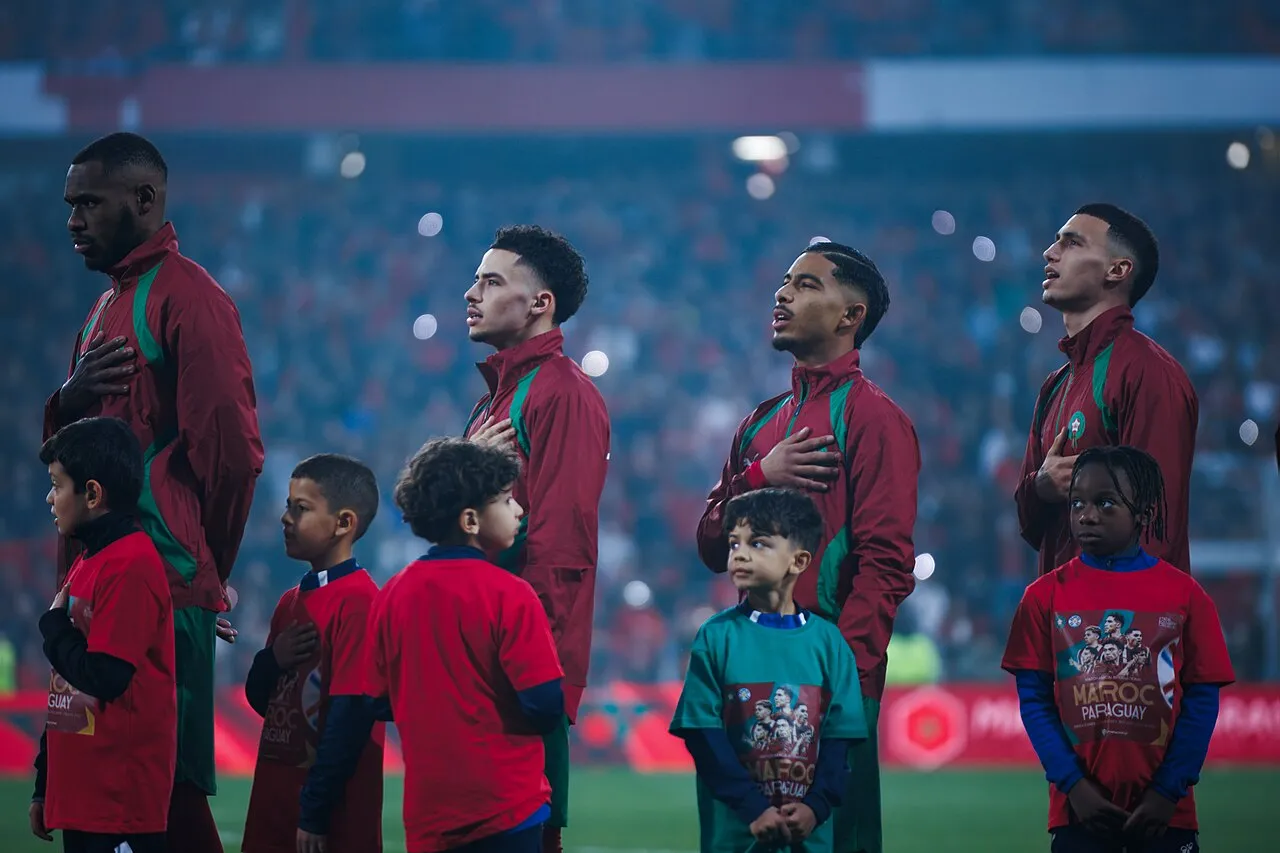
The FIFA World Cup, currently being hosted by Canada, Mexico, and the United States, marks a significant milestone as it showcases an unprecedented 48 teams. This expansive tournament has not only ignited discussions around ticket prices, game schedules, and travel logistics but has also shifted focus to the remarkable performance of Ayyoub Bouaddi, an 18-year-old Franco-Moroccan midfielder, during Morocco's match against Brazil. His unexpected emergence from relative obscurity to the global stage raises critical questions surrounding postcolonial identity, citizenship, and the essence of belonging to a nation.
The Moroccan national team's historic encounter with Brazil has sparked a flurry of commentary from international observers, both in the Global North and South. Experts attribute this success to the Moroccan Football Federation's strategic initiatives since 2010, particularly the establishment of the Mohammed VI Football Academy, aimed at revolutionizing the nation's approach to sports. Additionally, the phenomenon of players with dual citizenship has garnered attention, prompting debates on the authenticity of a national team composed predominantly of individuals born and raised outside Morocco. This discourse is particularly poignant as it reflects the broader implications of postcolonialism and the complexities of national identity in a globalized world.
Decolonization and the New Narrative of Moroccan Citizenship
The questions surrounding the legitimacy of Morocco's team, composed of players who have trained and honed their skills in various countries, echo sentiments raised during past tournaments, such as the 2022 Qatar World Cup. The discussions delve into themes of belonging, especially as right-wing politicians in Europe often use such narratives to question the loyalty of immigrants to their adopted nations. The controversy surrounding Lamine Yamal, who wore boots emblazoned with the Moroccan and Equatorial Guinean flags while representing Spain, exemplifies the ongoing struggle for identity among players of diverse backgrounds.
Historically, the concept of Moroccan citizenship has its roots in colonialism, specifically designed to differentiate between Moroccan nationals and their colonial rulers. The agreements forged in the 19th century established an enduring bond of Moroccanness that transcends geographical boundaries, allowing descendants of Moroccans abroad to claim their rightful place in the national narrative. Today's Moroccan team capitalizes on FIFA's eligibility rules, which permit players to represent nations based on various criteria, allowing Morocco to leverage its diaspora for both sporting excellence and a reaffirmation of national identity.
As Morocco navigates this duality of identity, it becomes evident that the dynamics of football have transformed. Players like Bouaddi, who opted to represent Morocco over a more lucrative future in France, symbolize a shift in perception where playing for one's ancestral homeland is increasingly seen as an act of pride and decolonial resistance. Morocco's ability to attract talent from its global diaspora not only challenges traditional narratives of extraction but also reclaims agency in the global football landscape, flipping the script on colonial legacies.
Morocco’s dedication to fostering connections with its diaspora is evident in its robust institutional support, ensuring that Moroccan citizens abroad remain integral to the nation’s identity, despite lacking voting rights. The remittances sent back to Morocco represent a significant economic contribution, estimated by the World Bank to account for around 7.8% of the nation’s GDP in 2024. This investment in the diaspora transcends mere economics; it is a cultural and political strategy that reinforces a sense of belonging and national pride among Moroccans worldwide.
As reported by africasacountry.com.