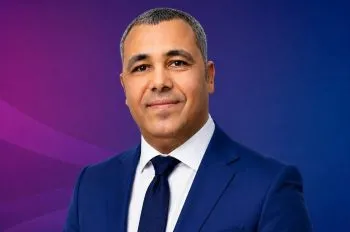

The name Anas Ansari is gaining significant importance during this pivotal moment, not solely because he is a newly elected parliamentarian, but also due to his impressive academic, professional, and institutional background accumulated prior to his entry into the political arena. This significance is further enhanced by his party's position on the new political landscape after securing the top spot in the recent legislative elections.
Anas Ansari is a state engineer who graduated from the prestigious National School of Arts and Textile Industries in France. He has amassed extensive experience in the industrial sector, currently serving as the General Director of CRC PRODUCTION in Meknes since 2019, following a long career within institutions and companies linked to the textile and industrial sectors. Previously, he held the position of First Vice President of the Chamber of Commerce, Industry, and Services in Meknes, and he presides over the Board of Directors of the Moroccan Association of Textile and Garment Industries, the oldest professional association in the country, founded at the dawn of independence. His active participation extends to several national institutions and organizations, including the General Confederation of Moroccan Enterprises, the Moroccan Association of Exporters, the Office of Vocational Training and Employment Promotion, and various higher education and quality-related institutions.
This robust academic and professional resume, along with his prominent presence in the national political scene, distinguishes Ansari from many others who have entered politics merely through elections. He arrives at parliament equipped with substantial experience in industry, entrepreneurship, training, export, and institutional work, all of which are directly related to several governmental sectors.
However, the emergence of Anas Ansari also raises another question regarding the city of Meknes itself and its role within Moroccan governments in recent years. The Ismaili capital, which had notable representations in the governments of the 1990s and early 2000s, has seen a significant absence from government formations in recent years. The last three governments, starting from Abdelilah Benkirane's administration, followed by Saadeddine Othmani and ending with Aziz Akhannouch, have notably lacked prominent Meknes names among their ministerial lists, a stark contrast to the city’s previous political significance.
During the earlier phase, Meknes was not absent from the governmental scene. Mohamed Bouzoubaa, born in Meknes, served as the Minister in Charge of Relations with Parliament starting in 1998, later taking over the Ministry of Justice in 2002. Another notable figure was the late Tayeb Bencheikh, a distinguished statesman from the Ismaili capital, who transitioned from parliamentary work representing Meknes to holding various ministerial positions in areas like planning and regional development, economic affairs, and finally serving as Minister of Health from 1985 to 1992, becoming Morocco's first health minister without a medical background.
Mohamed Alami Al-Tazi, also born in Meknes, held the portfolio of industry, commerce, and handicrafts in 1998 after a long career in economics and industry. Additionally, Bensalem Hamish, also from Meknes, made his mark in government by taking on the culture portfolio in the administrations of Idriss Jettou and Abbas El Fassi. One of the most prominent figures representing Meknes in government over the past decades is Salah Eddine Mezouar, born in Meknes in 1953, who transitioned from an economic player in the textile sector to a significant statesman in the post-2000 era. He was appointed Minister of Industry, Trade, and Economic Modernization in Idriss Jettou's government in 2004, later moving to the Ministry of Economy and Finance in 2007, and eventually taking on the role of Minister of Foreign Affairs and Cooperation in Abdelilah Benkirane's government in 2013.
Moreover, the presence of women from Meknes in the government during that period is also noteworthy, exemplified by the federal Nuzha Chaqrouni, who served as the Minister Delegate in charge of Moroccans residing abroad in Idriss Jettou's government, reflecting the substantial influence the city once enjoyed in executive decision-making circles.
Thus, the question now arises not only about whether Anas Ansari will receive a ministerial portfolio but whether Meknes will, through this new parliamentarian, regain a political tradition that the city has long known, especially after its governmental representation has notably declined in recent years.
Consequently, Anas Ansari's situation holds special significance for Meknes. The man who is participating in his first election campaign has managed to reach the parliament at a time when the Authenticity and Modernity Party is one of the main political forces in the new political landscape, a party to which Ansari chose to belong from the outset and contest the legislative elections under its banner.
As of now, no official announcement regarding a ministerial nomination has been made, nor is there any formal information confirming Ansari's inclusion in the upcoming government formation. However, the mention of his name in this context is based on several intersecting elements: a victorious election in his first experience, affiliation with a party in the majority, extensive experience in the industrial sector, responsibilities within professional and national institutions, and significant political presence on the national stage.
Thus, for Meknes, this matter may transcend the mere emergence of a new parliamentarian; it is also tied to the question of restoring the city’s presence within executive decision-making circles, after a prolonged period where Meknes names have not been prominently featured in government formations, unlike in the 1990s and early 2000s.
While awaiting the outline of the next government, Anas Ansari stands out as one of the new Meknes names deserving of support and endorsement from various Meknes stakeholders, ensuring that Meknes has a voice in the anticipated government, which all Moroccans are counting on to enhance purchasing power, create job opportunities, and salvage what can be salvaged for a commendable appearance during the 2030 World Cup.
As reported by meknespress.com.