
Understanding the Current State of Affairs
Two months ago, the prospect of war between Spain and Morocco seemed far-fetched. Today, however, the likelihood has shifted to a level that can only be described as low, yet concerning. On July 30, a squadron from the Royal Moroccan Navy was spotted near the territorial waters of Spain, serving as a stark reminder of the potential for conflict. In public discourse, there's a prevalent belief that a military confrontation with Morocco is either unlikely or impossible, grounded in the assumption that no rational actor would benefit from such an outcome. Yet, this perspective is dangerously simplistic when viewed through the lens of strategic studies and security analysis.
History has shown that wars are rarely instigated by states planning prolonged, large-scale conflicts. Instead, they often arise from surgical operations, tactical maneuvers, or actions taken in the gray area of international relations that fail to meet their initial expectations. Taking the example of Argentina's military junta, which ordered the occupation of the Falkland Islands in 1982, it was not a calculated move to ignite a total conflict with the United Kingdom, but rather a miscalculation based on the belief that London would not respond militarily to the loss of territory. Similarly, the Kargil War of 1999 between India and Pakistan was rooted in Pakistan's assumption that limited military provocations would not elicit a robust response from a significantly more powerful India.
The Calculated Risks of Morocco
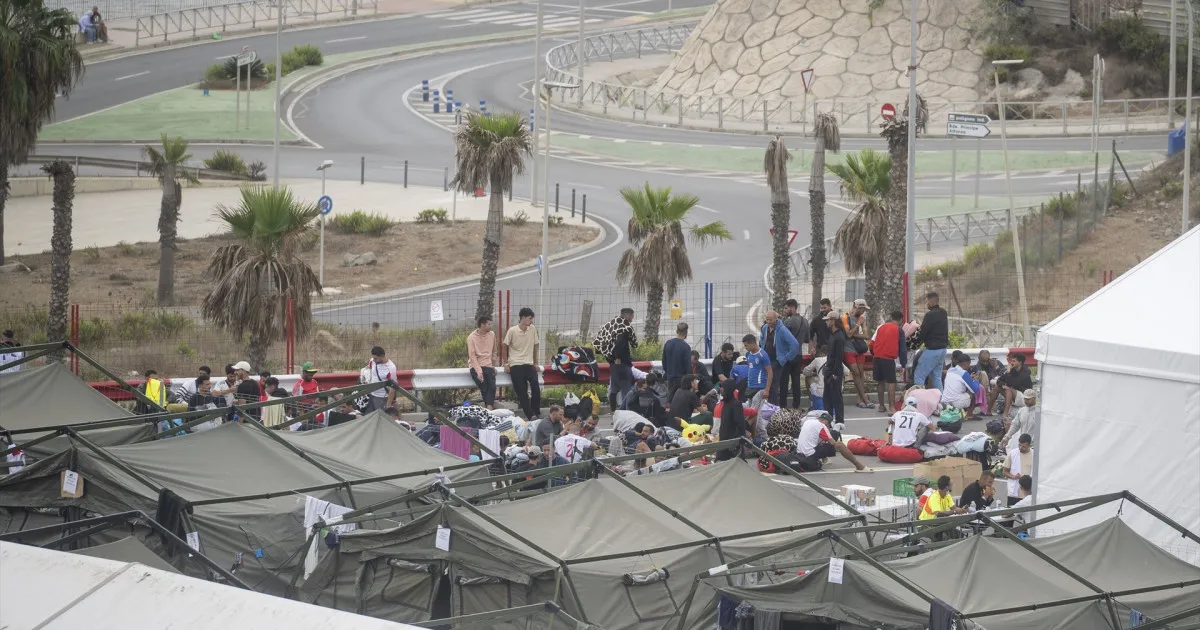
The critical takeaway from these historical precedents is the concept of "miscalculation." Escalations often begin with risky maneuvers that rely on surprise and an assumed unwillingness of the opponent to respond. This dynamic can shatter deterrence and lead to unintended conflict. The recent hybrid attack on Ceuta, for instance, was not merely a show of strength but rather a calculated military move within a broader hybrid campaign aimed at exerting pressure on Spain. This strategy aligns with coordinated efforts in information operations and political pressure, both domestically and internationally, that seek to position the status of Ceuta and Melilla as unresolved issues that Spain must address in favor of Morocco.
Morocco's recent actions are alarming and fraught with risk. The country jeopardizes its support from Spain concerning the Western Sahara issue and faces potential economic sanctions that could sour relations with its primary trading partner and investor, as well as the European Union. Furthermore, Morocco risks undermining high-impact international projects like co-hosting the 2030 World Cup, and it could find itself strategically isolated should Madrid and Algiers find common ground. The calculations made by Moroccan elites seem to be influenced by a perceived backing from the United States, a belief in their military modernization efforts providing local balance, and an underestimation of Spain's resolve and capability.
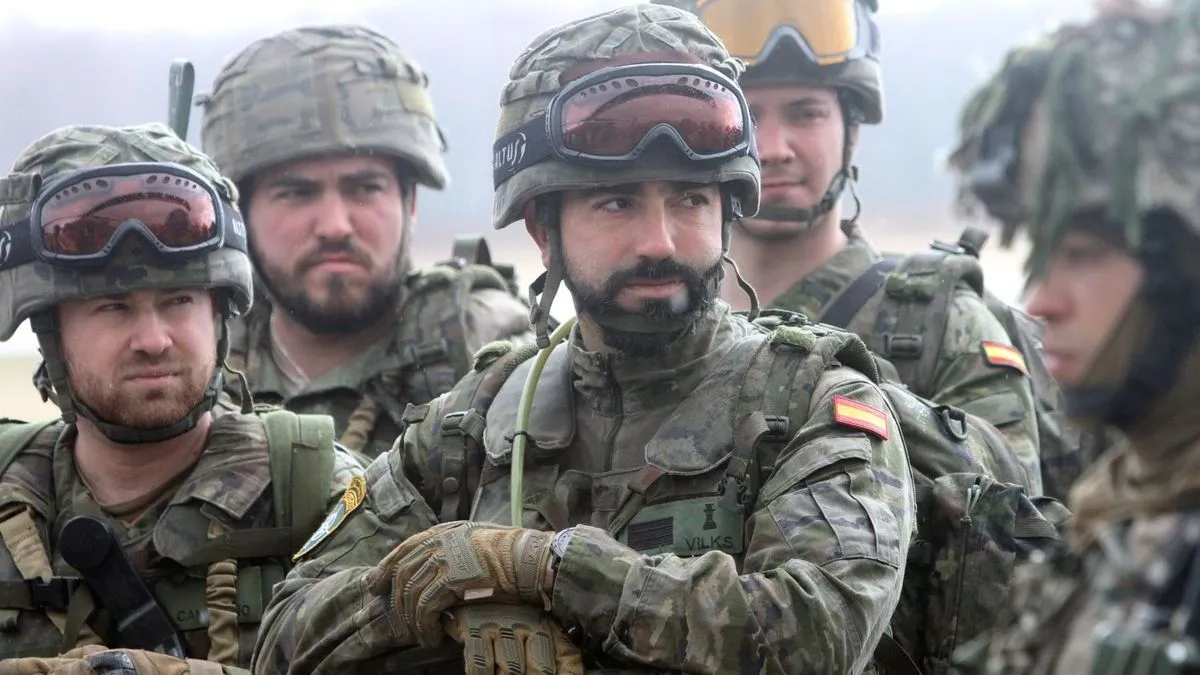
Despite Spain's overwhelming advantages in terms of economic and military strength, Morocco's audacity continues to grow. Spain's GDP is ten times that of Morocco, and its defense budget supports a professional military force of approximately 120,000 personnel. In contrast, Morocco grapples with the strategic burden of fortifying the Sahara Wall, a continuous defensive line that demands the deployment of over 100,000 troops. Yet, Moroccan leadership appears undeterred, often misinterpreting the political deliberation and internal debates of democracies as weakness.
Rabat perceives a political window of opportunity amidst Spain's internal polarization and institutional fatigue. Their strategic aim is not necessarily an immediate conventional invasion but rather to coerce Spain into accepting frameworks of co-sovereignty or progressive concession models. However, given that Ceuta and Melilla are integral parts of Spanish territory, any attempt to escalate tensions through hybrid coercion could trigger an unforeseen military response from Spain. A confrontation, whether through border skirmishes or unintended escalations, could ignite a conflict that neither side desires.
In a hypothetical scenario where Morocco were to dismiss extradition agreements with Spain, leading to a mass migration incursion, the potential for conflict could spiral rapidly. With the Royal Navy deploying aggressive postures off Ceuta and military forces being repositioned, the situation could deteriorate quickly, igniting a military response from Spain in defense of its sovereignty. The risk of miscalculation remains high, as a belief in a favorable political opportunity could lead Moroccan elites to underestimate Spain's resolve.
While the likelihood of a direct conventional war remains low, the risk of a reckless hybrid attack by Morocco escalating into a broader conflict is significantly heightened. The true danger lies not in Morocco's military capabilities but in the strategic misjudgment by its leaders, who may believe that Spain will not respond. The potential for a miscalculation could lead to a crisis reminiscent of past conflicts, one that Spain cannot afford as it navigates complex geopolitical dynamics.
As reported by elespanol.com.