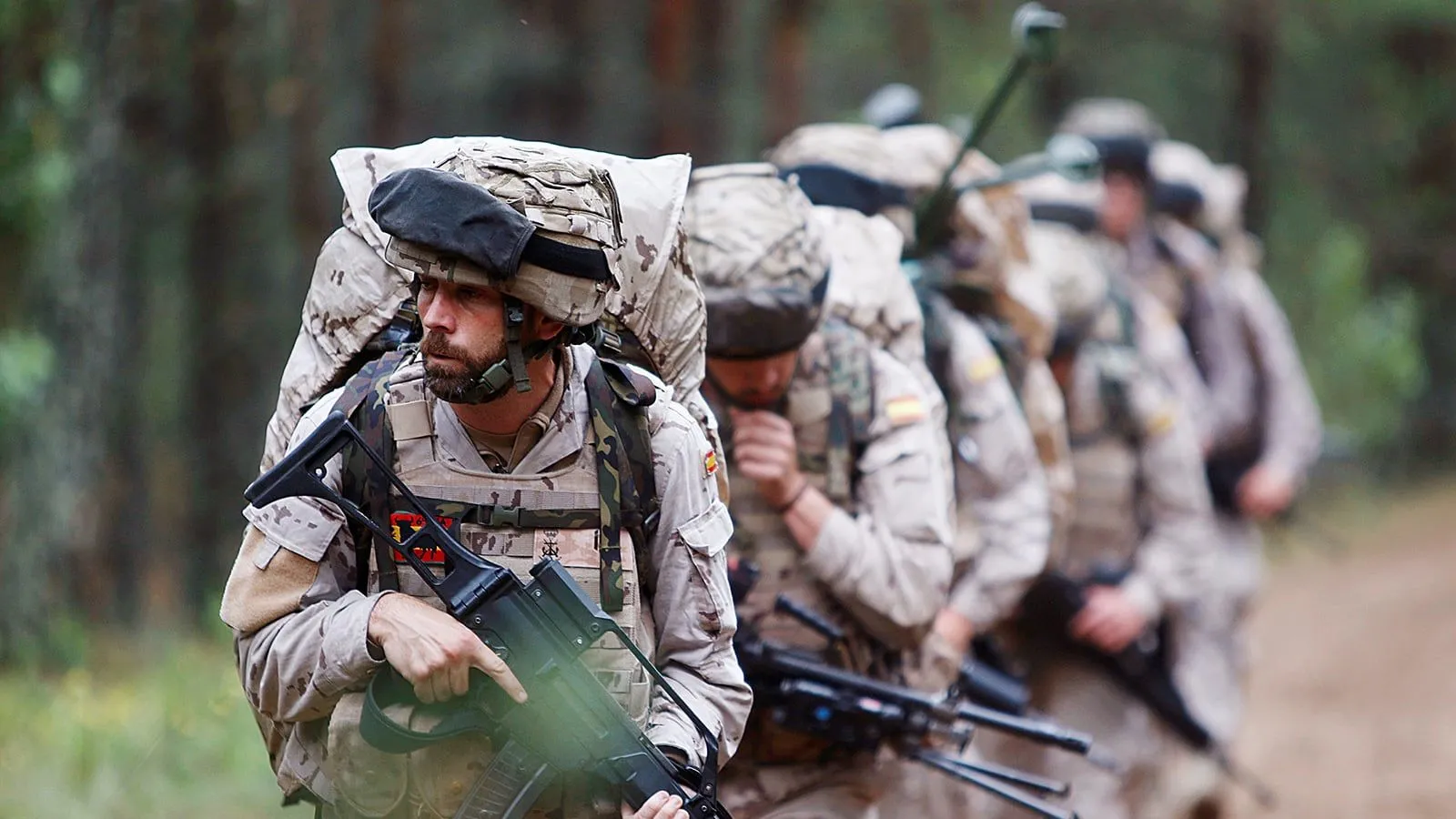

Recent developments have raised significant concerns regarding Morocco's military ambitions, especially in relation to its ongoing tensions with Spain over territories such as Ceuta and Melilla. With a GDP that is approximately ten times smaller than Spain's and a military expenditure that is merely one-fifth of Spain's budget, one must ponder why Morocco would risk its crucial commercial and political ties with its neighbor. The uncomfortable truth is that Morocco's actions on July 30 revealed a critical weakness in Spanish deterrence, suggesting that even without achieving military parity, Rabat is emboldened to act without fear of severe repercussions.
Morocco's resilience in the face of potential conflict is illustrated by its long-standing engagements, including a fifteen-year war with the Polisario Front and the extensive investment of 10% of its GDP in establishing a 2,700 km wall to assert control over the Sahara. The International Monetary Fund (IMF) projects that by 2026, Spain's GDP will reach $2.09 trillion, while Morocco's will only be $194.33 billion, creating a stark disparity of 10.75 to one. However, when it comes to military spending, the difference is less pronounced, with Spain's defense budget at $40.2 billion compared to Morocco's $7.51 billion, translating to a five-to-one ratio instead of ten.
Moreover, Morocco's military rivalry with Algeria adds another layer of complexity, as Algeria's defense spending stands at around $25.5 billion. This willingness to confront materially superior powers indicates a strategic calculation that could have substantial implications for regional stability. The events of July 30, during which over 70,000 individuals entered Ceuta, only to see 90-95% return to Morocco shortly thereafter, underscore a new kind of hybrid threat that Spain must now contend with. Spanish intelligence sources have reportedly concluded that while Rabat did not orchestrate this influx, it allowed the situation to unfold, dispatching agents to monitor and encourage the movement.
This hybrid operation exemplifies a strategy that does not require meticulous planning but rather relies on the removal of controls and the fostering of networks and rumors to create institutional saturation and political fracture while keeping violence below a conflict threshold. If Spain cannot or will not impose visible costs for such a significant breach, Morocco learns that escalation is a viable option. The economic interdependence between the two nations is starkly asymmetrical; in 2024, bilateral trade reached €22.7 billion, with Spain absorbing 22.1% of Morocco's exports and supplying 15.6% of its imports. Conversely, Morocco accounted for only 3.34% of Spain's exports and 2.32% of its imports, indicating that while both nations would suffer in the event of a rupture, the relative damage would be significantly greater for Morocco.
Additionally, the presence of over 350 Spanish companies in Morocco and the substantial investment of €4.1 billion, along with remittances sent from Spain to Morocco amounting to €1.589 billion in 2025—more than 1% of Morocco's GDP—further illustrate the interconnectedness of their economies. The total remittances received by Morocco reached $12.9 billion in 2024, which constituted about 8% of its GDP. The European Union has also played a role in this dynamic, committing €931 million in bilateral aid between 2021 and 2024, with Spain often serving as a key intermediary in fostering relations with Rabat.
Spain does not control all of Morocco's energy resources, yet it holds critical leverage, as Morocco imports approximately 90% of its energy needs. In 2025, Morocco received 10,375 GWh of gas and 2,537 GWh of electricity from Spain, highlighting the immediate vulnerabilities that could be exploited in a crisis. Even illicit cannabis cultivation in the Rif region relies heavily on European demand and the Spanish corridor. The last United Nations census from 2003 identified around 800,000 individuals dependent on cannabis cultivation, illustrating a persistent rural dependency that remains today.
In the political arena, Spanish Prime Minister Pedro Sánchez has already made significant concessions that Morocco deemed essential, such as endorsing Morocco's autonomy plan for the Sahara as a serious and realistic foundation for negotiations. Furthermore, Madrid has engaged in financial protocols and infrastructure credits while advocating for Morocco within the EU. However, Spain has not secured a definitive acknowledgment from Morocco regarding its sovereignty over Ceuta and Melilla, raising concerns about the strategic integrity of these diplomatic gestures.
If the recent withdrawal of controls was intentional, it signifies a strategic betrayal; if it was simply calculated permissiveness, the outcome remains the same: Morocco has undermined the core of the diplomatic transaction. The United States, while a traditional ally of Spain, has historically refrained from unequivocally supporting Spain against Moroccan incursions, as demonstrated during the 2002 Perejil crisis. The lesson here is clear: Washington's inclination will likely be to stabilize rather than vindicate. The NATO treaty does not automatically include Ceuta and Melilla, suggesting that the U.S. would not intervene against Morocco in defense of a NATO ally.
Morocco's calculations, particularly regarding the Sahara, indicate that its ambitions are not necessarily about profitability. Historical investments by Spain in the region did not yield the expected returns, and Morocco has invested heavily in military and defensive structures to solidify its claims. The Moroccan monarchy is more concerned with projecting strength and national identity than with financial gains. This unwavering commitment to its territorial claims, including Ceuta, Melilla, and the Canary Islands, poses a significant threat to regional stability.
Ultimately, the threat posed by Morocco is serious and requires an urgent reevaluation of Spain's defense strategies. The previously overwhelming military superiority of Spain has not deterred Morocco's aggression, which is likely only to increase. To prepare for a potential future conflict, Spain must prioritize its military readiness, maintain a significant strategic advantage, and establish clear communication with its populace regarding the aggression posed by its southern neighbor. Immediate action is crucial to prevent further emboldening of Moroccan aggression.
As reported by elespanol.com.