
The Shift of Rivalry to the Sahel Region
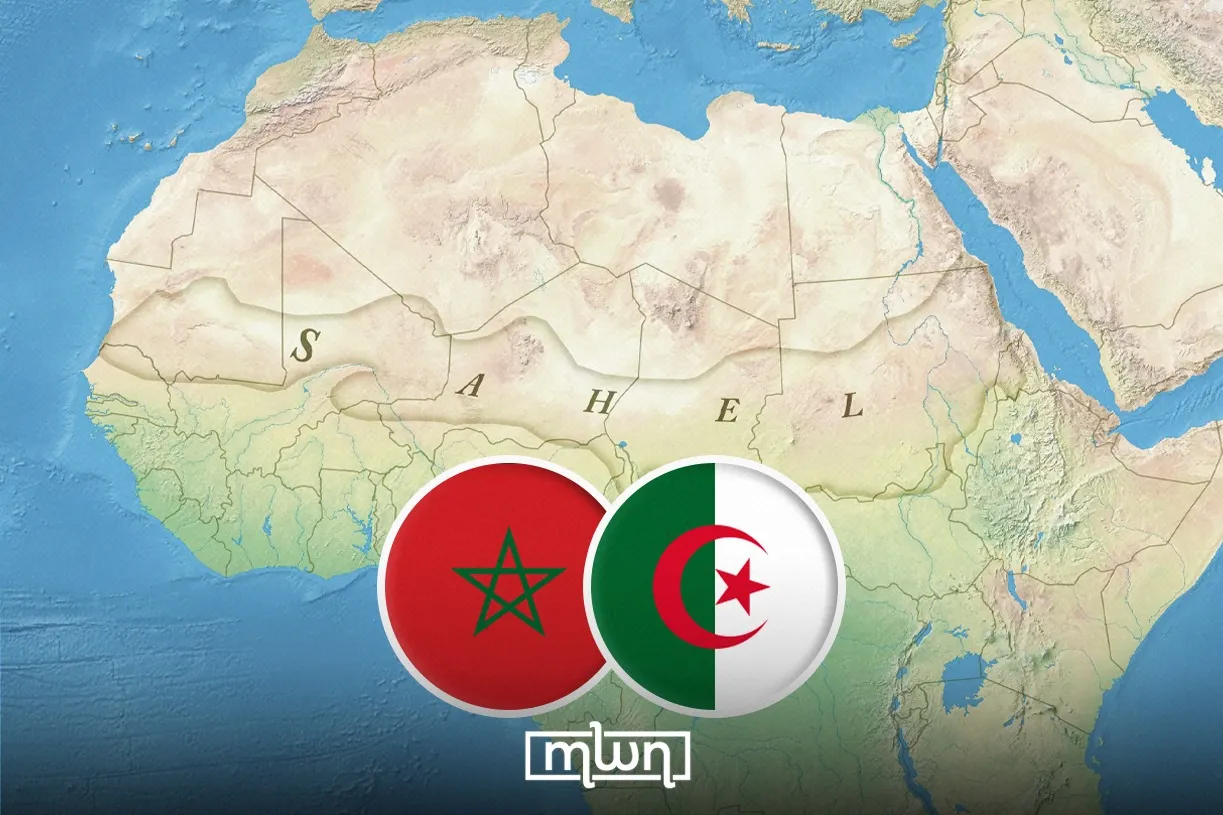
Historically, the rivalry between Morocco and Algeria has been defined by territorial disputes and the contentious issue of the Moroccan Sahara. However, this rivalry has now transitioned to a new geopolitical stage in the Sahel region, which is currently undergoing significant geopolitical reconstruction. In light of France's withdrawal and the increasing presence of Russia, both Rabat and Algiers are implementing starkly different strategies to assert their influence. Morocco is adopting an economic and diplomatic offensive, while Algeria continues to rely on its traditional security-focused paradigm. This divergence has prompted Sahelian states to adopt a hedging posture, allowing them to act as swing states and capitalize on the competition between the two North African nations for their own benefits.
In the past, the Moroccan-Algerian rivalry primarily played out within the confines of the African Union or along the borders of the Moroccan Sahara. However, since 2020, and notably with the establishment of the Alliance of Sahel States in 2023, the focal point of this competition has shifted southeastward to the Sahel, a region characterized by the emergence of sovereigntist juntas and the withdrawal of Western military forces. This evolving landscape has transformed the Sahel into a testing ground for two contrasting visions of regional power dynamics.
Contrasting Models of Influence
An extensive analysis of thousands of diplomatic, economic, and security interactions from 2010 to 2026 reveals a notable structural asymmetry between Morocco and Algeria. Morocco boasts a remarkable 100% cooperation rate with the entire Sahelian bloc, which includes Mali, Niger, Burkina Faso, and Chad. In contrast, Algeria's overall cooperation rate stands at 78%, hampered by a significant rift with Mali. This rivalry is not merely a binary confrontation; it underscores two competing models of influence, each with distinct characteristics.
Morocco employs a cumulative strategy rooted in 'soft centrality,' primarily focusing on economic and diplomatic engagements. A significant 68% of its interactions in the Sahel are diplomatic in nature, while 24% are economic, and only 7% pertain to security matters. This approach allows Morocco to avoid military entanglements and instead foster structural interdependencies through initiatives in banking, telecommunications, fertilizers, and religious leadership training.
Conversely, Algeria adheres to a historical security and diplomatic model, reflected in its 63% diplomatic engagement, 24% security-related interactions, and a meager 14% focused on economic partnerships, predominantly tied to hydrocarbons. Algeria's dual role as a regional leader safeguarding its southern flank and as a counter to Moroccan influence complicates its position in the Sahel.
Despite efforts to diversify its cooperation, Algeria's reliance on hydrocarbons undermines its ambition to transition from a primarily security-based influence model to a more hybrid approach encompassing energy security and economic partnerships, particularly in Niger and Chad. In stark contrast, Morocco's Atlantic Initiative, launched in November 2023, has been widely embraced across Sahelian capitals, demonstrating Rabat's ability to create meaningful economic partnerships while circumventing security traps.
This dynamic competition is underscored by the divergent economic foundations of both nations. Algeria's influence is predominantly tied to its energy resources, with econometric analyses revealing a strong correlation between crude oil production and its geopolitical clout. On the other hand, Morocco's influence is bolstered by a diversified economy, where Gross National Product (GNP) and strategic minerals like phosphates play pivotal roles in strengthening its regional presence.
As the geopolitical landscape continues to evolve, the rivalry between Morocco and Algeria in the Sahel underscores the intricate balance of power and the differing approaches each nation employs to expand its influence. While Morocco's emphasis on economic integration and diplomatic engagement positions it favorably in the eyes of Sahelian states, Algeria's heavy investment in military capabilities may lead to a precarious equilibrium, one that requires careful navigation amidst the shifting tides of regional politics.
As reported by moroccoworldnews.com.