
Transforming Regional Energy Dynamics
The recent signing of the international governmental agreement regarding the Nigeria-Morocco Atlantic Gas Pipeline by member states of the Economic Community of West African States (ECOWAS) during their 69th summit in Sierra Leone represents a pivotal moment in the evolution of this ambitious project, which has been in the works for nearly a decade. This agreement not only formalizes the collaborative framework between Nigeria and Morocco but also transforms the pipeline from a bilateral initiative into a regional project that implicates the political and organizational responsibilities of West African governments. It signals a shared vision for energy, manufacturing, and economic integration among the nations involved, fundamentally altering the nature of the pipeline and its respective stakeholders.
Infrastructure and Economic Implications
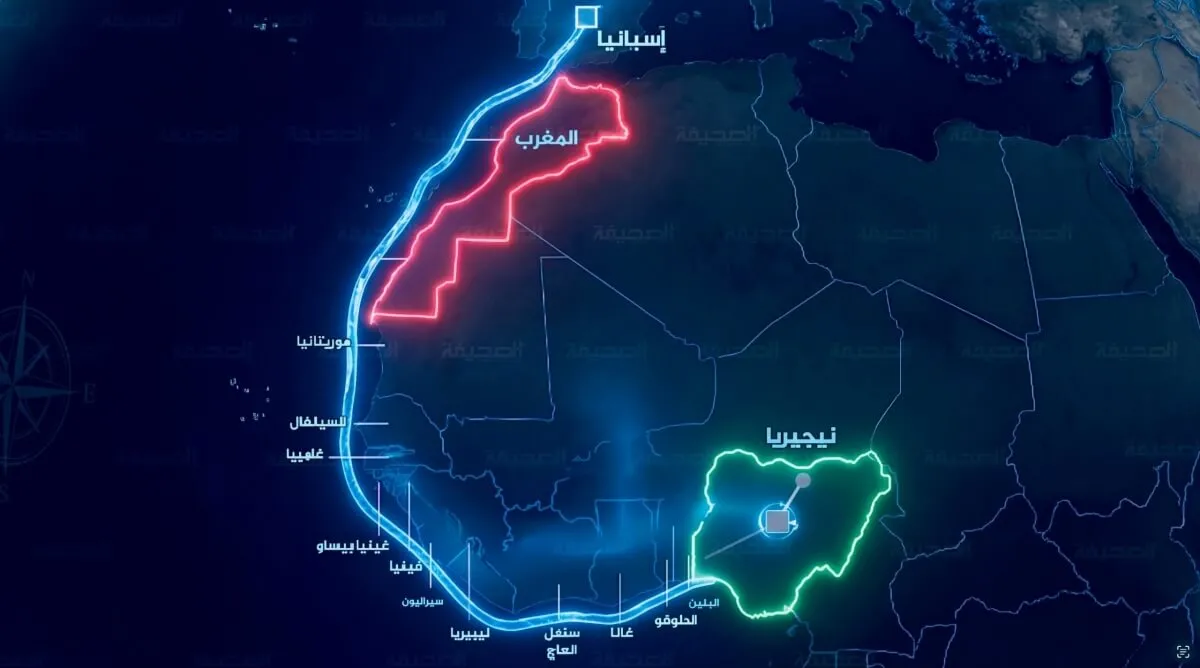
The proposed pipeline stretches approximately 6,800 kilometers, traversing 13 countries along the West African Atlantic coast, with the capability of transporting up to 30 billion cubic meters of gas annually upon completion. Notably, projections suggest that around 15 billion cubic meters of this gas could be directed towards Morocco and European markets, while the remaining quantities would cater to regional consumption needs. The overall cost of this monumental project is estimated at around $25 billion, with plans for phased implementation linking it to the Maghreb-Europe gas pipeline in northern Morocco. The strength of this new agreement lies in its approach to addressing one of the most significant challenges faced by cross-border infrastructure projects in Africa: the absence of a unified framework that delineates transit rules, ownership, operational guidelines, tariffs, and legal responsibilities. In order to attract investors, the pipeline must not only showcase promising engineering routes but also necessitate long-term political guarantees and consistent regulations across diverse nations with varying laws, institutions, and financial capacities.
To facilitate this, the anticipated establishment of a project-centered company headquartered in Casablanca, along with a high governance authority based in Abuja, is crucial. This will serve as a conduit for mobilizing investors and achieving a final investment decision. Furthermore, Morocco and Mauritania, which are not ECOWAS member states, are expected to sign the agreement in separate ceremonies, thereby completing the governmental framework for the countries traversed by the pipeline. This institutional sharing between Morocco and Nigeria is not merely a formal detail; it positions Casablanca as a gateway to banking, investment funds, and financial markets, while Abuja maintains a political and executive center that reflects Nigeria's status as a gas producer and the largest economic power in the region. This arrangement aims to balance financing and resources with national interests and regional ownership.
For West African nations, the value of the pipeline extends beyond mere transit through their territories or collection of transit fees; the real significance lies in the construction of local connections and power stations capable of utilizing the gas supply. The region is currently grappling with high electricity production costs and a heavy reliance on imported liquid fuels, coupled with limited national networks that fail to provide stable supplies to factories. The World Bank indicates that over half of West Africa's population was deprived of electricity prior to regional connectivity initiatives, and ongoing outages and high costs have remained obstacles to business operations and economic transformation. Gas thus emerges as a potential means of powering electricity production facilities and supporting industries, rather than merely a commodity aimed at export.
The experience of regional electricity interconnection serves as a practical example of the value of shared infrastructure. Networks of exchange have successfully reduced generation costs in Guinea-Bissau from 25 to 11 cents per kilowatt-hour, while electricity costs in The Gambia have decreased by about 42%. Additionally, this has allowed Liberia and Sierra Leone to import cheaper electricity from Ivory Coast, reducing generation costs by 10 to 20%. The hope is that gas will replicate this effect on a larger scale by powering electricity plants and providing raw materials for fertilizers, cement, food industries, and metals.
This is the essence that African officials underscored following the signing. Togo's Foreign Minister, Robert Dossé, regarded the project as an extension of King Mohammed VI's vision to enhance regional integration and alleviate the isolation of Sahel countries, viewing it as a conduit connecting ECOWAS countries to European markets. Gambia's Foreign Minister, Ousainou Darboe, emphasized that energy is central to the developmental programs of the region, asserting that the pipeline will connect member states and offer mutual benefits, ultimately benefiting all West African nations.
Liberian President Joseph Boakai provided a broader interpretation, describing the project as a "great achievement" that transcends mere energy infrastructure to represent a transformative investment in the shared future of West Africa. Ghana's Foreign Minister, Samuel Okudzeto Ablakwa, highlighted the economic core of the issue, stating that industrialization in Africa remains contingent upon investment in infrastructure. Similarly, ECOWAS Commission President Umaro Sissoco Embaló identified the pipeline as an unprecedented transformative initiative, potentially offering energy security, job opportunities, and economic interconnectedness, while Sierra Leone's Foreign Minister, Timothy Kabbah, termed it a structurally significant project that embodies hope for the launch of genuine economic dynamics.
Strategically, the pipeline offers Nigeria an additional route to capitalize on its gas reserves while positioning Morocco as a crucial energy hub between Africa and Europe. More importantly, it provides nations located between these two points with the opportunity to transition from small national markets to a regional market capable of justifying substantial industrial investments. The Atlantic route connects the most densely populated ports and economic cities along the coast, placing energy at the center of a broader initiative for trade and logistical integration.
As reported by assahifa.com.