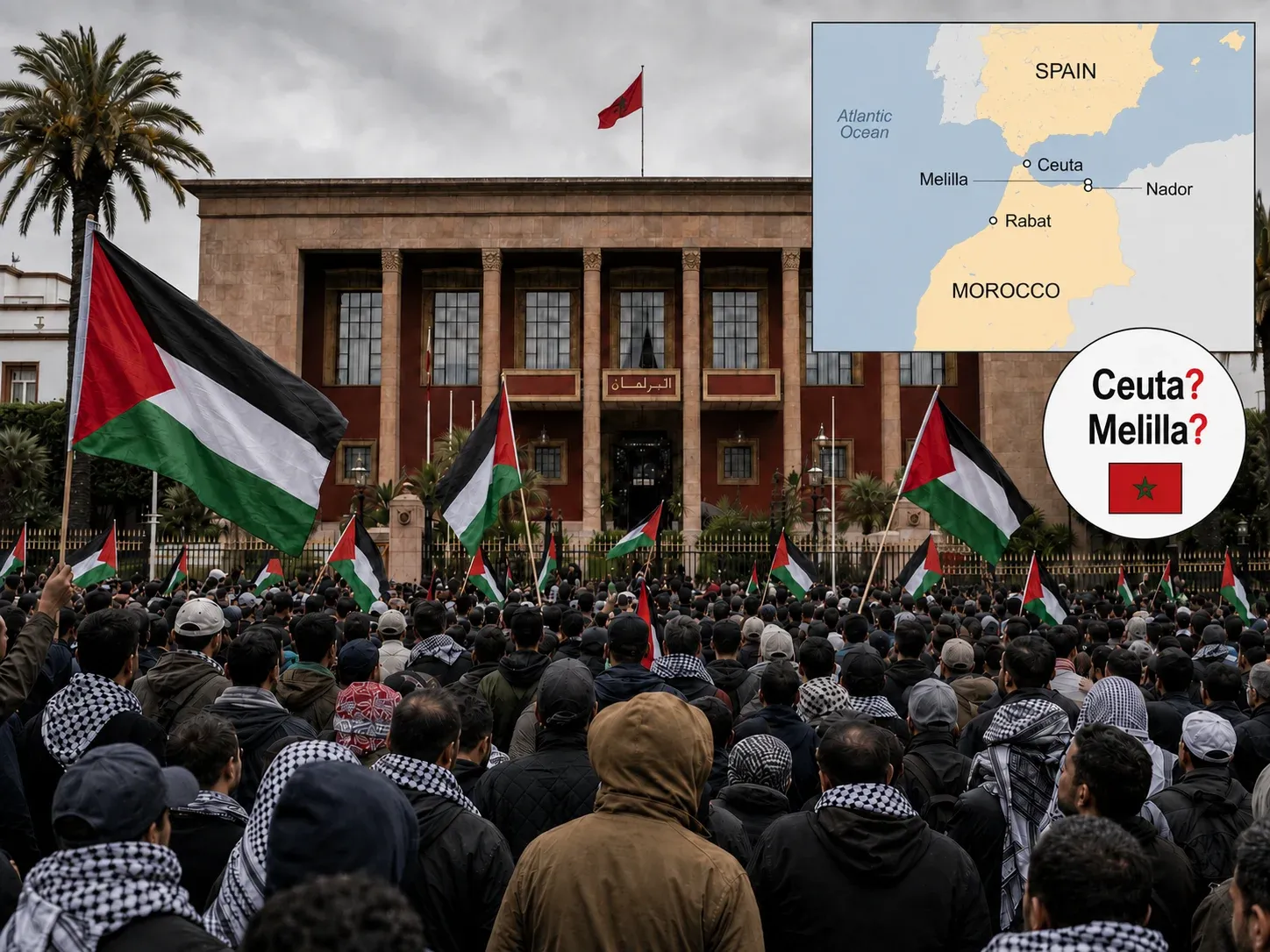

In Morocco's urban centers, a distinct form of political activism emerges whenever a crisis unfolds thousands of kilometers away, only to dissipate into silence when the crisis draws near to home. This performative and selective activism is evident in cities like Rabat, Casablanca, and Tangier, where demonstrators don keffiyehs with cinematic flair and brandish banners that vehemently condemn occupation, colonialism, and imperial violence. This fervor, however, is marked by a striking inconsistency, as outrage is selectively directed based on geography and political convenience. The moral compass guiding these activists reveals a troubling bias: their indignation is pronounced when the aggressor aligns with their ideological narrative, yet it becomes notably muted when the circumstances implicate their own nation.
The recent events surrounding Ceuta starkly illuminated this hypocrisy. In July, when 70,000 Moroccans crossed into Ceuta—a city with a colonial history dating back to its conquest by Iberian forces in 1415—Spain responded with military mobilization and a united front across its political spectrum. From left to right, the consensus was unwavering: Ceuta is Spanish, and any dissent is an affront to national sovereignty. This solidarity among Spanish politicians stands in stark contrast to the fractured political discourse within Morocco, where ideological commitments often supersede national interests, leading to a dissonance that complicates the country’s stance on its colonial history.
Moreover, the media coverage surrounding these events further complicates the narrative. Outlets like Al Jazeera, which typically champion anti-imperial rhetoric, framed the crisis in Ceuta as an extension of Israeli exploitation and European far-right opportunism, sidelining Morocco’s legitimate claims to sovereignty. The portrayal of Morocco as a mere pawn in a larger geopolitical game underscores the selective outrage prevalent in the Arab media landscape. This tendency to diminish Morocco's territorial integrity while amplifying grievances related to Palestine illustrates a troubling hierarchy of solidarity that often prioritizes ideological loyalty over national realities.
This ideological inconsistency is particularly evident in the response of Morocco's Islamist factions, whose silence regarding the colonial status of Ceuta and Melilla reflects a strategic avoidance of confronting a European ally that positions itself as a supporter of Palestinian rights. In this context, the occupation of Moroccan territory by Spain becomes a secondary concern, overshadowed by a broader narrative of solidarity with Palestine that fails to recognize Morocco's own struggles. The expectation that Morocco should remain silent about its territorial claims—while simultaneously supporting Palestinian causes—highlights a moral hypocrisy that demands examination.
As the dynamics of geopolitical relationships continue to evolve, it becomes increasingly clear that Morocco’s historical contributions to Palestine, through diplomacy and humanitarian efforts, have yet to translate into reciprocal support from Arab nations and media outlets. The ideological framework that prioritizes foreign causes over national interests ultimately undermines Morocco's sovereignty and integrity, leaving it vulnerable to external pressures while its own claims are dismissed.
In conclusion, the ongoing double standards surrounding territorial claims and national identities within the context of Moroccan activism reveal a significant ideological conflict. The keffiyist’s fervor for distant causes stands in stark contrast to the silence regarding the flag of colonialism looming over Moroccan cities. This ideological submission—rooted in a desire for transnational solidarity—ultimately serves to diminish Morocco’s voice in the global dialogue on occupation and sovereignty. It is imperative that Moroccan activists recognize the necessity of defending their own territorial integrity, lest they continue to be seen as collaborators in a narrative that both exploits and ignores their national struggles.
As reported by blogs.timesofisrael.com.