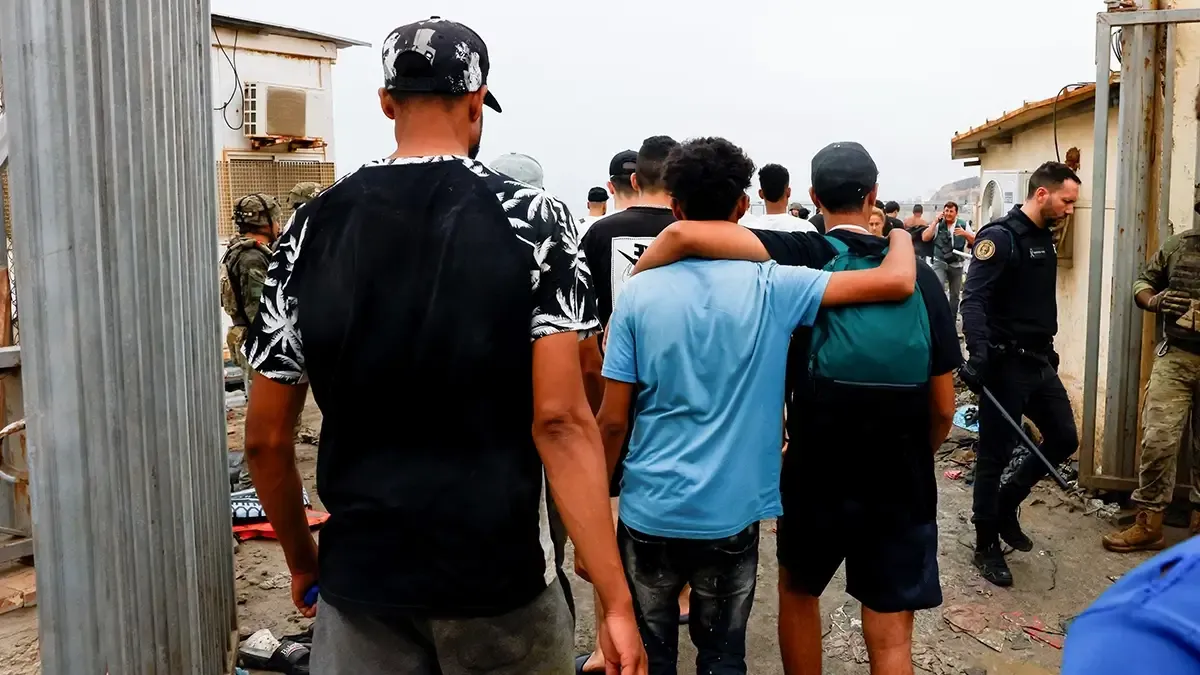

The haunting images of tens of thousands of Moroccans journeying toward the Ceuta border on July 30 and 31 will remain etched in the collective memory of the nation. Families comprising women, men, children, and the elderly traversed the terrain on foot or were packed into vehicles, resembling a scene from a catastrophic event like war, famine, or natural disaster. However, the reality they were escaping was less about immediate peril and more about a pervasive and systemic loss of hope.
A Structural Fracture in Moroccan Society
The current state of Moroccan society is characterized by an alarming bifurcation, where two distinct realities coexist within the same geographical boundaries yet fail to intersect meaningfully. We witness a stark juxtaposition: on one side, poverty, social exclusion, and daily struggles plague vast segments of the population; on the other, bustling restaurants, thriving shopping centers, and a multitude of luxury cars paint a picture of prosperity. This duality illustrates a profound social divide within the nation, where two 'Moroccos' exist in parallel, oblivious to each other's challenges and experiences.
To comprehend the motivations behind this massive exodus, one need not delve into ideological debates; rather, an examination of reports from official state institutions, such as the High Commission for Planning (HCP) and the Economic, Social and Environmental Council (CESE), reveals the pressing issues at hand. The HCP’s findings indicate a troubling rise in social inequalities and a deterioration in living conditions, with nearly 72% of Moroccan households —approximately five million families— surviving on an average monthly income below 1,829 dirhams. This statistic alone elucidates much of the unrest permeating the country.
Moreover, a particularly striking statistic from the CESE highlights that around 1.5 million young Moroccans between the ages of 15 and 24 find themselves outside the education system, vocational training, and the labor market, known colloquially as NEETs. Despite the Moroccan government’s efforts to launch significant strategic initiatives in recent decades, including the development of ports, highways, high-speed rail, and modern sports facilities, the benefits of economic growth have not been equitably distributed. A substantial portion of the populace continues to endure precarious living conditions, disconnected from the advantages of economic advancement.
The social landscape is further complicated by the pervasive influence of social media, which significantly shapes the aspirations of young Moroccans. Success stories proliferate, showcasing individuals from humble beginnings who have emigrated to the European Union and achieved remarkable transformations in their lives. While these narratives are indeed factual, often featuring Moroccans or European citizens of Moroccan descent who have attained notable success in various fields, they rarely portray the arduous journey that precedes such achievements. The reality is that many emigrants labor under grueling conditions, performing menial jobs merely to sustain their daily existence, while thousands remain unable to fully integrate into their host countries’ economies.
This selective portrayal fosters a collective belief that emigration is the sole pathway to a dignified life. Within a context marked by inequality, youth unemployment, and limited prospects, the desire to leave transcends individual choice, morphing into a pervasive social phenomenon. The narrative intensifies due to the overwhelming influence of contemporary consumer culture, which bombards individuals with images of material success, contrasting sharply with the grim financial realities faced by many.
The chasm between aspirations and achievable realities breeds frustration, diminishes faith in the future, and cultivates a profound sense of exclusion. Such an environment becomes fertile ground for the proliferation of extremist ideologies and harmful behaviors that undermine civic harmony.
An Institutional Challenge That Admits No Indifference
As the nation approaches its upcoming legislative elections, the prospects for substantial political change appear bleak. The same political figures who have long been entrenched in power are likely to dominate the landscape once more, despite their diminishing ability to engage citizens and earn their trust. The critical issue at hand is not merely political turnover; rather, it is the imperative to restore institutional credibility and fortify the relationship between the state and a society yearning for tangible solutions to its pressing issues.
Rebuilding trust among citizens necessitates more than just electoral promises or grand infrastructure projects; it demands comprehensive public policies spearheaded by ministries such as the Ministry of National Education, Preschool and Sports, aimed at curbing inequalities, expanding opportunities for youth, ensuring quality education, promoting decent employment, and upholding the principles of meritocracy, equal opportunity, and social justice. The stability of a nation is not solely reliant on macroeconomic metrics or the international acclaim of its flagship projects; it heavily depends on its ability to inspire hope among those who feel disconnected from the future.
The scenes observed at the Ceuta border should not be dismissed as isolated incidents or mere migration crises. Instead, they represent a visible manifestation of a profound social malaise that has been simmering for years, demanding urgent attention before its ramifications become unmanageable. The pressing question is no longer why thousands of young people are attempting to breach Europe’s borders. The real inquiry should focus on how long a society can coexist with an ever-widening social chasm without taking decisive action to address its underlying causes. For when hope abandons a society, no wall is formidable enough to contain it.
As reported by atalayar.com.