
Understanding the Upcoming Solar Eclipse in Morocco
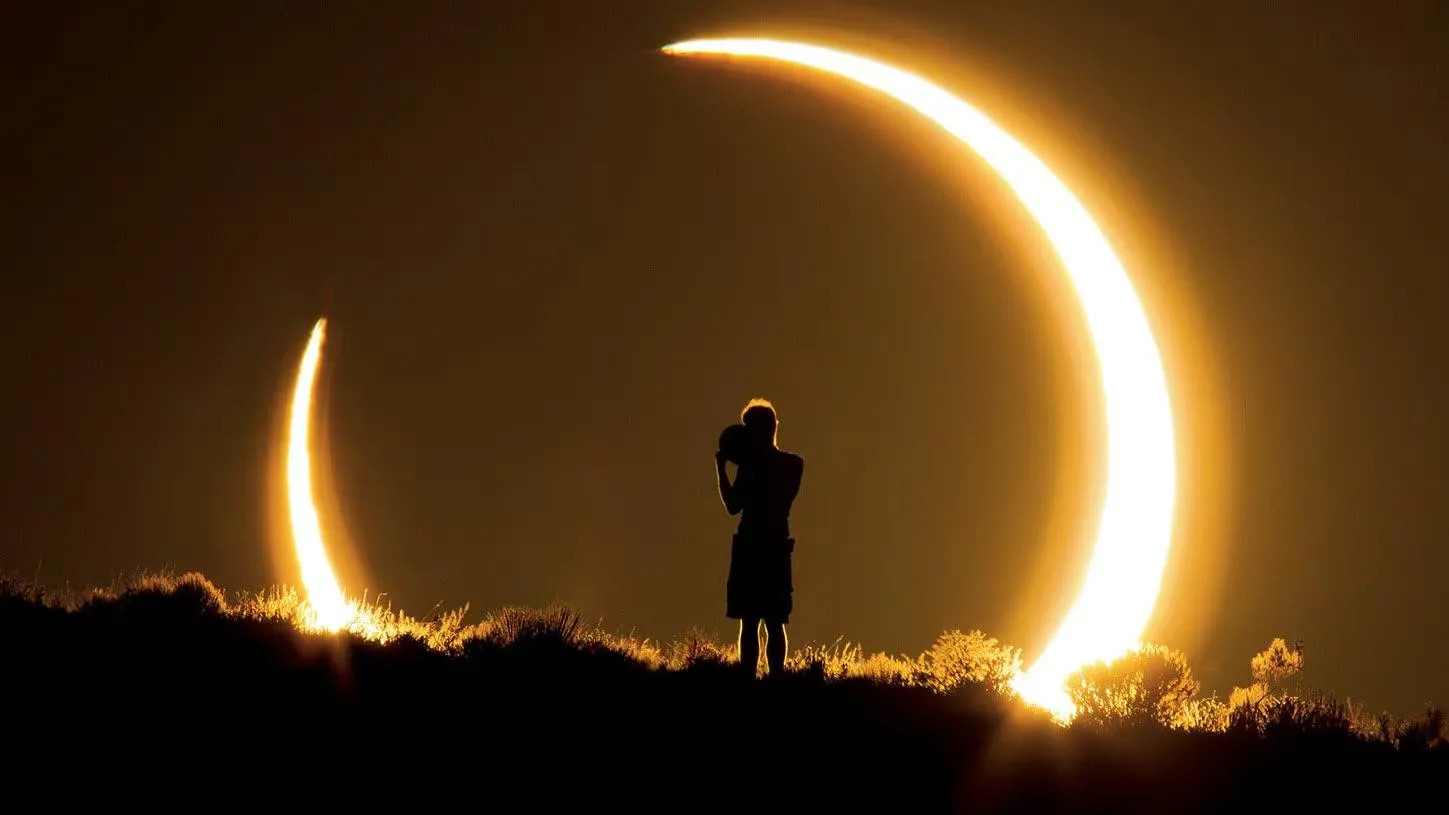
On August 12, 2026, a solar eclipse will occur, with its intensity varying depending on the observer's location on Earth. A swath stretching from Galicia in Spain to Catalonia will experience a total eclipse, where the Moon will completely obscure the solar disk. This totality will also be visible in certain parts of Greenland, Iceland, and Spain, as well as a small region in northeastern Portugal. However, Morocco is not situated within this zone of totality; across the Kingdom, residents will witness a partial eclipse where the Moon will never fully cover the Sun, obscuring a significant portion and creating a crescent shape accompanied by the shadow cast on the ground.
This event marks the most significant eclipse observable from Morocco in over 20 years, with the last comparable partial eclipse occurring on October 3, 2005. But why are such phenomena relatively rare? The irregularity of solar eclipses is due to the orbital mechanics of the Earth-Moon-Sun system. The Moon orbits the Earth, while the Earth-Moon system orbits around the Sun. These movements are not perfectly synchronized; variations in their orbits mean that the shadow cast by the Moon does not consistently fall on the same locations on Earth. As a result, depending on the geographical position of the observer at the time of alignment, the eclipse may be total, partial, or even entirely invisible.
Timing and Visibility Across Morocco
In Morocco, the eclipse will begin between 6:44 PM and 7:06 PM, varying by region, reaching its peak between 7:40 PM and 8:00 PM, before gradually concluding around sunset. This celestial event will unfold entirely in the late afternoon and early evening, with the Sun already relatively low on the horizon at maximum phase. For instance, in Casablanca, the eclipse will commence at 6:48 PM, peak around 7:43 PM with approximately 87% of the solar disk obscured, and end around 8:20 PM, coinciding with sunset. In Meknes, the maximum obscuration is anticipated around 7:42 PM, while in Agadir, it will occur later at approximately 7:49 PM, highlighting the temporal variance of the phenomenon based on geographical location.
The intensity of the eclipse will not be uniform across Moroccan territory; it will be more pronounced in the northern regions and gradually decrease moving southward. The Nador region is expected to record the highest obscuration rate in the Kingdom, with 93% of the solar disk hidden by the Moon. Cities like Tangier, Al Hoceïma, and Oujda will also see over 92% coverage. In Rabat, the sky will darken by about 88%, while Marrakech will experience around 83%. Further south, the phenomenon remains observable; in Dakhla, nearly 60% of the solar disk will be obscured at maximum.
This north-south gradient reflects Morocco's position relative to the trajectory of the Moon's shadow, which is closer to the northern regions than to the Saharan areas.
Essential Safety Precautions for Viewing
It is crucial to note that this phenomenon must not be viewed directly, even when the Sun is largely obscured by the Moon. Solar rays, even partially blocked, can cause serious and irreversible retinal damage. To safely observe the eclipse, the use of specially designed solar viewing glasses is essential, along with equipment fitted with appropriate radiation filters. Ordinary sunglasses or smoked glass do not provide adequate protection and should not be used for this purpose.
The astronomical event on August 12, 2026, also heralds another significant occurrence. On the morning of August 2, 2027, a total solar eclipse will directly cross Moroccan territory, following a path from Tangier to Oujda. Unlike the partial eclipse occurring tomorrow, this event will allow observers in this specific area to witness a complete obscuration of the Sun.
As reported by fr.le360.ma.