
Morocco: Africa's Leading Security Contributor
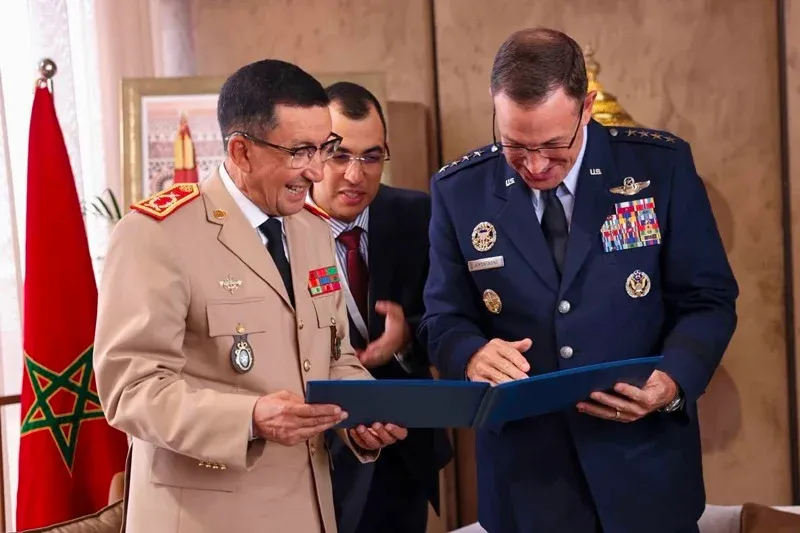
In a recent statement, the Deputy Chief of Staff of the U.S. Air Force emphasized Morocco's pivotal role as the largest security contributor on the African continent. The kingdom has consistently participated in peacekeeping missions across Africa and beyond, while also providing training for numerous African officers year after year. This commitment positions Morocco as a reliable partner for the United States, fostering a strong bilateral relationship.
During an interview with the online newspaper Hespress (English version) at the eighth edition of the Marrakech International Airshow, the American military official highlighted Morocco's historical significance, noting that the kingdom was the first nation to recognize U.S. independence in 1777. This long-standing partnership continues to evolve, particularly through military collaboration.
Strengthening Military Ties Through Training and Joint Exercises
The U.S. Africa Command (AFRICOM) recently established a multi-domain training center in Tan-Tan, Morocco, a strategic choice that underscores the importance of Morocco as a training ground compared to other potential locations on the continent. This initiative is seen as a significant step toward enhancing cooperation and integration between the U.S. Air Force and the Royal Moroccan Air Force. The Deputy Chief of Staff expressed optimism about the future of these relations, stating that they are likely to strengthen year after year.
He pointed out that the Moroccan Air Force receives the same level of training and adheres to the same standards in tactics, techniques, and procedures as their U.S. counterparts. Moroccan F-16 operators and maintenance crews are trained to the same qualifications and engagement rules utilized by the U.S. Air Force. This was evident when U.S. F-35 jets flew alongside Moroccan fighters during the Marrakech Airshow, highlighting the trust and strong relationship between the two air forces.
Morocco boasts one of the most capable air forces in Africa, operating F-16s and soon the advanced F-16 Block 72 models, as well as C-130 transport aircraft and Apache helicopters. The kingdom's investment in military modernization, averaging around $5 billion on U.S. systems, is expected to reach approximately $11 billion, presenting numerous opportunities for collaboration between the two nations.
The U.S. Air Force has collaborated with Morocco to enhance the content of the African Lion exercises, which have shifted focus from primarily air operations to a more integrated approach that includes land elements as well. This collaborative effort is expected to shape the future of joint operations and further solidify the partnership between the U.S. and Moroccan air forces.
With shared security interests, the partnership between Morocco and the United States continues to grow. The establishment of the multi-domain training center in Tan-Tan opens doors for collaboration not only in the air force but also across the army and navy, encompassing areas such as training, artificial intelligence, drone operations, and autonomous warfare. Achieving a more regular and sustainable relationship is a mutual goal, one that both nations aspire to fulfill.
The landscape of air power is ever-evolving, with advancements in technology and warfare strategies. From the early days of World War I to the current capabilities of fifth and sixth-generation fighters and autonomous drones, the trajectory of military technology necessitates continuous adaptation and improvement. As adversaries innovate in response to new developments, both the U.S. and Morocco remain committed to advancing their military capabilities and fostering a robust partnership.
As reported by hespress.com.