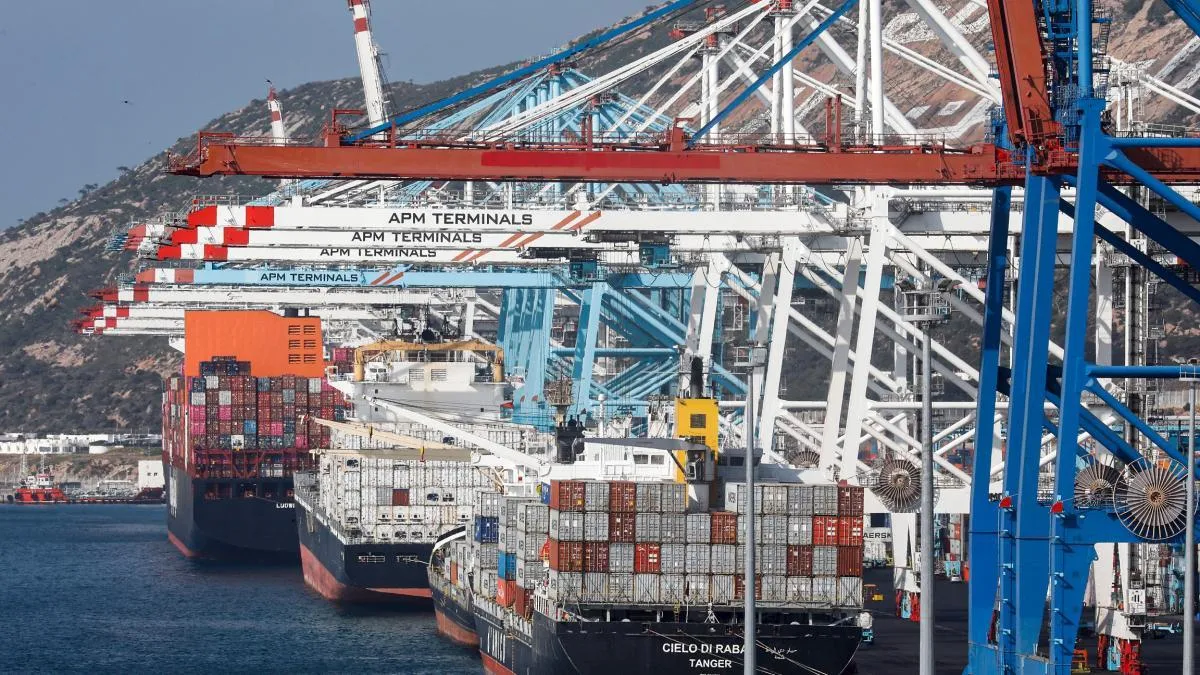

The ongoing military crisis in the Bab el Mandeb Strait has emerged as a significant challenge for the West, yet it has also produced unexpected beneficiaries. Notably, Spain has seen a rise in the logistical value of its Mediterranean ports, refineries, and regasification plants over the past two years. However, the most significant advantage has been accrued by Morocco, which is set to establish the most powerful port hub in the Mediterranean by the end of the year with two state-of-the-art facilities: the ports of Tangier Med and Nador West Med, both accompanied by thriving business areas. Tangier Med lies approximately thirty kilometers from Ceuta, while Nador West Med, which is nearing inauguration, is situated about fifty kilometers from Melilla. Any future assessments of these two Spanish cities in North Africa must consider this evolving reality, as Tangier Med and Nador West Med could soon encircle Ceuta and Melilla with burgeoning industrial and commercial activities.
The troubles in the Bab el Mandeb Strait began in December 2023 when Houthi rebels from northern Yemen, backed and armed by Iran, commenced attacks on Israeli merchant vessels or those associated with Israel, in retaliation for the offensive in Gaza. This escalation led to an immediate increase in maritime insurance costs, prompting major shipping companies to divert their container ships to the older Portuguese route around the Cape of Good Hope in South Africa. This detour, while longer—adding an additional twenty days of transit from the Far East to Gibraltar compared to the Red Sea route—has become the safer option.
The Return of Major Shipping Lines to the Red Sea Amid Promises of Safety
As a result of this shifting logistics axis, Spain has emerged as a leader in the Maritime Connectivity Index, a metric developed by the United Nations Conference on Trade and Development that assesses a country’s integration into global maritime transport networks. By ranking first in Europe and seventh globally, coupled with its six operational refineries and seven regasification plants along its coast, Spain is solidifying its status as a logistical powerhouse. The rise of its ports, robust capacity for receiving and storing liquefied natural gas, and an enhanced oil refining capability—especially amid the current surge in diesel prices—underscore Spain's growing significance in the maritime domain.
2024 proved to be a prosperous year for the ports of Barcelona and Valencia, with container traffic in Valencia increasing by 14.5% and Barcelona experiencing a remarkable surge of 19%. The Port of Barcelona has functioned as a key redistributor, benefiting from its rail connection to France through the European gauge, a crucial aspect of the Mediterranean corridor often discussed. Meanwhile, Algeciras maintained stability, as growth occurred across the strait in the modern terminals of Tangier Med.
Tangier Med and Nador West Med: Catalysts for Economic Activity Around Ceuta and Melilla
In 2025, while the growth of Spanish ports moderated, traffic at Tangier Med surged by 8.5%, exceeding ten million containers annually—outpacing the combined totals of the ports of Valencia and Algeciras, cementing its status as the principal gateway to the Mediterranean. Experts in the international port sector suggest that the shift in shipping routes due to the crisis in Bab el Mandeb is not the sole factor behind Tangier Med's ascent. They highlight its modern infrastructure, competitive pricing driven by lower labor costs, and exemption from the European ETS emissions trading scheme as significant advantages. With the upcoming inauguration of the new Nador port, Morocco is set to dominate the Mediterranean maritime landscape without incurring ecological surcharges.
Current developments indicate that shipping lines are returning to the Red Sea, as the Houthis have pledged not to indiscriminately attack vessels, focusing their efforts on Saudi Arabia instead. This evolving situation poses intriguing questions about the stability of these maritime routes in the future. Furthermore, as Morocco enhances its port capabilities, Egypt is simultaneously modernizing its own ports, specifically Alexandria and Port Said, in an effort to bolster its economic recovery.
The Mediterranean region presents an interesting dynamic; the distance between its shores is closer than it appears. The narrow strait of Gibraltar, only 14 kilometers wide, serves as a potent reminder of the geopolitical forces at play. The Moroccan government's strategic maneuvers and possible external influences signal a significant shift in the maritime balance of power within this critical area.
As reported by lavanguardia.com.