
Understanding the Mountainous Nuclear Facility in Iran
The name of the nuclear facility known as "Mountain of the Axe" in Iran has resurfaced in the spotlight following a warning from former U.S. President Donald Trump, who threatened to target the site should a new agreement not be reached with Tehran regarding its nuclear program. This development has once again highlighted one of the most enigmatic sites within Iran's nuclear infrastructure. In an interview with American broadcaster Hugh Hewitt on July 13, Trump stated that the United States is closely monitoring the facility, referencing previous military actions against Iranian nuclear sites while indicating that the Mountain of the Axe represents a distinct location that could potentially be a target. He urged for International Atomic Energy Agency (IAEA) inspectors to be granted access to this site.
What Makes the Mountain of the Axe Unique?
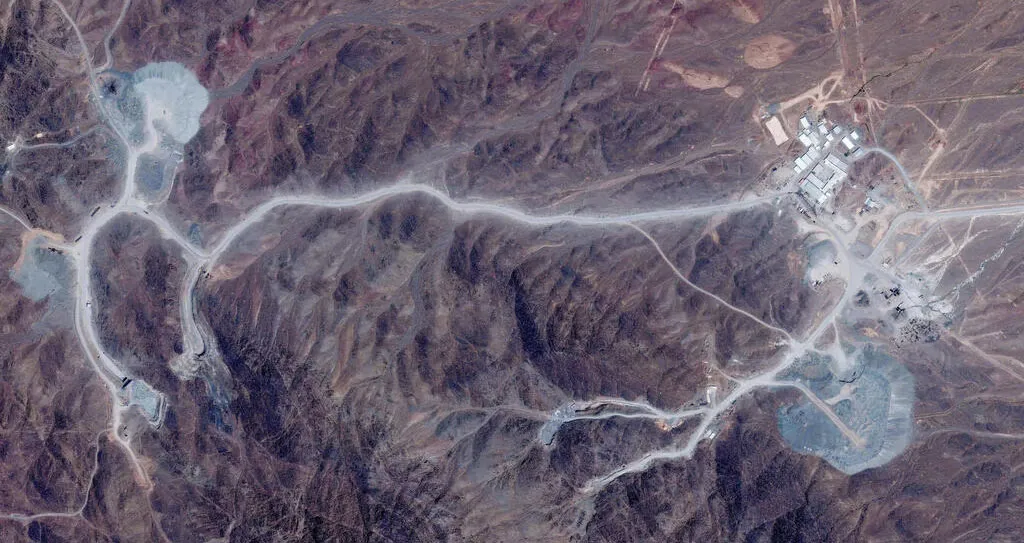
Located just 1.6 kilometers from the Natanz uranium enrichment facility in central Iran, the Mountain of the Axe is believed to be a complex of tunnels carved within the mountain, specifically designed to withstand attacks better than other nuclear facilities. Various reports, including those from Reuters and specialized nuclear proliferation research centers, suggest that the facility could reach depths of several tens of meters, potentially making it deeper than the Fordow facility, which is known for its high level of fortification. This depth complicates any potential military targeting, posing significant challenges for any military engagement.
The U.S. is particularly concerned about the Mountain of the Axe due to the ambiguity surrounding its operational details, as Iran has not officially disclosed its full use. Furthermore, IAEA inspectors have not been able to conduct direct inspections at the site, which has led to limitations in their ability to assure that no undeclared nuclear activities are occurring. Western analysts speculate that the facility may be dedicated to the production and assembly of advanced centrifuges, essential equipment for uranium enrichment, while others contend that it could eventually host sensitive components of Iran's nuclear program.
As the United States focuses on the Mountain of the Axe, this comes in the context of Iran’s ongoing efforts to secure its nuclear facilities by relocating parts of its program underground. The Natanz facility serves as the primary center for uranium enrichment in Iran and has been subjected to various attacks and acts of sabotage, with Tehran attributing some of these incidents to foreign entities. Meanwhile, the Fordow facility, discovered in 2009, has drawn international attention for its construction within a fortified mountainous region. According to the 2015 nuclear agreement, its activities were to be restricted, yet Iran resumed enrichment operations there following the U.S. withdrawal from the agreement in 2018.
Reports suggest that the Mountain of the Axe represents an Iranian initiative to create a facility that is more resilient to possible attacks, especially in light of previous strikes against other nuclear installations.
When it comes to military operations against deeply buried facilities, significant challenges arise, as the effectiveness of strikes depends on the depth of the site, the surrounding rock types, and the level of internal fortification. Analyses from Reuters and the Institute for Science and International Security indicate that some deep Iranian sites may require specialized penetrating munitions and precise intelligence capabilities, rendering the assessment of potential damage from any strike uncertain.
In 2025, the U.S. announced plans to target Iranian nuclear installations, including Fordow, Natanz, and Isfahan, utilizing advanced airborne capabilities. However, the emergence of the Mountain of the Axe underscores the ongoing debate regarding the efficacy of military strikes in completely dismantling Iran's nuclear program. While Washington maintains that it is monitoring the site and possesses intelligence capabilities to track it, the Mountain of the Axe remains one of the most sensitive files in the future of nuclear confrontation between the United States and Iran, representing a significant test for any potential agreements between the two parties.
As reported by sana.sy.