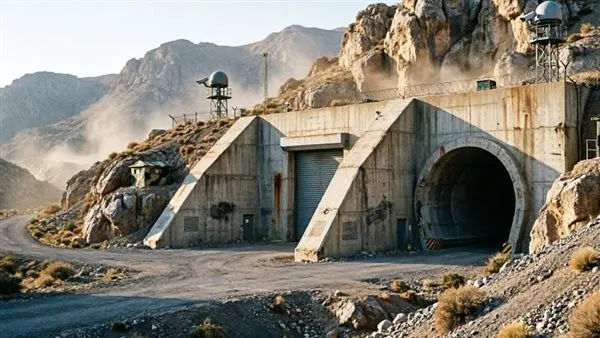
On Tuesday, U.S. President Donald Trump issued a stark warning regarding the Iranian nuclear site known as 'Mount Axe', labeling it a potential target for a significant and powerful strike. This assertion comes amidst heightened tensions between Washington and Tehran, with the location of 'Mount Axe' presenting a major challenge for the Trump administration. Recently, Trump disclosed that the site is under close surveillance, yet no evident nuclear activity has been detected there.
What is 'Mount Axe'?
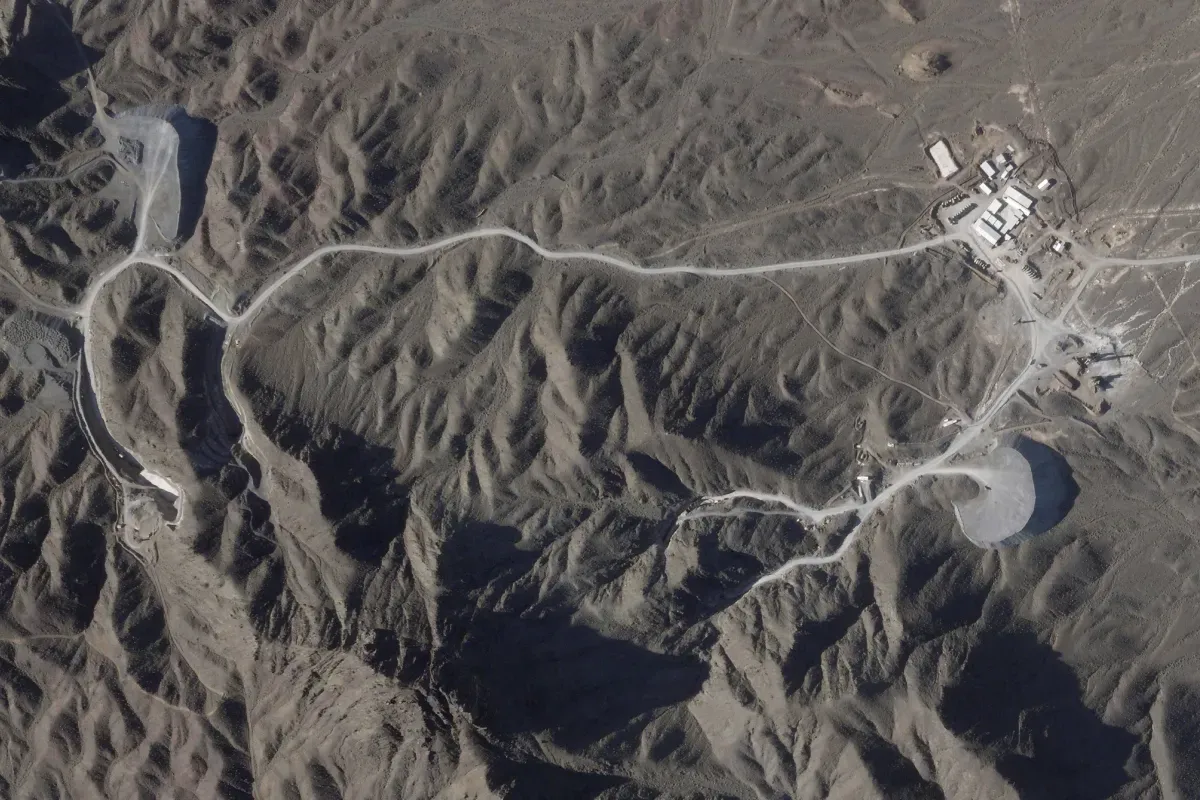
Officially known as 'Koh Kolanj Gaz La', which translates to 'Mount Axe' in English, this facility is strategically located less than two kilometers south of the Natanz uranium enrichment complex, which was devastated by U.S. airstrikes in 2025. Carved deep within the Zagros Mountains of Iran, the site boasts formidable fortifications, enhancing its defense against potential attacks.
The facility's depth is notable, situated approximately 600 meters underground, making it significantly more fortified than the previously considered impenetrable Fordow facility. It features four main tunnel entrances, complicating any attempts to neutralize it via aerial bombardment. Experts suggest that this considerable depth may place it beyond the reach of the most potent bunker-busting bombs currently available in the U.S. arsenal.
Site Functions and U.S. Monitoring
The primary functions of the 'Mount Axe' site appear to include the manufacturing of advanced centrifuges and the storage of highly enriched uranium. Intelligence estimates indicate that Iran may have relocated a portion of its stockpile of 60% enriched uranium to this facility. Analysts believe that the capabilities housed within 'Mount Axe' could enable Iran to produce as many as 19 nuclear weapons within a mere three months.
According to informed sources, President Trump is closely monitoring the site and has publicly stated, "We are watching the Mount Axe site in Iran closely and do not see any activity there. Their nuclear situation is not good. Whenever we hear about something, we destroy it." Trump is under pressure from his hardline supporters, particularly influential figures in the Jewish Institute for National Security of America (JINSA), to address the 'Mount Axe' issue promptly. U.S. experts emphasize that the facility represents a critical gap in any claims regarding the destruction of Iran's nuclear program.
Blaze Mital, JINSA's Vice President, warns that 'Mount Axe' is deeper, larger, and better fortified than Fordow, indicating that it may be beyond the reach of U.S. munitions. Michael Makovsky, the President of JINSA, stated, "If there is not a complete dismantling of the Iranian nuclear program—meaning no enriched uranium or facilities remain—this will be viewed as a significant missed opportunity."
Compounding the complexity of the situation is Iran's refusal to allow the International Atomic Energy Agency (IAEA) to inspect the site at any time, creating what is referred to as a 'blind spot' that remains beyond the scrutiny of international inspectors. Since the U.S. strikes in 2025, inspectors have been unable to evaluate the site adequately. Satellite imagery, including from Airbus's Pleiades Neo satellite, has revealed that Iran has accelerated construction activities at the site following the U.S. bombardments, with images showing trucks suspected of transporting highly enriched uranium into the tunnels.
Several factors contribute to why 'Mount Axe' has not yet been targeted. First, its considerable depth of 600 meters makes it six times deeper than Fordow. Second, the towering mountain provides substantial natural protection against aerial strikes. Third, the presence of multiple tunnel entrances complicates efforts to neutralize the site through bombing. Lastly, the lack of precise intelligence regarding its current contents leaves uncertainty surrounding any military action.
'Mount Axe' remains a thorn in the side of the U.S. administration, posing a genuine test of Trump's ability to fulfill his promises regarding the destruction of Iran's nuclear program. While Washington asserts that it is closely monitoring the site, its ambiguity, depth, and fortifications present a complex military and diplomatic challenge that could ultimately influence any future agreements with Tehran.
As reported by vetogate.com.