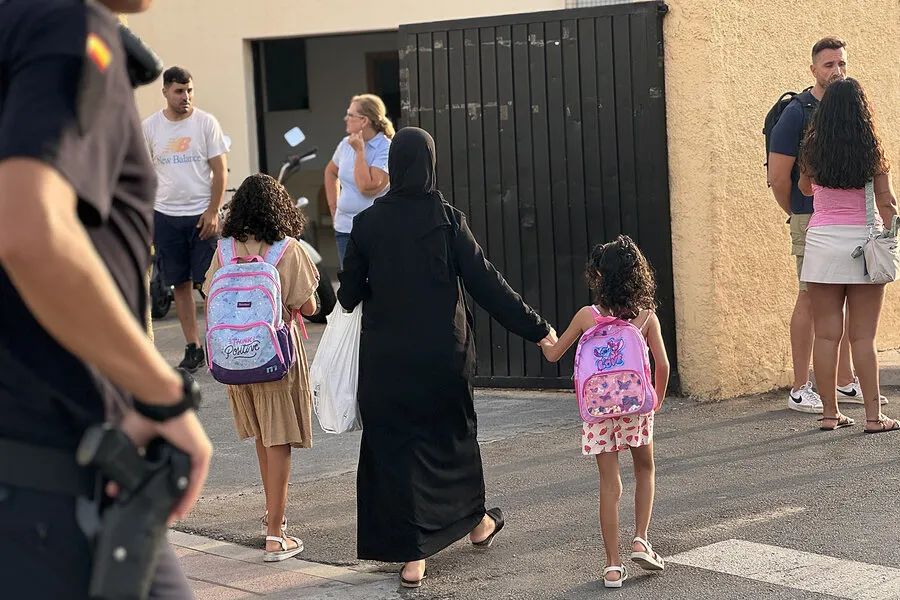

This week marked the beginning of the school year for children across Spain, yet the atmosphere at the Reina Sofia primary school in Ceuta was anything but ordinary. Staff made efforts to prepare the school for students by cleaning the entrance and displaying photographs of teachers, but the backdrop of a migrant crisis loomed large. In late July, approximately 80,000 migrants made their way into this autonomous Spanish city without authorization, drastically impacting local resources and the community's fabric. Although many migrants have since returned to Morocco, hundreds of children, including a 13-year-old named Ismael, have faced the harsh reality of sleeping outdoors on a nearby soccer field.
The Urgency of Education Amidst a Crisis
The start of the academic year in Ceuta has not unfolded as anticipated, with authorities grappling with the influx of unaccompanied migrant children who seek education and stability. Ismael, who traveled from Tangier with his brother, expressed a desire to remain in Spain and attend school, but for many like him, that dream feels increasingly out of reach. Spanish authorities have officially recorded around 1,500 unaccompanied minors since the migrant surge, but countless others remain unregistered and unacknowledged, effectively rendering them invisible to the system.
Despite the existence of laws designed to protect underage migrants in Spain, the response from the central government has been hampered by both domestic challenges and European regulations. As the crisis stretches into its second month, the overwhelmed system has left many children without access to education, compounding their vulnerability. Residents of Ceuta share a collective urgency to address the plight of these children, with local leaders like Ahmed Efen-Dal emphasizing the impossibility of allowing a 13-year-old to live on the streets.
A Community's Response to the Growing Need
In the face of an overwhelming situation, community members have taken matters into their own hands. Efen-Dal and other volunteers quickly mobilized to assist unaccompanied girls and boys, providing them with food, clothing, and a safe place to sleep in a makeshift camp adjacent to the Reina Sofia school. However, this grassroots effort is intended only as a temporary solution, and residents are beginning to express frustration at the lack of government support.
While Spanish police are mandated to register unaccompanied minors to facilitate their access to temporary housing and essential services, the sheer number of cases has created a backlog. Aid groups like Save the Children have highlighted the dire situation, noting that without registration, these children simply do not exist in the eyes of the law. This bureaucratic quagmire has left many children, including 17-year-old Malak, uncertain about their futures and longing for the opportunity to pursue their education.
As the Spanish government navigates complex legal frameworks and conflicting directives from the European Commission regarding the treatment of minors, the pressing question remains: how to balance the humanitarian need for protection with legal obligations? The government's commitment to family reunification and the challenges of engaging Moroccan authorities complicate the situation further. Recent statements suggest a lack of cooperation from Morocco, leaving many children in limbo.
In the midst of this chaos, educators like Francisco Javier García Padilla, the principal of Reina Sofia, are striving to maintain a semblance of normalcy for their students. With classrooms capped at twenty students, the school is preparing for the possibility of more migrant children enrolling, although the need for additional resources and support is clear. The situation is a heartbreaking reminder of the human cost of migration, as local educators and community members grapple with the reality of children living on the streets amidst their desire for education and safety.
As reported by csmonitor.com.