
The Struggles of Moroccan Youth: A Quest for Opportunity
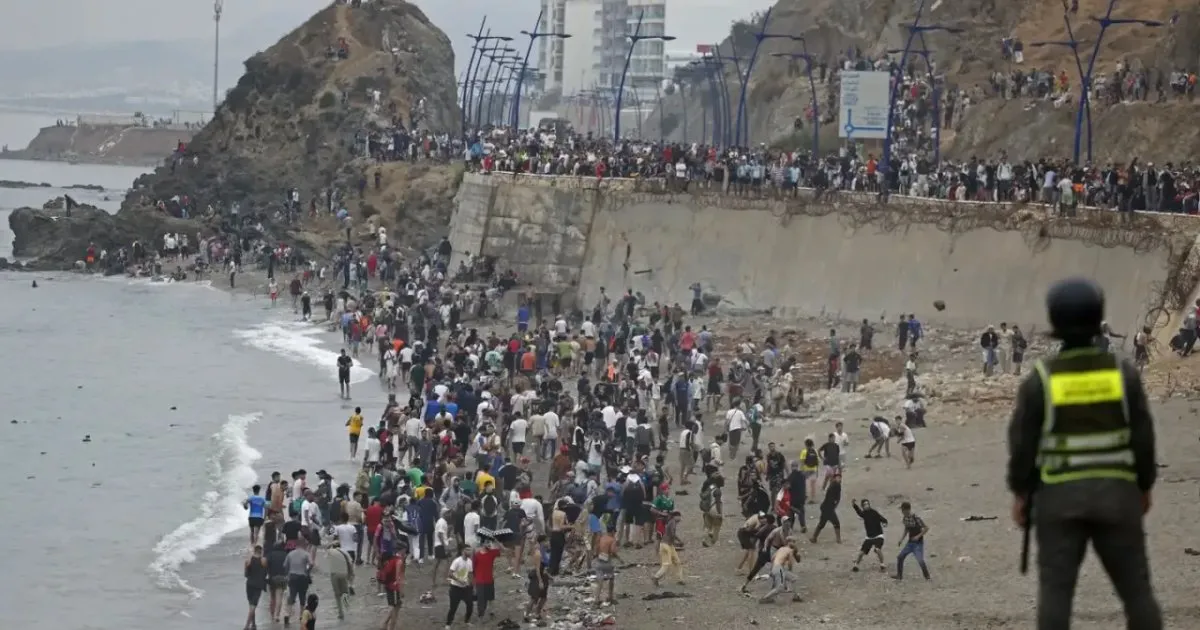
In recent months, a significant incident has highlighted the plight of Moroccan youth. Thousands attempted to swim to the Spanish enclave of Ceuta from northern Morocco, a desperate act driven by a stark contrast between the nation's economic growth and the pervasive challenges faced by its young people. This migration episode, reported extensively by Le Monde Afrique, exposes a troubling reality: while Morocco boasts impressive macroeconomic indicators, many young citizens struggle to find employment, secure housing, and achieve social mobility.
Among those seeking a way out is Othman, a 27-year-old with a master’s degree in economics and finance. Despite his qualifications, Othman found himself working at a Casablanca call center for a meager salary of 4,000 dirhams a month. After paying rent, he barely had enough to sustain himself, eventually returning to his parents' home in Fnideq. There, he secured a job as a waiter, earning only 3,500 dirhams per month. Although he is multilingual, he feels trapped in a cycle of dependency on his family, unable to envision a future where he can establish his own household. Witnessing peers head towards Ceuta, Othman made the drastic decision to leave his job and join them, a narrative echoed by many others in his community.
The situation is exacerbated by a World Bank report indicating that over 43% of Moroccan university graduates aged 25 to 34 are employed in roles that do not match their educational qualifications. This phenomenon, known as declassification, breeds a deep-seated sense of hopelessness among young people, particularly those who have invested years in their education. Despite Morocco's projected economic growth of 4.9% in 2025, alongside a notable rise in foreign investment and tourism, these advancements have not translated into tangible improvements in the living conditions for the broader population. The weak job creation rates and the struggles of small and medium-sized enterprises further illustrate the disconnect between economic indicators and the everyday realities of Moroccan youth.
The Geopolitical and Social Implications of Ceuta and Melilla
The recent migration attempts have also sparked a broader discussion regarding the geopolitical context surrounding Ceuta and Melilla, two Spanish enclaves situated on Moroccan territory. Analysis from Moroccan media outlets points out that the individuals attempting to cross the border are not predominantly Moroccan; reports suggest a mix, with 60% being Algerian, 35% Moroccan, and the remaining 5% from sub-Saharan Africa. This demographic complexity complicates the narrative surrounding the migration crisis, underscoring the need for comprehensive solutions that address the underlying economic and social issues driving youth to seek better opportunities abroad.
Moreover, the GenZ212 movement, which emerged in late 2025, encapsulates the frustrations of a generation advocating for better employment, healthcare, and educational opportunities. The movement's demonstrations highlight the urgent need for policies that prioritize youth as key beneficiaries of national growth, focusing on improving education quality, vocational training, and entrepreneurship. As calls for action grow louder, the challenge remains: how to effectively bridge the gap between Morocco's economic potential and the aspirations of its youth.
As reported by beninwebtv.bj.