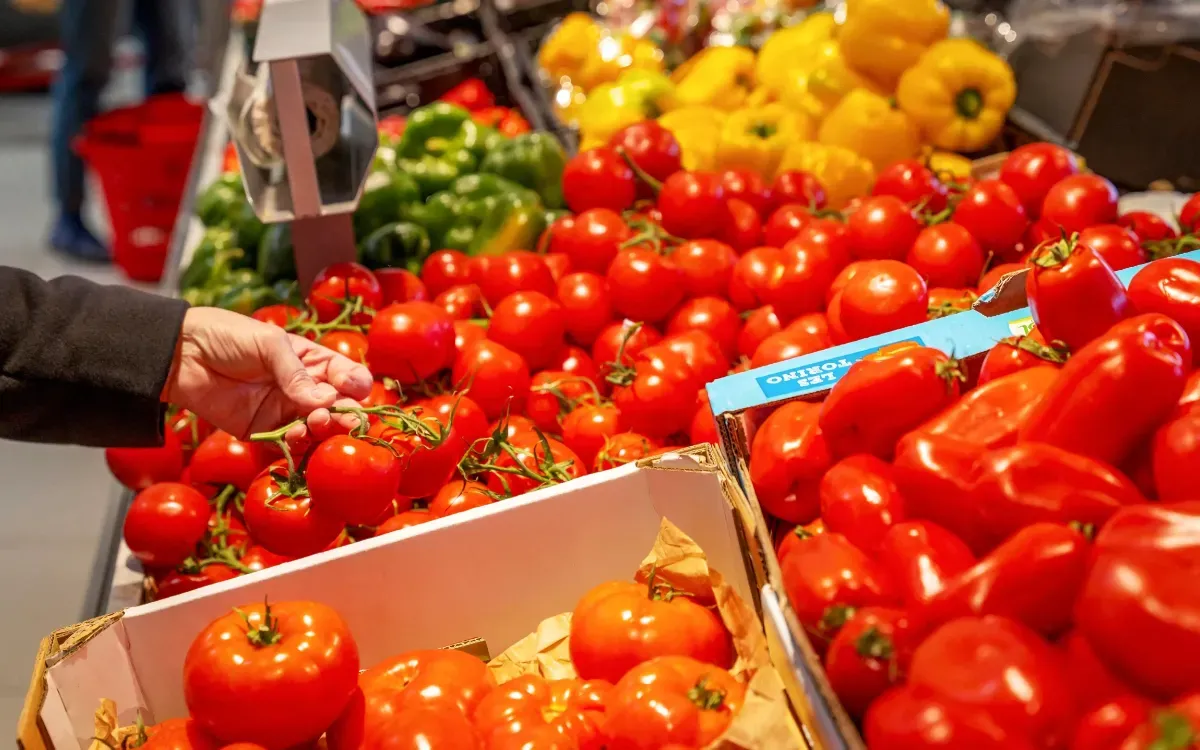

In the Netherlands, a pack of Moroccan snack tomatoes is currently priced at nearly 100 dirhams per kilogram in certain retail stores. This stark contrast is particularly notable when one considers that the wholesale price of tomatoes in Casablanca, Morocco, was only 4.50 dirhams as of August 21. In a leading Dutch supermarket, these small tomatoes are sold at €2.29 for a 250-gram pack, translating to a steep price of €9.16 per kilogram when calculated from its official listing. With the current exchange rate hovering around 10.78 dirhams to one euro, this equates to approximately 99 dirhams per kilogram, highlighting the hefty markup.
A recent photograph of the packaging confirms the origin of the product, stating "Land van oorsprong: Marokko," which translates to "country of origin: Morocco." However, Albert Heijn, the supermarket chain in question, notes that the same product could also be sourced from Belgium or Tunisia, indicating that the exact origin may vary depending on the specific batch available in each store.
Currently, a promotion allows customers to purchase three packs for €5, effectively reducing the price of 750 grams of Moroccan tomatoes to around €6.67 per kilogram, or nearly 72 dirhams. This price disparity is astonishing. According to the Casablanca wholesale market data released on August 21, the price range for tomatoes fluctuated between 1.20 and 4.50 dirhams per kilogram, meaning that the Dutch price can exceed twenty times the maximum wholesale rate seen in Casablanca.
Stark Comparisons: Quality and Pricing Differences
It's crucial to note that this price difference does not solely reflect the profit margin on tomatoes exported from Morocco. The prices in Casablanca pertain to ordinary tomatoes at wholesale rates, while the Dutch offering consists of specially selected small fruits that are packaged attractively as a snack product. This distinction is significant, as it illustrates how marketing and presentation can drastically affect consumer pricing.
The price variation also becomes apparent when comparing with France. For instance, in Toulouse, dark round tomatoes imported from Morocco were priced at €1.89 per kilogram in a Lidl store, roughly 20 dirhams. Thus, the same origin can yield prices that range from modest to exorbitant, depending on the variety and sales method employed.
In the Netherlands, local tomatoes also exhibit a wide range of prices. Regular Dutch tomatoes are approximately €3.58 per kilogram, whereas premium cherry tomatoes produced within the country can command a price of €11.96, nearing 129 dirhams. This discrepancy in pricing underscores the reality that what consumers in Europe pay does not reflect the remuneration received by Moroccan producers. Instead, it incorporates costs associated with transport, packaging, distribution, and particularly commercial positioning. This comparison vividly illustrates that tomatoes grown in Morocco, which may start at just a few dirhams, can be transformed into a product approaching 100 dirhams per kilogram once they are packaged and sold in the Netherlands.
As reported by bladi.net.