
The Tradition of Zellige Craftsmanship in Fez
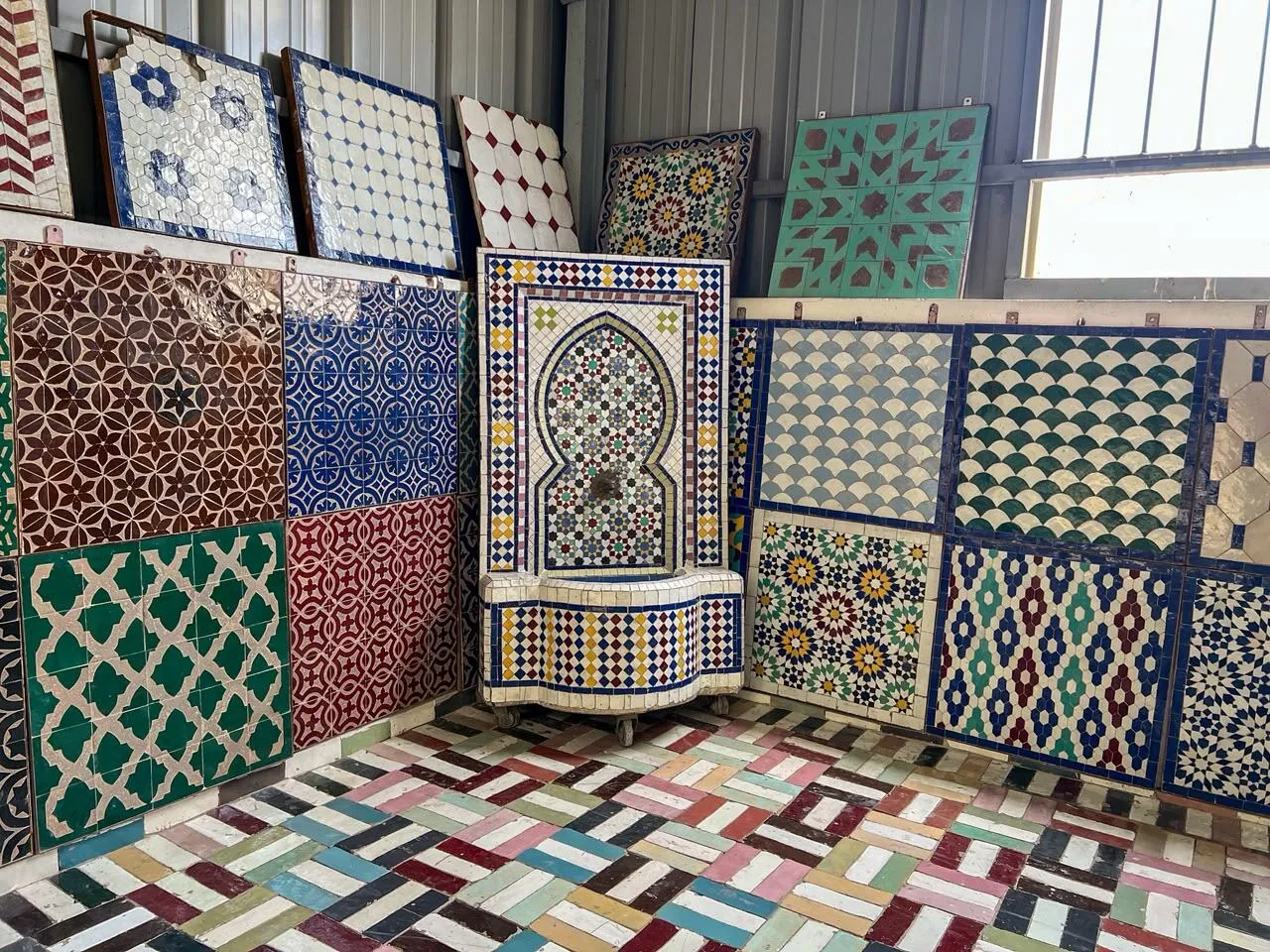
The art of zellige, a traditional Moroccan tilework, has long been synonymous with the city of Fez, deeply embedded in its architecture and cultural memory. This ancient craft has thrived for centuries, thanks to skilled artisans who have passed down the intricate secrets of their trade from generation to generation. At the heart of this craft lies the unique clay sourced from the Benjellil region, which is celebrated for its distinct properties that contribute to the authenticity of Fez zellige, allowing it to gain recognition and admiration worldwide.
Summer: A Crucial Season for Zellige Artisans
Contrary to the high temperatures often experienced in Fez during this season, summer represents a vital period for zellige artisans. The heat accelerates the drying process of the clay pieces, known locally as "lamzari," enabling artisans to produce larger quantities in preparation for the winter months when drying slows down significantly. This seasonal workflow ensures that workshops remain active even during colder periods, allowing the craft to continue thriving.
In a conversation with Le360, Abdel Fattah Chlah, a renowned master of traditional zellige in Fez, reflects on his remarkable journey spanning over four decades in this craft. He shares insights into the evolution of zellige production, discussing the various stages from clay preparation to cutting and shaping the tiles in accordance with traditional designs. Chlah emphasizes the unique composition of Benjellil clay, which provides an ideal balance of flexibility and durability, making it both easy to mold and precise to work with, allowing artisans to create tiles of various sizes and shapes while maintaining their integrity throughout the crafting process.
After extracting the clay from the Benjellil mountains near Sidi Harazem, it is transported to the workshops where it is mixed in a process called "zouba," then spread out to dry before being fired in kilns. Following this, artisans meticulously prepare and color the tiles according to the desired patterns and hues before assembling them into intricate geometric designs that give Fez zellige its distinctive appearance.
Chlah notes that Fez zellige enjoys significant demand in various international markets, including France, Spain, and other European and American countries. The harmonious blend of colors, shapes, and craftsmanship lends the zellige a unique character, ensuring its continued presence beyond Morocco and appealing to customers in search of authentic traditional tiles.
However, Chlah also raises concerns regarding the quality of clay available to artisans, pointing out that some quarries no longer provide the high-quality materials essential for producing delicate and intricate pieces, referred to as "fine work." This type of craftsmanship requires clay that is suitable for cutting and shaping.
He asserts that granting artisans licenses to exploit quarries with high-quality clay would alleviate some of the challenges they face, highlighting that the region houses numerous quarries with excellent raw materials. Furthermore, he stresses that maintaining the quality of Fez zellige also hinges on supporting artisans and providing them with the necessary conditions to continue this craft, as zellige is one of the most significant facets of Morocco's traditional industry.
As reported by ar.le360.ma.