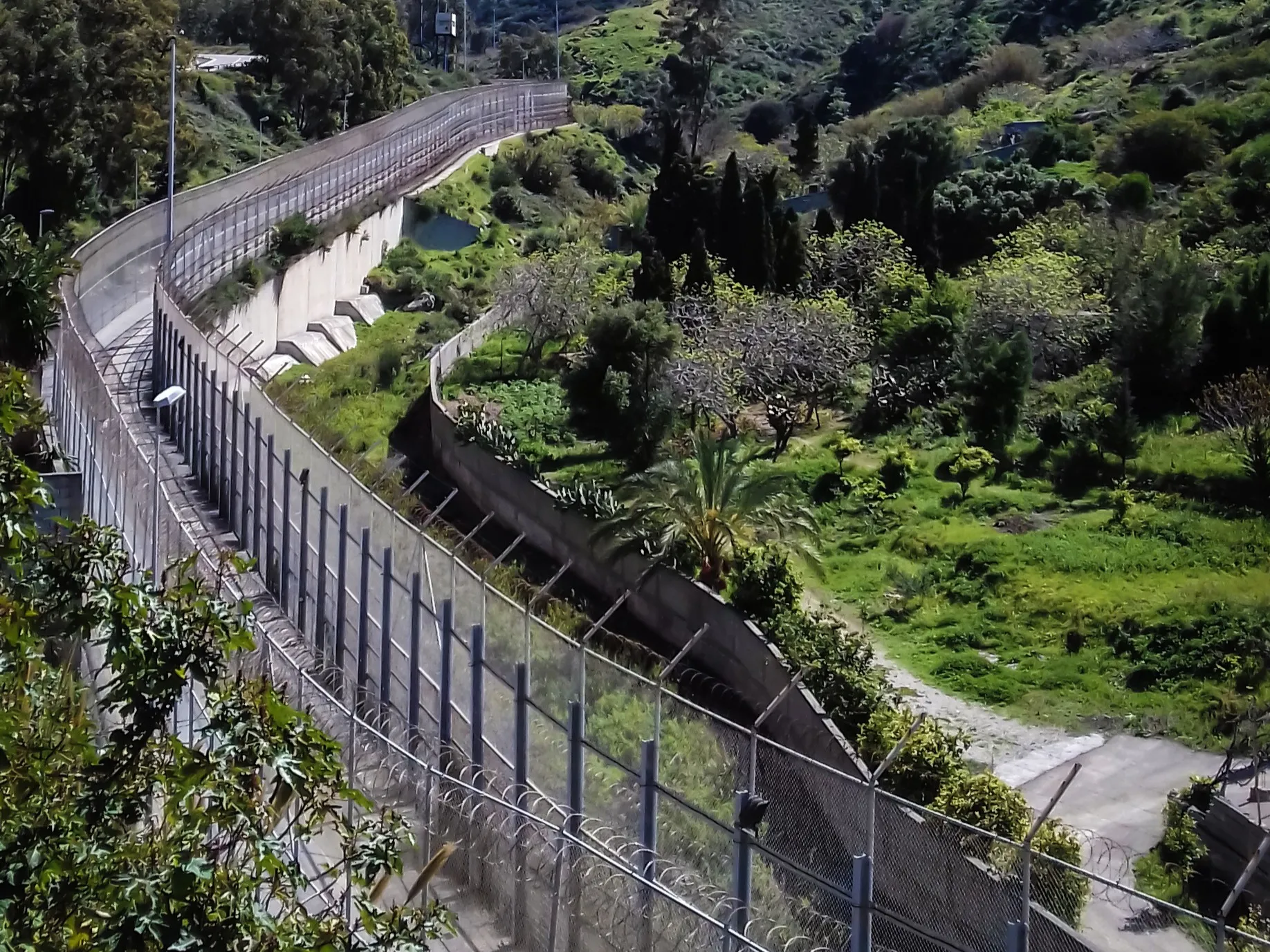

Between July 30 and August 2, 2026, approximately 50,000 individuals reached Ceuta, a Spanish city located on the Mediterranean coast of North Africa. Although politically part of Spain, Ceuta is geographically situated in Morocco. According to authorities, within just 48 hours, the majority of these individuals returned to Morocco, with over 48,000 reportedly crossing the border again. This return was executed under pressure from both Spanish and Moroccan authorities. Tragically, at least 72 people lost their lives in the attempt to reach Ceuta; many drowned while crossing the waters, while others perished trying to overcome the border installations. Among those who remained in Ceuta were about 860 unaccompanied minors, as reported by authorities.
As the events unfolded, media coverage quickly shifted to focus on terms like "mass influx," "Ceuta crisis," or "invasion," which dehumanize the individuals involved and shape public perception of migration. Families, youth, and children are reduced to abstract groups, while people with personal stories are transformed into mere numbers. Those seeking safety are often depicted as potential threats or culprits. This perspective obscures the underlying reasons for migration; individuals do not leave their homes lightly. Many risk their lives fleeing war, political persecution, violence, or the absence of future prospects, with the hope of finding a better life.
Migration is not a phenomenon unique to our time; it has been a part of human history since the beginning. People have always crossed man-made borders due to trade, labor, conflicts, environmental changes, or the quest for safety. The debate should not center on whether a migration issue exists, but rather on how societies manage power inequalities. Europe is increasingly fortifying its borders under the notion that security and freedom of movement are privileges reserved for those fortunate enough to have been born within those boundaries. However, no one has control over their birthplace. Why should one's place of birth determine who deserves the chance for safety, freedom, and a better future?
Instead of focusing on isolation, there needs to be a discourse that intertwines human realities, political accountability, and long-term solutions. Migration is linked to global inequality and historical developments. Europe bears a particular responsibility due to its wealth and economic standing; it cannot indefinitely secure itself at the expense of poorer regions. A portion of its prosperity and resources must be invested sustainably.
The history of Ceuta serves as a reminder that borders are not simply natural lines on a map. Like most contemporary borders, the boundary between Ceuta and Morocco is the outcome of conquests, power dynamics, and political decisions. Ceuta was seized by Portugal in 1415 amid European imperialism in Africa and later came under Spanish control. The European invasion and colonization in North Africa did not arise from neutral border delineations; central to the European continent was the claim to dictate terms over non-European territories through military expansion.
Morocco views Ceuta as part of its territory, while Spain considers it an integral part of its state, managing it as an autonomous city. The dispute over Ceuta highlights a fundamental question: who determines which borders are deemed natural and legitimate? Often overlooked is the fact that today's European borders and notions of territorial belonging are also shaped by colonial conquests and power relations. European nations frequently portray their current borders as particularly stable, legitimate, and worthy of protection, while the colonial power dynamics that established this order are relegated to the background.
Furthermore, it is forgotten that the economic disparities between Europe and many regions of Africa did not develop by chance. Over centuries, European colonial powers exerted control over resources, resulting in exploitative trade structures for Africa. European states have built their wealth and political power on frameworks that have long disadvantaged other regions. Although European colonialism formally ended with the political independence of colonized areas, the associated power dynamics and dependencies persist today. Neo-colonialism manifests in economic dependencies, global inequalities, and unequal opportunities that people face solely based on their place of birth.
This does not mean that all migration can be traced back to colonialism; people migrate for a variety of reasons, including war, political oppression, economic hardship, climate change, or the pursuit of better personal prospects. Nevertheless, migration should also be viewed in the context of global power structures and inequalities that stem, in part, from colonial legacies and continue to influence the present.
Thus, the real question is not how Europe can protect its borders but rather what responsibilities arise from a history of exploitation that benefits Europe to this day. The true border, therefore, does not only lie between Spain and Morocco; it exists within human minds, navigating the racist notion that some people naturally belong while others must remain outside. It lies between isolation and responsibility, fear and empathy, justice and injustice.
States that have benefited from global power dynamics for centuries must finally stop asking how to limit access to prosperity.
As reported by etosmedia.de.