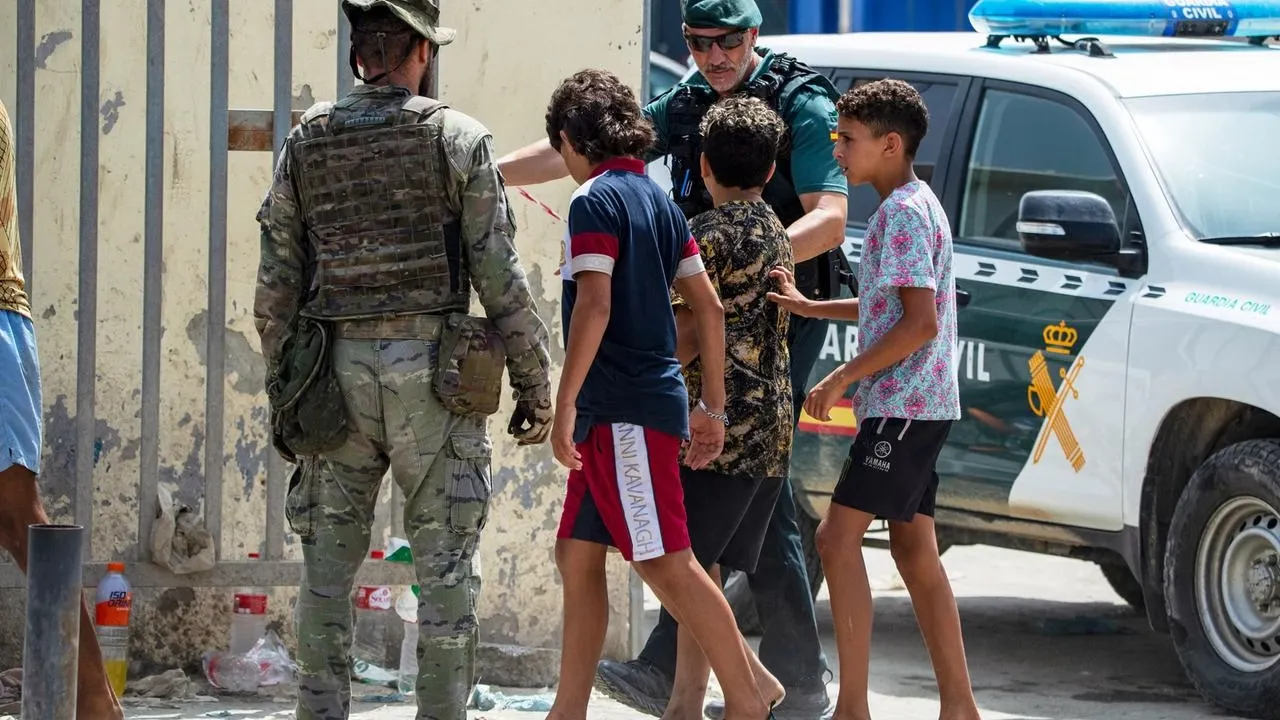

The ongoing migration crisis has led to a significant number of refugees attempting to reach Ceuta, a Spanish exclave located on the northern coast of Africa. Recent reports indicate that most of the over 70,000 migrants who sought refuge in this region have been returned to Morocco, yet the fate of many unaccompanied minors remains uncertain. While adult migrants have largely faced swift repatriation, the situation for minors is complicated by legal protections that prohibit their immediate deportation, raising questions about their future and safety.
Following a massive influx of around 72,000 migrants, the fate of unaccompanied minors in Ceuta has become a pressing concern. The local administration initially reported 1,017 unaccompanied minors, but this number quickly rose to approximately 1,200, with estimates from organizations like Save the Children suggesting that the actual figure exceeds a thousand. Youth Minister Sira Rego announced during a recent visit that 1,342 minors had been registered and were receiving care. However, the local reception center's capacity is limited to just 29, which highlights the ongoing crisis in terms of resources and care for these vulnerable individuals.
In Ceuta, the registration process for minors involves a medical age verification. Spanish law mandates that if the reception capacity is exceeded, these young refugees must be relocated to the mainland within 15 days. Unfortunately, due to overwhelmed authorities, this process often experiences delays that can extend for weeks or even months. The distribution of minors across Spain's autonomous communities is determined by a fixed quota based on population size and economic strength, complicating immediate assistance.
As Morocco hosts the Africa Cup, the local Generation Z protests highlight demands for improved educational facilities and social services, reflecting a broader discontent that could influence migration patterns. Unaccompanied minors in Spain are subject to compulsory education and can obtain regular residency permits; upon reaching the age of 16, they also qualify for full work permits. Upon turning 18, they exit state guardianship but retain their residency and work rights, with renewal requirements set at relatively low financial thresholds, allowing many to maintain legal status through modest incomes.
While transferring unaccompanied minors from Ceuta to other European countries is legally permissible and organizationally feasible, actual implementation has been hindered by a lack of political will among EU member states to accept these individuals voluntarily. The reformed Common European Asylum System (CEAS) has come into effect, but human rights organizations like Pro Asyl express concerns over potential erosions of the rights of asylum seekers.
Spain is also unable to deport these minors to other EU nations because it has assumed legal guardianship over them, and there is no mandatory distribution mechanism at the EU level. Some regions governed by conservative parties have criticized these regulations, threatening legal action against transfer orders. For instance, Isabel Díaz Ayuso, the President of the Madrid region, has advocated for the return of these minors to their home countries, while right-wing populist parties exploit the situation to stoke fears of an 'invasion' by foreigners.
According to ZDF correspondent Ulf Röller, the EU's response to the situation in Ceuta remains critical, as Morocco has officially expressed a willingness to cooperate with Spain on the return of minors. However, previous reports suggest that Moroccan authorities have often left identity verification requests from Spanish authorities unanswered, complicating the legal process for repatriation. The internal pressure in Morocco, stemming from a lack of opportunities for young people, positions migration as a necessary outlet from the government's perspective.
Migration remains one of the most polarizing issues within Europe, and since 2015, the EU has increasingly shifted towards a stricter approach to handling asylum seekers. The unfolding crisis in Ceuta is a vivid reminder of the urgent need for comprehensive migration policies and international cooperation to ensure the protection of vulnerable populations.
As reported by zdfheute.de.