
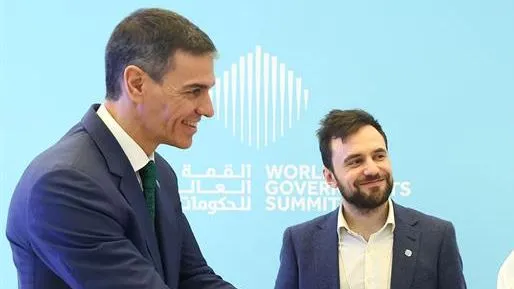

The Migration Crisis in Ceuta: A Government in Dilemma
As the autonomous city of Ceuta struggled to manage an unprecedented wave of migration in August, the command center at La Moncloa was operating nearly 10,000 kilometers away in Japan. Diego Rubio, the director of the Cabinet of the Presidency of the Government, opted to maintain his month-long vacation in Japan, aligning with the President Pedro Sánchez's approach. While the government claims that Rubio coordinated operations remotely—bridging the seven-hour time difference between Tokyo and Madrid—the episode has sparked criticism directed at the government.
Until this summer, Diego Rubio had kept a low profile, entering the executive branch from the academic world without any political background in the Spanish Socialist Workers' Party (PSOE). His education spanned institutions such as Barcelona, Paris, Columbia, and Oxford, where he earned his doctorate. In 2020, he was appointed the director of the National Office of Foresight and Long-Term Strategy, and by September 2024, he had ascended to lead the Cabinet of the Presidency.
Communication Breakdown and Internal Conflicts
The troubles for Rubio began to unfold on July 27, just three days before a mass assault on Ceuta. Amid difficulties in contacting President Sánchez, the Ceuta leader, Juan Jesús Vivas, managed to relay the alarming increase in migrant entries to Rubio. Although Rubio assured Vivas that he would escalate the issue to the relevant ministries, the response from the state was notably absent. Vivas’ persistent follow-ups were reportedly met with irritation at La Moncloa, where officials expressed that he was being "too bothersome," as revealed by the Ceuta leader himself.
The management shortcomings on the ground were compounded by a tense jurisdictional clash in Madrid. The National Security Department (DSN) released a bulletin indicating that 49,000 entries had been recorded, provoking outrage from the Ministry of the Interior and prompting Fernando Grande-Marlaska's team to demand accountability. According to reports, Rubio sought explanations from the head of the DSN, General Loreto Gutiérrez, resulting in the abrupt dismissal of the staff member who drafted the report while on vacation. Sources close to the government acknowledge that managing the crisis from 10,000 kilometers away, along with conflicts with other departments, have placed Rubio under scrutiny.
Rubio had previously stated in an interview that "politics is inherently short-term," emphasizing the need to anticipate risks before they escalate. Ironically, he now faces the repercussions of a sudden border crisis that the government failed to foresee. His rapid rise through the ranks of the government, having little political experience, is now under the spotlight as the crisis in Ceuta brings to light the uncomfortable position he occupies as the head of the Cabinet.
As reported by elespanol.com.
