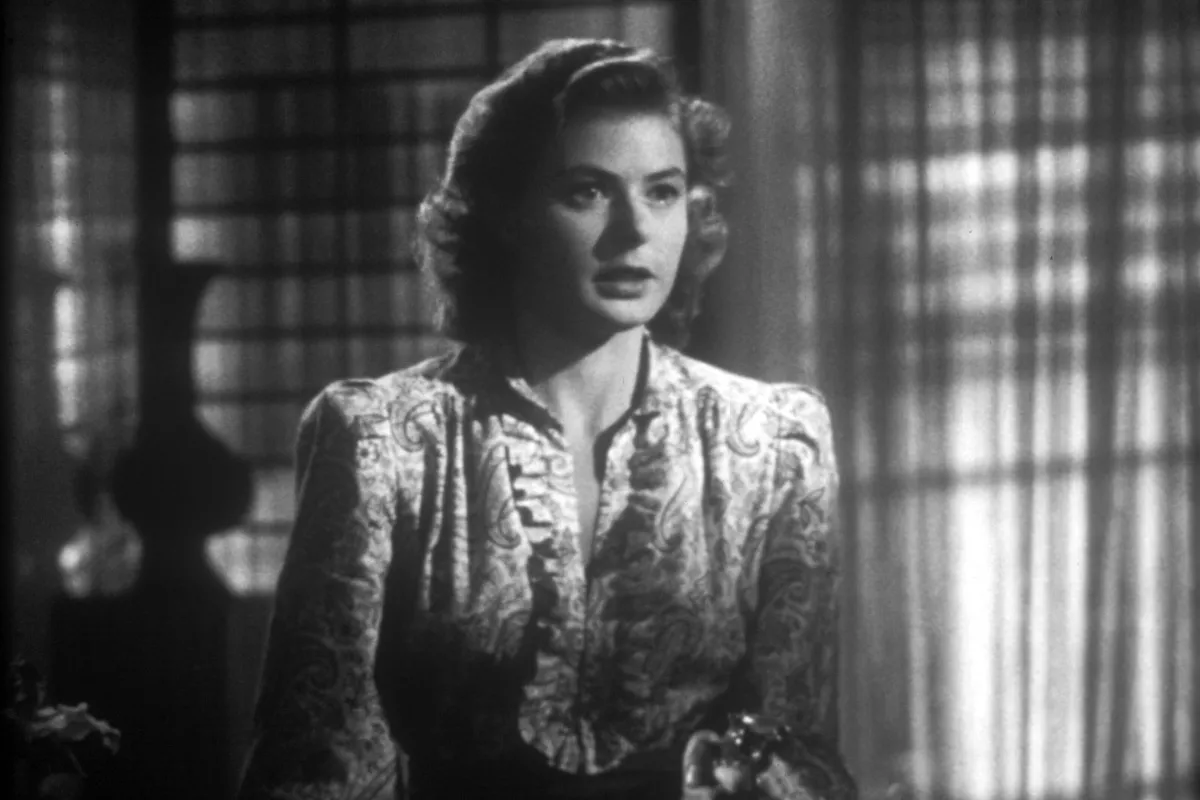

During the tumultuous production of the iconic film Casablanca in 1942, the creative team faced a unique challenge that would shape both the narrative and the performances within this timeless classic. Screenwriter Howard Koch, along with the Epstein twins, found themselves rewriting script pages up until the very last moment before filming began, leaving unresolved the crucial love triangle involving the characters Rick, Ilsa, and Victor. When Ingrid Bergman, who portrayed Ilsa, sought guidance from Koch regarding whom her character should ultimately love, he responded with uncertainty, advising her to 'play them both evenly.' This candid admission stemmed from the fact that the production team was still grappling with the film's conclusion. Koch later elaborated that the lack of clarity around the ending significantly influenced Bergman's performance, which was further enriched by Humphrey Bogart’s spontaneous improvisation of the famous line, 'Here's looking at you, kid,' during shooting breaks.
A Film Crafted Day by Day
Released on November 26, 1942, Casablanca has since earned its place as one of the most cherished films in Hollywood history. However, the journey to its completion was fraught with challenges. The screenplay, adapted from an unproduced play titled 'Everybody Comes to Rick's' by Murray Burnett and Joan Alison, was developed in real-time by the Epstein twins—Julius and Philip—and Howard Koch. As the filming extended into the summer of 1942, new script pages continued to arrive each day, forcing director Michael Curtiz to navigate the constantly evolving storyline while striving to keep the production on schedule.
The Emotional Weight of Uncertainty
For Ingrid Bergman, the uncertainty surrounding her character’s fate weighed heavily as she portrayed Ilsa Lund, who was caught between the affections of Rick Blaine, played by Humphrey Bogart, and Victor Laszlo, portrayed by Paul Henreid. Throughout the filming process, Bergman repeatedly inquired about which man her character should ultimately choose, but the answer remained elusive, as the writers themselves had yet to decide. Koch’s advice to 'play them both evenly' echoed throughout the set, a reflection of the reality that the film's conclusion had not been solidified until late in production. Frank Miller, author of 'Casablanca: As Time Goes By,' recounted that Curtiz encouraged Bergman to embody a sense of ambiguity, instructing her to perform her scenes 'in-between' the two love interests. This very uncertainty, which was a source of frustration for Bergman, became a hallmark of the film's enduring appeal.
The film's climax was similarly uncertain throughout production. The pivotal decision of whether Ilsa would choose to stay with Rick or leave with Victor was still unresolved as filming progressed. Ultimately, the choice for Ilsa to depart in support of her husband's fight against the Nazis was finalized late in the production timeline, influenced in part by the era's strict Production Code, which prohibited the portrayal of a married woman abandoning her husband for another man.
Interestingly, the film's most famous line, 'Here's looking at you, kid,' was not included in the script but was instead a spontaneous improvisation by Bogart, reportedly inspired by a light-hearted moment shared with Bergman during a poker game between takes. This iconic dialogue resonates throughout the film, most notably during the emotional farewell scene at the airport.
Directed by Michael Curtiz and produced by Hal B. Wallis, Casablanca won three Academy Awards, including Best Picture, Best Director, and Best Writing for Koch and the Epstein brothers. The film not only achieved critical acclaim but also became a commercial success, ranking as the sixth-highest-grossing film in the United States in 1943, with a box office total of $4,496,000.
As reported by 3dvf.com.