
USFP's Enthusiastic Gathering in Rabat
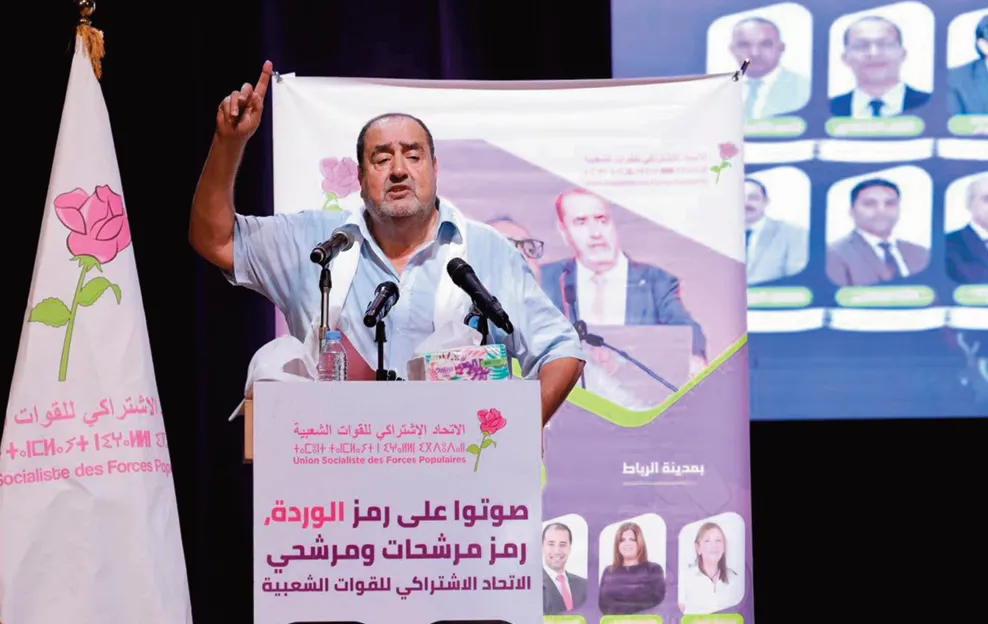
This past Sunday, Rabat resonated with the vibrant energy of the USFP (Union Socialiste des Forces Populaires). In a packed Mohammed V Theatre, the Rose Party transformed its meeting, presided over by the First Secretary Driss Lachguar, into a jubilant celebration. A diverse gathering of recognizable faces, young leaders, and dedicated militants from various provinces showcased their unwavering determination, marking the commencement of an electoral battle that the USFP intends to approach with confidence and resolve.
Driss Lachguar's Rallying Call for National Unity
Within this atmosphere of optimism, Driss Lachguar delivered a particularly incisive address, placing the National Cause at the forefront of his message. He issued a straightforward warning to those who, in his view, choose silence when Morocco faces external campaigns and attacks. For Lachguar, the National Cause cannot be treated as an incidental matter; it necessitates ongoing mobilization, a committed political stance, and a genuine national front. He reminded the audience of the historical struggles of his party in advocating for democracy, the rule of law, and national unity.
Lachguar emphasized that the National Cause must remain the country's top priority, one that cannot be trivialized by reactive statements or belated responses when external pressures mount. He recalled the significant efforts of the late King Hassan II and the sacrifices of generations of Moroccans who have defended the territorial integrity and national dignity of the country. Simultaneously, he highlighted the endeavors of King Mohammed VI to strengthen Morocco's position on the international stage. According to Lachguar, this progress hinges on collective, responsible, and sustained mobilization, all while nurturing Morocco's privileged relationships with partners including the United States, Spain, Europe, and various global powers.
It was precisely on this critical issue that Lachguar adopted a firmer tone, questioning the absence of governing parties when Morocco is under attack. His remarks particularly targeted the behavior of certain political factions in light of the campaigns against Morocco from abroad, notably in Europe following the migration crisis at the occupied Ceuta border. This inquiry, articulated as a reproach, reflects what he perceives as a deeper failure within the political landscape. For Lachguar, political parties should not limit their role to electoral preparations and vote-seeking; they must also act during sensitive moments when national interests are under threat and citizens expect clear positions.
He expressed concern over a political trend where certain parties only surface during election cycles, retreating when issues become challenging or politically costly. Issues such as health, unemployment, and the living conditions of citizens are areas where, according to him, these parties often withdraw. "In all these matters, they retreat into their shells," he lamented. This attitude, while troubling regarding social issues, becomes even more serious when it pertains to significant national questions.
Lachguar also rejected any attempts to rewrite a portion of Morocco's political history to suit contemporary interests, recalling the dedication of generations of Ittihadi militants who have spent years defending their convictions across universities, political organizations, and various activist structures. He insisted that these generations have paid a price for their commitments and contributed significantly to the democratic construction of the country. Therefore, he opposes any attempts to erase this collective memory through narratives that seek to credit a single party or individual with the merits of struggles that he argues were collective and historical.
The Ittihadi leader also reflected on the responsibilities he has undertaken during sensitive periods of public life, especially during his governmental roles. He underscored a fundamental principle: the respect owed to institutions should never depend on the individual in charge. Whether a minister, head of government, or parliamentarian, every political leader must adhere to a duty of reserve and respect for their position.
Returning to the central theme of his address, Lachguar reiterated the defense of the Constitution, national sovereignty, and the rule of law. In a context marked by external campaigns against Morocco and internal political tensions, he urged everyone not to lose sight of what is essential. Democratic and institutional gains must not be bartered for personal ambitions or political recovery strategies.
For Lachguar, the current moment is not one for opportunistic posturing; it is a call for political responsibility. In the face of external attacks, parties must emerge from their "tunnels," take on their roles, and contribute to the establishment of a national front. Moreover, against attempts to undermine democratic memory, the USFP aims to remind that the country's achievements are the result of struggles, sacrifices, and commitments made by multiple generations.
As reported by libe.ma.