
Understanding the Qanat System in the Moroccan Desert
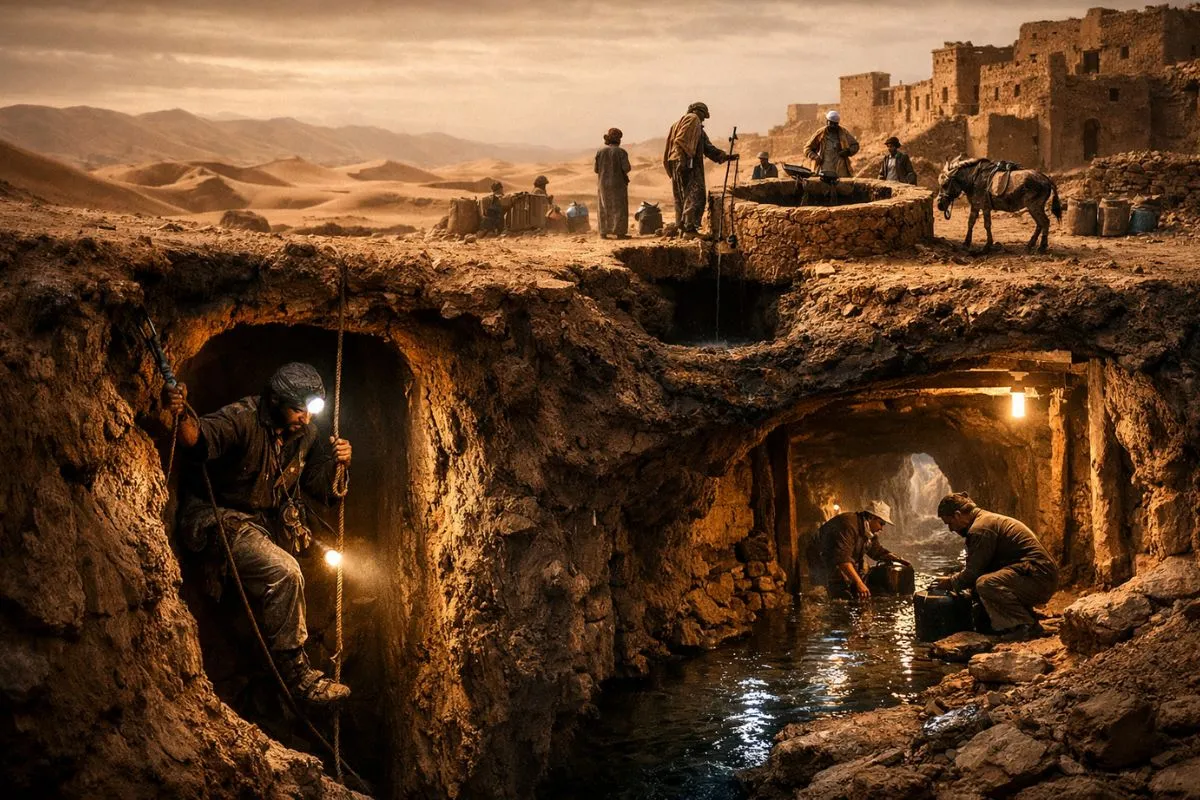
In the arid expanse of the Moroccan desert, water is not a readily visible resource but rather a vital lifeline intricately woven into the fabric of local life through a remarkable ancient system known as qanats. These underground tunnels, which snake through the earth, are engineered to channel water to palm groves and cultivated fields, ensuring that the villages reliant on this system can thrive amidst the harsh climate. When any segment of these qanats becomes obstructed, the consequences are far-reaching—irrigation halts, the soil dries, and the specter of scarcity looms large, affecting numerous families who rely on this water for their survival.
The small village of Buouya, located in the southern region of Morocco, provides a striking example of community action in the face of such adversity. When a quarry blocks one of the qanats, the entire village mobilizes to address the issue. The decision-making process is communal, taking place during the jama, an assembly convened after Friday prayers where men deliberate on all matters pertaining to water management. This collective approach determines who will brave the depths of the qanat to clear the blockage, reflecting a deep-seated commitment to preserving a system essential for the village's existence.
The Collective Responsibility of Water Management
In the Moroccan desert, the qanat system is more than just a mechanism for water distribution; it shapes agricultural practices, sustains family units, and dictates land use. In Buouya, the ramifications of a blocked tunnel are immediate and severe, as evidenced by the crops suffering from a lack of irrigation. This scenario illustrates how water management transcends mere technicality and becomes a profound communal concern. The farmers in the region understand that the health of their crops and the vitality of their families depend on the proper functioning of these tunnels.
Maintenance of the qanat is regarded as a shared obligation rather than an isolated task. Throughout the year, local farmers engage in the upkeep of the tunnels, cleaning out sediment and ensuring that water flows freely in accordance with the agricultural calendar. In essence, repairing a qanat equates to restoring the lifeblood of their community, enabling the continuation of their agricultural practices and way of life.
This system of water management is intimately tied to the social fabric of the village. Residents actively monitor the state of the qanats, noting when water flow diminishes, and they convene to plan necessary interventions. Water is perceived as a communal good, intricately linked to daily life and social cohesion. The disruption of water flow affects not just one individual or farm but cascades through the entire irrigation network, impacting the collective welfare of the community.
The rituals surrounding the clearing of blocked tunnels highlight the blend of technical skill, tradition, and social continuity that underpin this ancient system. The process of descending into the qanats is neither simple nor devoid of risk, as the villagers choose who will enter the dark, confined spaces, fully aware of the fears associated with such tasks. Working within these tunnels requires not only physical strength and endurance but also a profound respect for the historical significance of the work being done.
The qanats exemplify a complex and adaptive hydraulic system that has evolved over centuries to meet the challenges posed by the desert environment. The presence of clay along the gallery floor, which creates an impermeable barrier, is crucial for directing the water along its course for several kilometers without seeping back into the soil. This natural engineering marvel ensures that water is available where it is most needed, allowing agriculture to flourish even in the most arid conditions.
As the water finally reaches the surface, the distribution process begins, facilitating the irrigation of fields through a network of channels known as seg. This system is meticulously organized, adhering to strict communal agreements that dictate when and how much water each farmer is entitled to. Such arrangements are essential in a landscape where scarcity necessitates careful management and collaboration among all users.
In conclusion, the qanat system in the Moroccan desert is not merely an ancient relic; it is a living, breathing testament to human ingenuity, community resilience, and the necessity of sustainable practices in the face of environmental challenges. As younger generations increasingly migrate to urban centers in search of better opportunities, the survival of these traditional structures remains a pressing concern. The balance between preserving this invaluable heritage and adapting to modern realities poses a significant question for the future of rural life in Morocco. Should communities that depend on such ancestral systems receive more support to sustain their way of life, or does the exodus of youth indicate that these traditional practices are becoming untenable?
As reported by en.clickpetroleoegas.com.br.