
Discover the 10 Most Beautiful Hotels Around the Globe
Beauty in hotels can be more easily perceived than defined, which is why Time Out's approach to curating this list is straightforward: each hotel included has been personally visited by one of the publication's editors, writers, or hotel experts. These experiences are not merely derived from photographs or press releases; they are grounded in real visits. The result is a list that reflects the specific qualities of actual stays, as opposed to the curated perfection often found in promotional materials. The hotels featured range from a 13th-century Irish castle to a brutalist eco-lodge in Iceland, a maximalist showcase in New York, and an earthen brick botanical garden in Morocco. What they all share is the unique ability to make guests feel that the building they are sleeping in is doing something that no other structure can accomplish.
The complete list, which encompasses 33 entries, showcases a broad and sometimes surprising range of what hotel beauty can mean. Heritage and craftsmanship are evident in the Irish castle and the Florentine Renaissance palace. Architectural daring is displayed in the Icelandic outpost perched on its volcanic slope and the Australian wine hotel with its coal-and-neon aesthetic. Natural beauty and landscape integration contribute to properties in Morocco, Japan, and Cape Town.
The ten hotels listed below appear in Time Out's list of the most beautiful hotels in the world for 2026, selected by Time Out's global network of editors, writers, and hotel experts, all of whom have stayed in each accommodation and can speak firsthand about their experiences.
1. Ashford Castle: A Timeless Irish Treasure
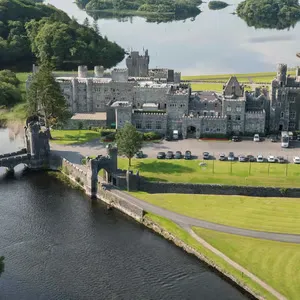
Located in County Mayo, Ireland, Ashford Castle has welcomed guests in some form since 1228, a lineage that has included aristocrats, the Guinness family, and Oscar Wilde. The castle's current status as one of Ireland's most celebrated hotels is the result of this long history. Upon arrival, guests are greeted by statues of Irish Wolfhounds guarding the gate, and a doorman in a top hat sets the tone for what is to come. The hotel's labyrinthine interior, adorned with Donegal crystal chandeliers and a spa pool surrounded by shell-like candelabras, lives up to the promises made by its exterior. The staff personally escort new guests to their rooms, and navigating back requires one to memorize the way.
The guest rooms are vibrant with color, some offering stunning views of Lough Corrib directly from the bed, a sight that no designed interior can rival. The castle's grounds extend over 350 acres of woodland and lakeshore, providing activities such as falconry, kayaking, and clay pigeon shooting alongside the more conventional amenities of a five-star establishment. In autumn, as fog rises from Lough Corrib and the surrounding forest turns golden, the fairy-tale allure of this hotel, which has evolved over eight centuries, is most pronounced.
Culinary experiences in the Connaught Room and the George V dining room operate at a level befitting such a majestic setting. The estate is located in Cong, a village in County Mayo that also served as the filming location for John Ford's 1952 film "The Quiet Man," adding a cinematic heritage to an already rich history. Ashford Castle does not shy away from its grandeur; centuries of practice are evident in the consistency with which it delivers an experience that is dramatically theatrical in the best sense of the word. Visitors are encouraged to book in the fall to witness the magic of fog over Lough Corrib, which the hotel's marketing touts as a true highlight.
2. Hiramatsu Karuizawa Miyota: A Serene Japanese Retreat
Situated in the Nagano Prefecture, Hiramatsu Karuizawa Miyota offers breathtaking views of the expansive skies and volcanic landscapes of the Miyota region, achieving what many design-focused Japanese retreats aspire to but few accomplish: it seamlessly integrates with its surroundings. Long corridors, natural materials, generous glazing, and private onsens keep the surrounding landscape as a central experience while details such as prehistoric ceramic fragments embedded within the interiors reflect an uncompromising commitment to the philosophy of Japanese hospitality.
Each morning, mist rolls over the valleys beyond the terrace, creating a retreat-like atmosphere devoid of ambient noise or artificial light. The Hiramatsu group operates hotels in Tokyo, Osaka, and Kyoto, yet the Karuizawa Miyota property possesses a unique character compared to its urban counterparts. While the city hotels bring refined Japanese hospitality to bustling downtowns, this establishment offers it in a landscape that does the emotional heavy lifting. The hotel's role is simply to provide the framework and infrastructure, which it does with a precision that makes its apparent simplicity seem effortless.
In Japanese culture, the Karuizawa area is associated with summer residences for elite families and a resort culture that developed around the foreign community established in the 19th century, who sought the cooler mountain air over Tokyo. The Hiramatsu estate continues this legacy in a building that eschews unnecessary visual flourishes, avoiding decorative elements that do not serve the experience of sitting in a landscape and giving it full attention. The stay here is described by Time Out's editor-in-chief as a blissful dream that lingers long after departure. The nearest Shinkansen station is Sakudaira, less than two hours from Tokyo, easily accessible from Nagoya. The Karuizawa area remains a historic summer retreat for both Japanese families and the foreign community that settled there in the 19th century, and the culture of mindful leisure that still defines the area makes the specific hallmark of Hiramatsu’s tranquil luxury feel fitting, where it might seem out of place in a more anonymous location.
3. Four Seasons Hotel Firenze: A Renaissance Gem
The Four Seasons Hotel Florence is housed in a 15th-century Renaissance palace, surrounded by 11 acres of meticulously maintained gardens, making it one of the city's historically significant buildings and one of the most extravagant hotel stays in Europe. The interior fulfills the promise of the palace with stately guest rooms featuring high ceilings, frescoed surfaces, heavy velvet drapes, and antique furnishings, imparting the quality of a royal residence rather than a hotel. This impression is amplified by the spaciousness created by the high ceilings and extensive use of mirrors in every room.
The gardens, which also include an intimate outdoor pool with retro red-and-white striped cabanas, are mostly hidden from view by the palace walls, meaning that the 11 acres of secluded grounds provide a constant surprise for guests arriving through the entrance on Via della Scala. The contrast between the grandeur of what lies behind these walls and the unassuming facade facing the street captures something of how Florence itself operates: the most significant interiors of the city are routinely concealed behind unremarkable exteriors. The Four Seasons has refined this Florentine tendency into a luxury offering.
The property features two restaurants, the Michelin-starred Il Palagio and the more casual poolside dining at the Atrium Bar, both operating at a level befitting the ambiance. Located north of the Arno, within walking distance to the Accademia, the Duomo, and the San Marco district, the hotel's location integrates it into Florence's cultural geography without requiring a car or a long walk. Visitors wishing to stay in a building that is itself a notable Florentine artifact will find that the Four Seasons Firenze delivers uncompromisingly. The palace, dating back to the 15th century, has been restored by Four Seasons with sensitivity to the original fabric, a fact confirmed by the frescoes and architectural details of the building at every turn.
As reported by de.qz.com.