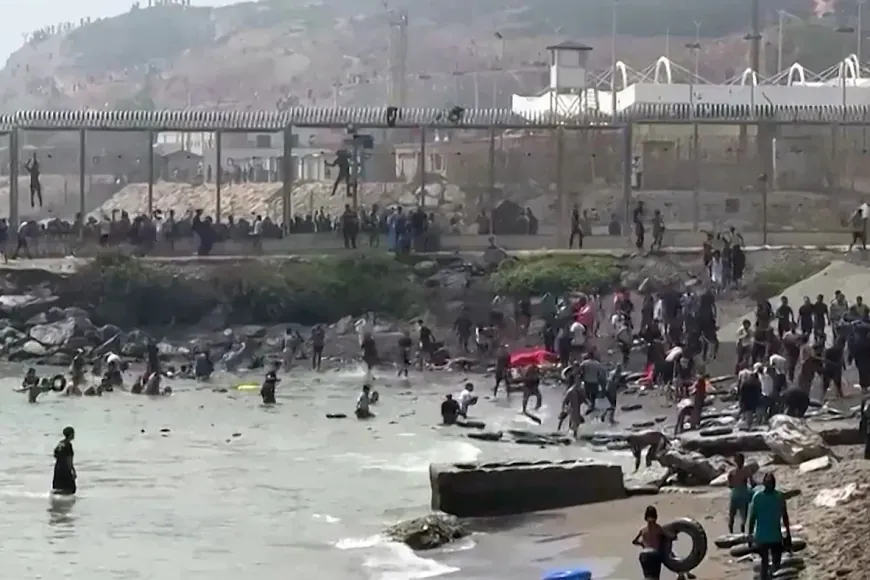

Border Crisis: A Deadly Crossing Attempt
In a heart-wrenching incident, 18 migrants tragically lost their lives during desperate attempts to cross the border into the Spanish-controlled city of Ceuta from Fnideq, Morocco. Despite the significant presence of security forces aimed at curbing such crossings, thousands of migrants surged toward the border late Thursday night, driven by the hope of reaching Europe. The situation escalated quickly, prompting Spanish authorities to report a rising death toll as they recovered nine bodies from the scene. In addition, estimates suggest that between 2,000 to 3,000 individuals successfully made it across the border amidst the chaos.
In response to this alarming increase in crossings, Spain has deployed additional military and police units to Ceuta, while Moroccan officials have reinforced their security measures. These measures included the use of water cannon-equipped trucks to deter migrants from approaching the border. Witnesses described scenes of turmoil, with reports of clashes leading to the destruction of vehicles, including a bus and seven other cars. The desperate situation has attracted hundreds of migrants, encompassing women, children, and individuals from various African nations, all seeking alternative routes to reach Ceuta.
The Geopolitical Context of Ceuta
Ceuta is a unique geopolitical entity; though it is located on the African continent, it remains under Spanish sovereignty, making it a focal point for migration. The city holds significant importance to Morocco, which views it as an occupied territory and has continuously called for its return. The ongoing struggle for control and rights at this border reflects broader issues related to migration policy, human rights, and international relations between Morocco and Spain. As the situation continues to unfold, it raises urgent questions about the humanitarian crisis at the borders and the responsibilities of nations in addressing the plight of migrants.
As reported by hawarnews.com.