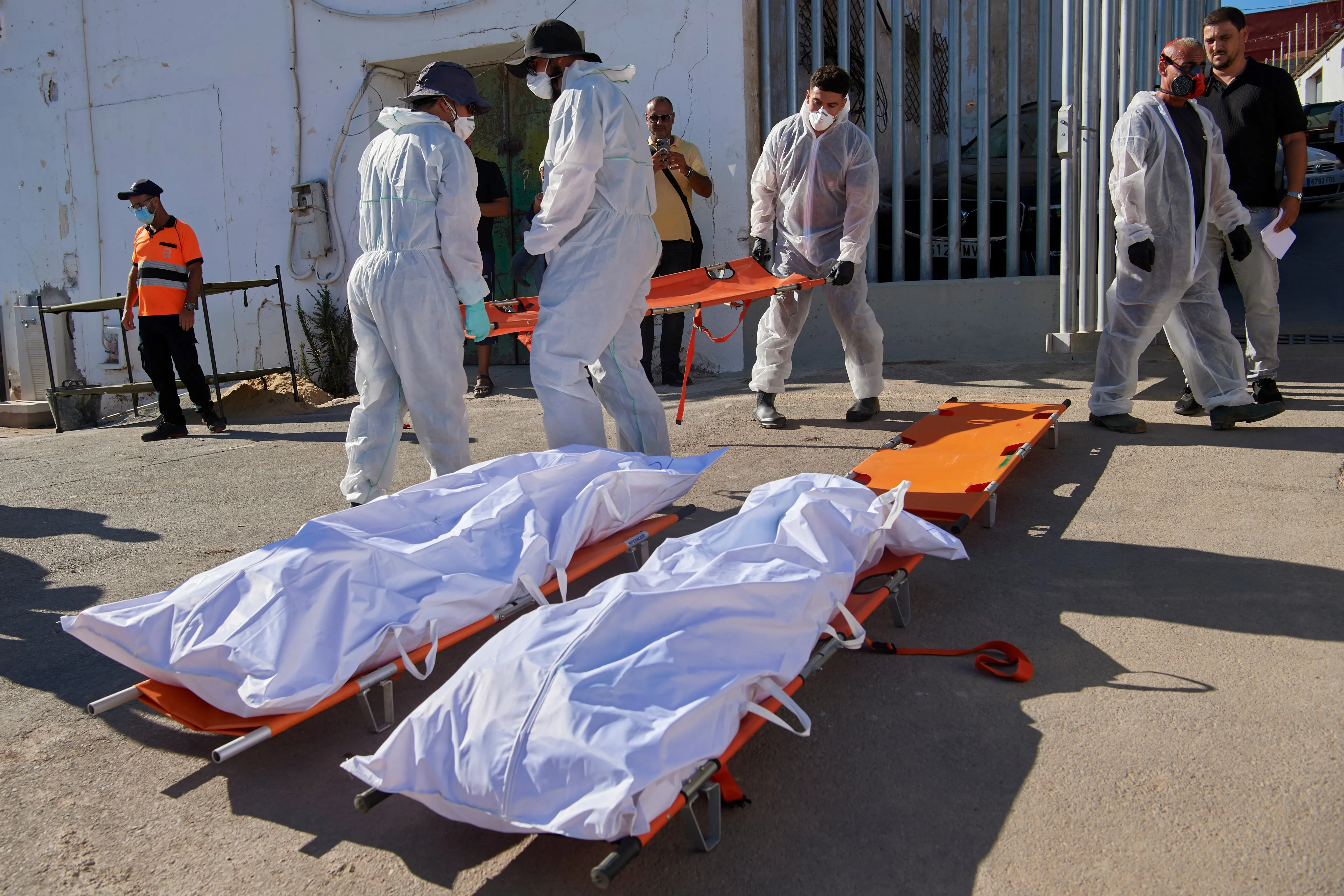

Ceuta Commemorates Lives Lost in Border Crisis
In a solemn ceremony held at a Muslim cemetery in Ceuta, Spain, the remains of eighteen migrants were interred following a catastrophic border crisis that occurred three weeks ago. This incident claimed the lives of over ninety individuals as a staggering 72,000 people sought to cross from Morocco into the Spanish territory. An Islamic cleric presided over the burial, offering prayers while funeral workers respectfully laid the deceased in cinderblock graves marked only by numbers, symbolizing the anonymity that often surrounds the lives of those who embark on perilous journeys in search of a better future.
The Moroccan Association for Human Rights has urged authorities to pause the burials until every attempt has been made to identify and repatriate the bodies to their homeland. The organization highlights the distressing reality that many of the deceased were victims of a desperate attempt to escape poverty and unemployment back home. Moreover, the tragic loss of life has been attributed to a combination of misinformation spread through social media and the influence of human smuggling networks. Survivors of this tragic event have voiced their struggles, citing economic hardships as the driving force behind their hazardous journey.
The Ongoing Humanitarian Crisis
As the burials commenced, local authorities indicated that while many migrants returned to Morocco shortly after the crisis, a significant number—estimated at around 10,000—remain in Ceuta. This has created a challenging humanitarian situation as locals and government entities work tirelessly to provide aid and shelter to those stranded in the city. The Spanish government offers a lower estimate of approximately 5,000 individuals still present, yet the reality on the ground suggests a more severe crisis.
In response to the ongoing situation, the Moroccan foreign ministry has remained silent regarding the burials and the repatriation process for the identified bodies. The local cemetery manager confirmed that all those buried were men, and the graves were prepared in accordance with Islamic customs, positioning the bodies towards Mecca, their ultimate spiritual destination.
This event is a painful reminder of the ongoing struggles faced by migrants and the complex socio-political factors that drive such desperate measures. As the situation evolves, the hope remains for a resolution that honors the dignity of those lost and addresses the root causes of migration.
As reported by bozemandailychronicle.com.