
Tragic Burials of Migrants in Ceuta Following Border Crisis
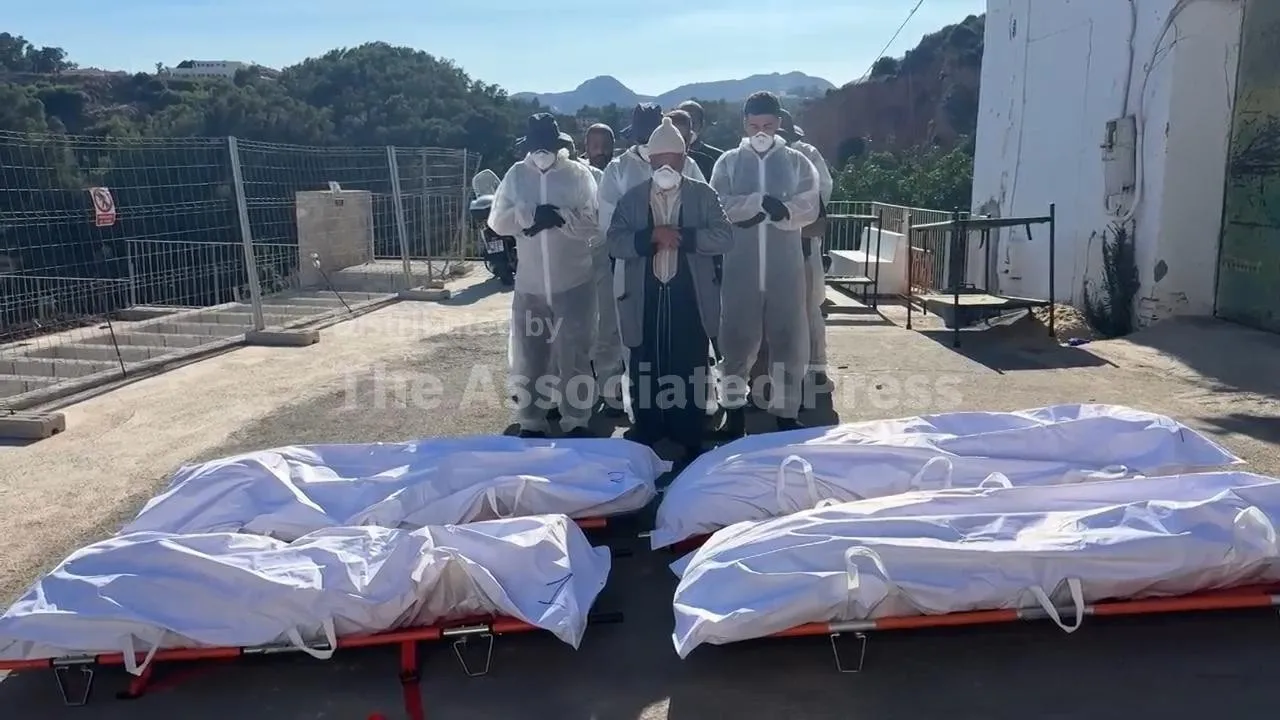
In a poignant and somber ceremony, burials commenced in Ceuta, Spain for migrants who tragically lost their lives during a recent border rush from Morocco. This heartbreaking event unfolded as the bodies of the deceased were delicately removed from a vehicle and placed on stretchers, marking the beginning of a series of funerals for those who met a grim fate while attempting to cross into Spanish territory. An imam led prayers at the cemetery, where the bodies of the victims were respectfully laid to rest, their identities largely unknown, yet their stories echoing the desperate struggles faced by many migrants.
This incident is part of a larger crisis that saw over 90 migrants perish in one of the deadliest border incidents in recent memory. The surge was fueled by a confluence of factors, including misinformation, extreme poverty, and a lack of opportunities in their home countries. In a matter of weeks, more than 72,000 individuals attempted to cross into Ceuta, a Spanish enclave situated at the northern tip of Africa, seeking refuge and a better life. On a recent Friday, 18 migrants were interred at the Muslim cemetery in Ceuta, with prayers and chants praising God resounding through the air as funeral workers hurriedly covered the white body bags with soil—a solemn reminder of the lives lost in pursuit of safety and stability.
The Moroccan Association for Human Rights, a vocal non-governmental organization, has urged that these burials be suspended until comprehensive efforts are made to identify the deceased and repatriate their remains to Morocco, which is the homeland for most of the victims. Many of those who died did so in tragic circumstances, either through drowning or in a stampede as they attempted to navigate a breakwater barrier near a border checkpoint. The NGO has called upon Morocco’s foreign ministry to ensure that the bodies are returned to their families, allowing for dignified burials. They characterized the ongoing burials in Ceuta as an ongoing human tragedy, compounding the issues of displacement and the phenomenon of missing persons.
Local authorities in Ceuta have reported that while most migrants who crossed in late July returned to Morocco shortly thereafter, an estimated 9,000 to 10,000 individuals, including women and children, have remained in the small Spanish city, exacerbating the humanitarian crisis. This situation has posed significant challenges for local and national authorities tasked with providing shelter and assistance. In contrast, Spain's national government has suggested that the number of migrants still in Ceuta may be as low as 5,000. Both Moroccan and Spanish officials have attributed the deadly events to social media rumors and human smuggling networks, while the migrants themselves cite dire economic conditions and low wages as critical motivators for their perilous journey.
As the burials continue, it is noted that all individuals interred thus far have been men, and the graves are marked with numbered stones as a precaution for potential future claims by their families. In accordance with Islamic customs, the bodies are oriented towards Mecca, symbolizing their faith and connection to their homeland. Just across the sea lies mainland Europe, the ultimate destination for many of these hopeful migrants, who risked everything in search of a better life.
As reported by youtube.com.