Details of the Incident
Bologna, Italy – A harrowing six minutes and 56 seconds of video footage documents the tragic final moments of Abderrahim Fakir, a 42-year-old Moroccan-born resident of Bologna, who had lived in Italy for over thirty years. Captured shortly after 12:30 PM local time on a Sunday, the video reveals two Italian police officers and a civilian restraining Fakir on the ground, as he repeatedly cries out for help. Nearby, four Italian Red Cross volunteers, who had arrived with an ambulance, stand idly by. For over four agonizing minutes, Fakir’s cries resonate, only to fall silent as he loses consciousness, secured by a black plastic zip tie around his ankles. It is only after the restraint ends that medical personnel realize he has stopped breathing.
Fabio Anselmo, the attorney representing Fakir’s family, urged the public to examine the video closely during a press conference held on July 21 in the Italian Senate, emphasizing the parallels between this case and that of Stefano Cucchi, whose death in police custody in 2009 became a symbol for police accountability in Italy. Anselmo articulated the grim reality of the situation, asserting that when the officers finally stood up, Fakir may have still been alive, yet no one made an effort to assist him or remove the restraints. He highlighted his extensive experience with similar cases, noting that the European Court of Human Rights has previously condemned Italy for its handling of such incidents.
Public Response and Political Repercussions
In the wake of Fakir’s demise, Bologna police claimed their officers had responded to reports of a person exhibiting violent behavior and insisted that emergency services were contacted immediately. However, the circumstances surrounding the restraint procedures remain under scrutiny, prompting prosecutors to order a post-mortem examination and Bologna's local health authority to initiate an internal investigation. The footage quickly circulated on social media, igniting public outrage and prompting gatherings at the site of Fakir's death. His sister, in a poignant display of grief, addressed the media, insisting, "My brother wasn’t an animal. He was a father, a worker, a good man. Why did they do this to him?" She implored the public to recognize his humanity and called for justice rather than revenge.
As details of Fakir's life emerged, it became evident that his final months were fraught with anxiety and financial strain. Barbara Spinelli, who had provided legal assistance to Fakir regarding immigration matters, revealed that he faced severe economic hardships that forced him to lay off employees from his small logistics business. Additionally, the tightening immigration policies in Italy, particularly discussions around deportations and the European Union’s Pact on Migration and Asylum, exacerbated his fears of being expelled from the country despite having no legal grounds for such action at the time.
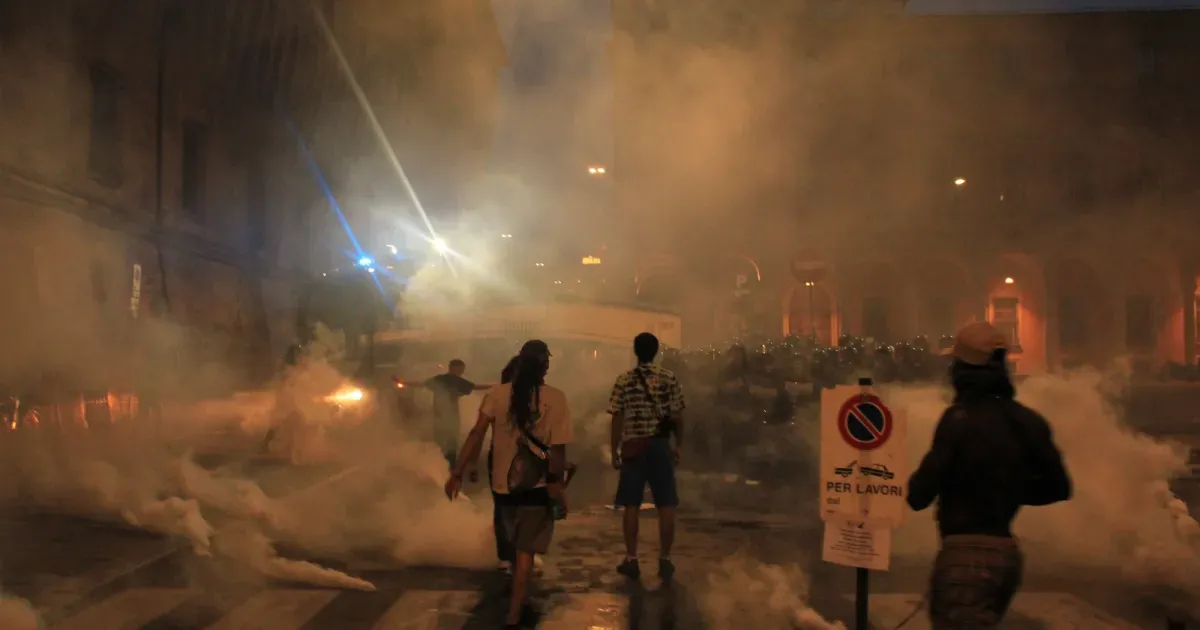
The situation escalated on the evening of July 20, when Bologna's mayor called for a solidarity rally in support of Fakir’s family. This demonstration, initially peaceful, devolved into chaos as protesters clashed with riot police after marching towards government buildings. The unrest resulted in significant property damage and injuries among both protesters and law enforcement, with accounts of excessive force used by police emerging from the chaos. Prime Minister Giorgia Meloni condemned the violence while asserting the need for a thorough investigation into Fakir’s death, calling for accountability without bias.
The unfolding investigation marks a pivotal moment for police accountability in Italy, particularly under the newly established Article 45-bis procedure, which critics argue could hinder the prosecution of officers involved in alleged misconduct. As the nation grapples with these events, the call for justice in the face of systemic issues surrounding police conduct remains a pressing concern for many.
As reported by aljazeera.com.