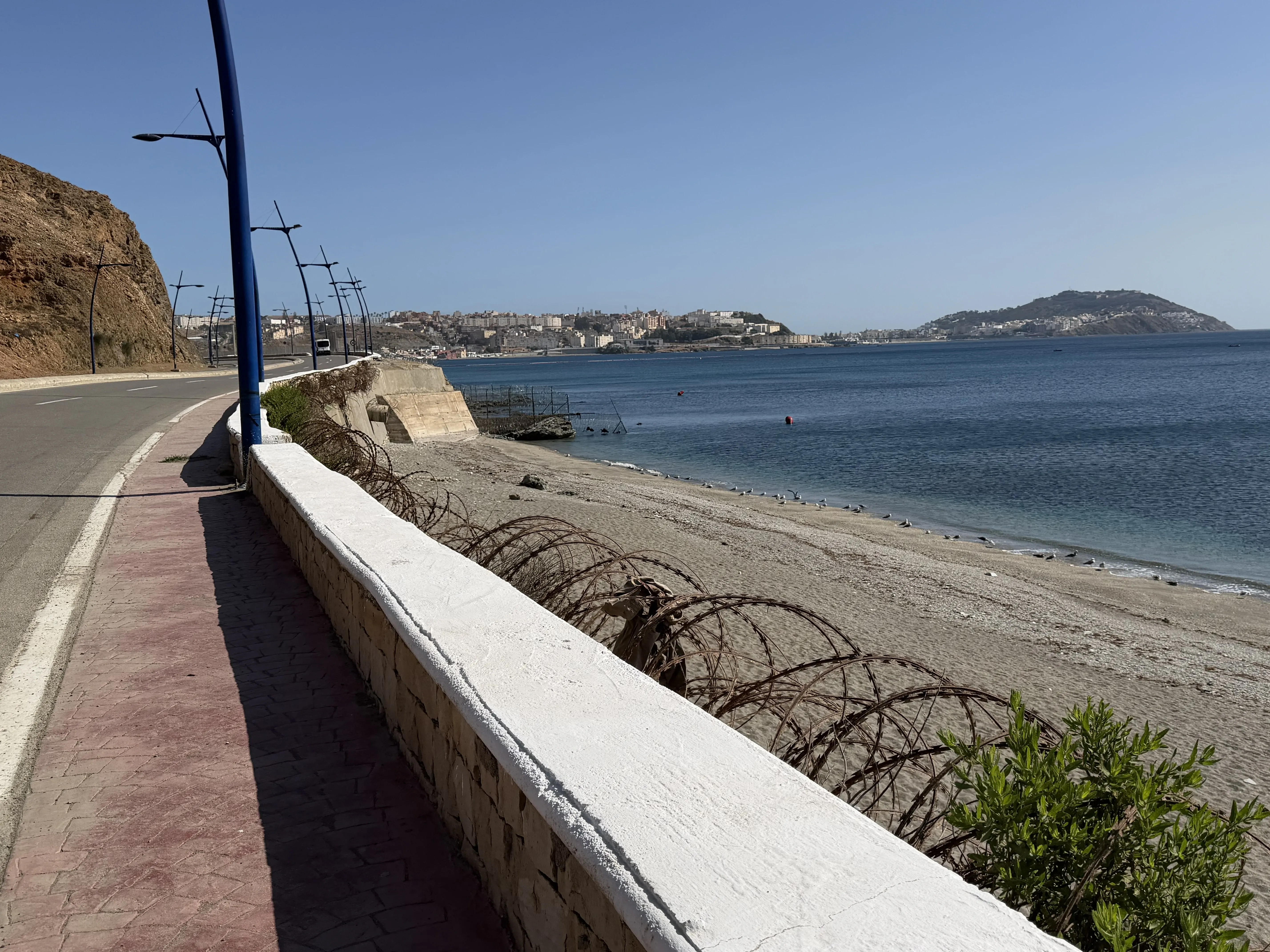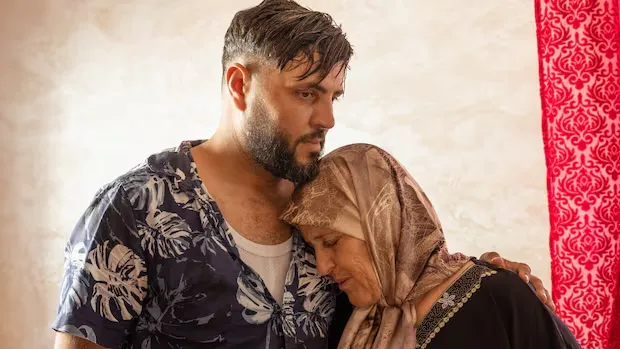

The heart-wrenching story of Fatin Ben Homar Azizi, a 26-year-old Moroccan woman, has captivated the attention of many, as her mother, Jamila Afelom, shares the painful details of her daughter's tragic fate. "The only thing by which I was able to identify her body was a necklace," Afelom recounted, a cherished gift she had given to Fatin before her ill-fated attempt to swim from Morocco to the Spanish enclave of Ceuta. This desperate journey ended in tragedy, as Afelom discovered her daughter’s body in a hospital a day and a half later, a grim reality that has left her shattered. Speaking from Tétouan, a city not far from Ceuta, Afelom recalled the shocking moment when friends informed her of Fatin's death, a moment that will forever haunt her.
Fatin was described by her mother as bold and determined, with a boyish charm that endeared her to many. "She often skipped school to play football," Afelom reminisced, highlighting her daughter's passion for the sport. This passion was nurtured by her coach, Adel El Kaab, who has seen Fatin grow from a young girl into a talented player. He fondly remembers her as a younger sister and emphasizes the importance of football as a refuge for many girls facing economic hardship in Morocco. Despite warnings about the dangers of irregular migration, many of his players, including Fatin, felt compelled to seek better opportunities in Europe.
As a single mother working at a cemetery in Tétouan, Afelom struggled to provide for her family after the death of Fatin's father. The burden of raising four children on her own weighed heavily on her, and she often found herself at a loss, stating, "Our state does not look after us. There is no work, no doctor. There is absolutely nothing." Fatin, driven by a desire to escape poverty, had once proclaimed, "I want to do everything I can to go to Europe and get you out of this misery." This yearning for a better life led her to attempt the perilous journey to Ceuta, a decision that ultimately cost her life.
The chaotic scene at the border saw an estimated 80,000 Moroccans and migrants flocking to the northern city of Fnideq, hoping to cross into Ceuta, which many view as a gateway to a brighter future in Europe. Despite her mother's desperate pleas for Fatin to stay home, the young woman was undeterred, confident that her friends who had previously crossed were now living prosperous lives. Tragically, after a frantic search through hospitals and police stations, Fatin's family discovered her lifeless body in a hospital, a stark reminder of the dangers faced by countless others who embark on similar journeys.
The Moroccan human rights organization AMDH reported that at least 141 individuals had perished attempting to reach Ceuta during this surge, with many bodies remaining unidentified in morgues. This situation has prompted calls for action from both Moroccan and Spanish authorities to ensure that victims are properly identified and returned to their families for dignified burials. Fatin was laid to rest in the cemetery where she and her mother had worked just days prior, a poignant end to her dreams of a new life.
As the story unfolds, the challenges faced by Fatin's family continue. Jamila Afelom fears for her surviving children, especially her 14-year-old daughter, who remains lost in Ceuta. The emotional toll is evident, as Afelom struggles to cope with her loss while worrying about her daughter's safety. Fatin's ultimate dream was to lift her family out of poverty, yet tragically, she was never given the chance to realize that dream.
As reported by cbc.ca.