
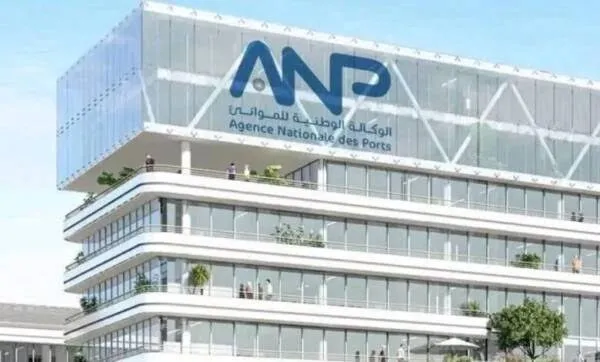

Significant Legal Transition for Moroccan Ports
The implementation of Law No. 34.25, which pertains to the transformation of the National Ports Agency into a joint-stock company, marks a pivotal moment in the history of Morocco's maritime sector. Published in Official Gazette No. 7533, this law officially transitions the agency into a new entity named "Moroccan Ports S.A.,” governed by a board of directors. This transformation is part of a broader initiative to reorganize the legal and institutional framework governing port management, aligning with the evolving needs of the national port system and bolstering governance, operational efficiency, and development while ensuring the continuity of the rights and obligations associated with the agency.
The law clearly stipulates that the change in the legal status of the National Ports Agency does not result in the cessation of its activities or the liquidation of its legal obligations. Instead, the new company will automatically inherit all properties, rights, and obligations—be they civil, administrative, commercial, financial, or tax-related—alongside existing agreements, contracts, partnerships, and licenses of any nature that were held by the agency at the time of its legal transformation.
Empowering Moroccan Ports for Future Development
Under the auspices of "Moroccan Ports S.A.,” the responsibility of managing, developing, maintaining, and enhancing the ports within its jurisdiction will be undertaken, excluding those located within the special zone of Tangier Med and ports associated with the Marchica lagoon site. The law endows the new company with extensive powers in the realm of port management, including the preparation of internal development plans, operational regulations for each port, and the specification of activities to be conducted, alongside the number of licenses and privileges to be granted, as well as the conditions and procedures for their issuance.
The company will also engage in establishing concession agreements and granting licenses for port activities, in addition to permits for temporary occupancy of public port property, making it a central player in organizing and utilizing the national port space. Moreover, the responsibilities of "Moroccan Ports S.A." extend beyond mere management and exploitation; they encompass economic, financial, technical, and managerial oversight of concessionaires and licensees, thereby strengthening monitoring and governance mechanisms within the ports.
The new legal framework allows the company to carry out port exploitation activities not assigned to other operators and enables it to manage or exploit industrial, logistical, and service-related activities connected to the ports, whether directly or indirectly. This opens avenues for expanding port functionalities and enhancing their integration into value chains and logistics services. Furthermore, the company is empowered to implement training and qualification programs in port management and operation, reflecting a commitment to developing competencies and human resources, which are critical components in enhancing the performance of the maritime system and adapting to the technological and logistical transformations occurring globally.
Additionally, the law allows for "Moroccan Ports S.A." to be tasked by the state or other legal entities with delegated oversight responsibilities for the construction of port infrastructure, under agreements that clearly define the rights and obligations of all parties involved. Through this transformation, the national port system enters a new institutional phase, transitioning from its previous legal framework to a joint-stock company endowed with extensive powers in management, development, operation, and oversight, while ensuring the continuity of its previous assets, rights, and obligations.
This new framework is anticipated to lay the groundwork for enhancing the competitiveness of Moroccan ports, increasing their attractiveness for investment, and improving the quality of port and logistical services. This aligns with the rapid transformations occurring in the maritime economy and international trade, reinforcing Morocco's position as a significant logistical and port platform at both regional and international levels.
As reported by agadirinfo.ma.
