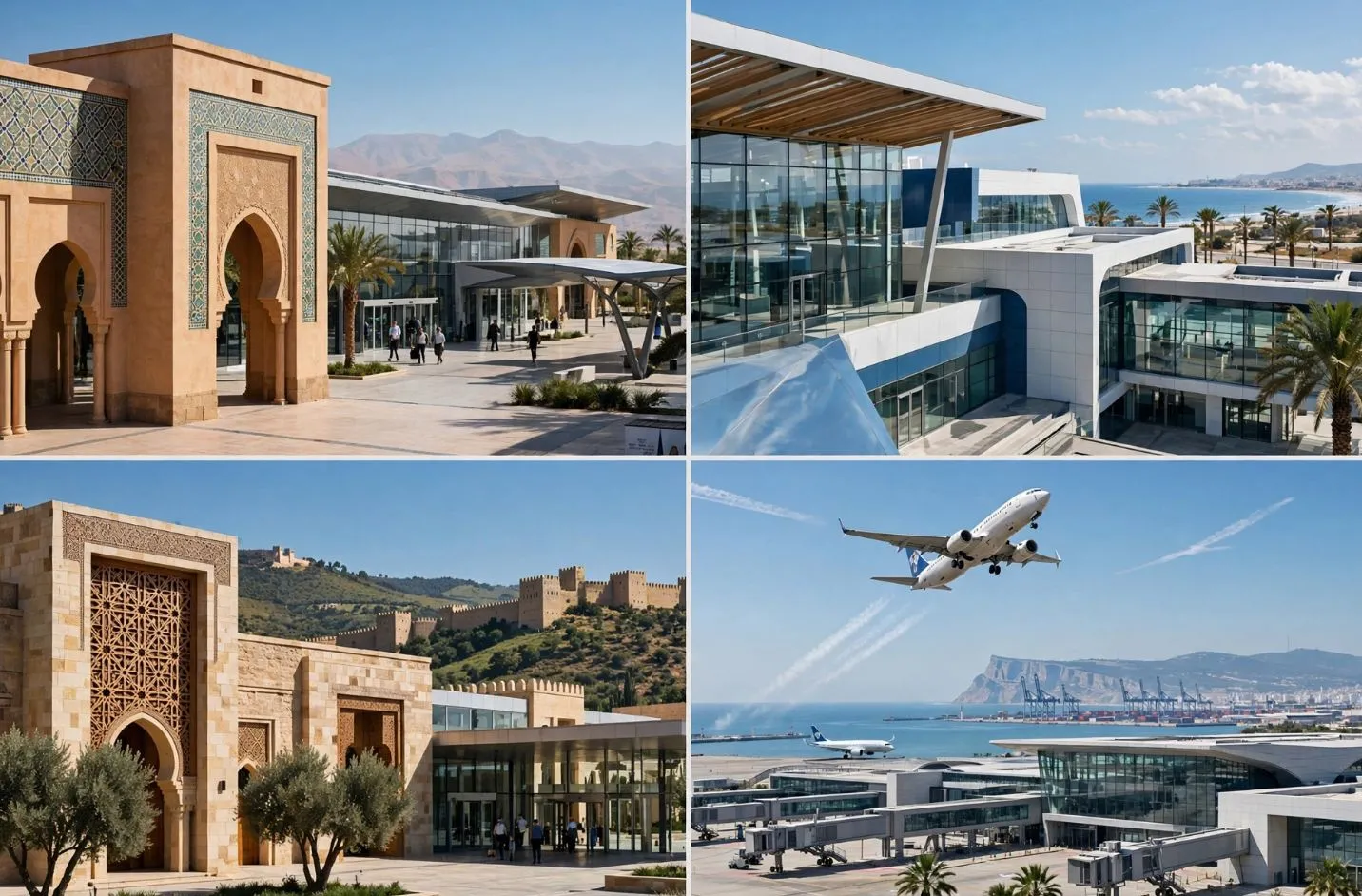

Major Development Initiative for Moroccan Airports
In a significant stride towards enhancing its aviation infrastructure, Morocco has entered into a financing agreement with the African Development Bank (AfDB) worth €270 million. This ambitious program aims to modernize and expand four key airports: Marrakech, Agadir, Fès, and Tangier, with a target to elevate their combined capacity to accommodate over 25 million passengers annually by the year 2030. This initiative not only seeks to bolster operational capabilities but also prepares these vital transport hubs to manage the anticipated surge in passenger and freight traffic in the coming years.
A High-Level Agreement in Casablanca
The formal signing of this agreement took place in Casablanca, presided over by Sidi Ould Tah, the President of the AfDB Group, alongside Nadia Fettah, Morocco's Minister of Economy and Finance. The event witnessed the presence of several officials from both institutions, marking a pivotal moment for the country's aviation sector. The agreement was signed by Achraf Tarsim, head of the AfDB office in Morocco, and Adil El Fakir, the Director General of the National Airports Office (ONDA). Additionally, Tamwilcom, represented by its Director General Saïd Jebran, is set to provide the financial guarantees associated with this operation.
According to a press release from the AfDB dated September 30, 2026, the loan will be exclusively allocated for the modernization and expansion of the aforementioned airports as part of a comprehensive plan designed to enhance the competitiveness of Morocco's aviation sector and strengthen the country's connections to international markets. By 2030, the targeted capacities are expected to reach 14 million passengers per year for Marrakech Airport, 5 million for Agadir, 3.6 million for Tangier, and 3 million for Fès, totaling an impressive capacity of approximately 25.6 million passengers across all four platforms.
This program is not limited to physical infrastructure improvements; it encompasses the modernization of airport facilities and equipment, the expansion of air navigation systems, and the enhancement of safety and security measures. Plans include the introduction of modern security equipment, automated baggage handling systems, and digital solutions aimed at streamlining the passenger experience within airports. The overarching ambition is to minimize processing times for travel formalities, elevate the quality of services offered to passengers, and enhance operational security levels in line with international standards prevalent in the aviation industry.
Sidi Ould Tah emphasized that this loan to ONDA aligns with Morocco's ambitions to modernize its airport infrastructures and expand their capacities, particularly in Marrakech, Agadir, Fès, and Tangier, while preparing the Kingdom to host major international events. He elaborated that this operation is also part of the Integrated African Aviation Transformation Program, initiated by the AfDB to assist countries across the continent in modernizing and financing their air transport systems, thereby enhancing their integration and building a safer, more competitive, and sustainable aviation sector that connects African nations more effectively.
Nadia Fettah remarked on the numerous reforms and major projects undertaken by Morocco that have benefitted from AfDB financing, commending the institution's commitment to supporting the Kingdom's initiatives, especially in the aviation sector. This agreement aligns with Morocco's strategy to solidify its position as an air transport hub linking Africa, Europe, and beyond, while also aligning with the objectives set forth in the Kingdom's tourism vision for 2030. According to the AfDB, the modernization of the targeted airports will not only address the anticipated growth in passenger and freight traffic but also enhance air connectivity and better meet mobility needs, all while supporting tourism, trade, and logistics activities.
Furthermore, the program is expected to create thousands of jobs during its implementation phase, with a particular focus on benefiting youth and women, while simultaneously enhancing operational security within the airports. In the medium term, the anticipated increase in capacity and improvement in air connectivity quality are expected to benefit tourism, commercial, and logistics activities, alongside attracting additional public and private investments related to air transport and associated services.
As reported by industries.ma.